Uganda Group Tours: Come Solo, Travel Together & Make a Real Difference
Come solo. Travel together. Discover the Uganda you will never forget.
Table of Contents
There is a special kind of silence that happens on a Uganda safari.
The engine stops.
The morning mist hangs low over the grass.
Nobody wants to speak too loudly because somewhere beyond the trees, something is moving.
Then someone in the vehicle points.
An elephant steps into view.
For a few seconds, six strangers become one group, all staring in the same direction, sharing the same feeling.
Then someone whispers, “Wow.”
And everybody smiles.
This is the magic of Uganda group tours.
You don’t need to arrive in Uganda with a group of friends. You can arrive alone, climb into a safari vehicle with people you’ve never met, and discover that some of your favorite travel memories may come from the people sitting beside you.
But there is another reason group travel in Uganda can be so meaningful.
When you choose a locally operated safari, stay in locally connected accommodation, eat at local businesses, travel with Ugandan guides and include community experiences, your journey can become part of the place rather than simply passing through it.
You don’t just see Uganda.
You meet it.
You listen to it.
You taste it.
And, if you travel thoughtfully, you can leave something positive behind.
So let me take you through seven ways to make a Uganda group tour more than a safari.
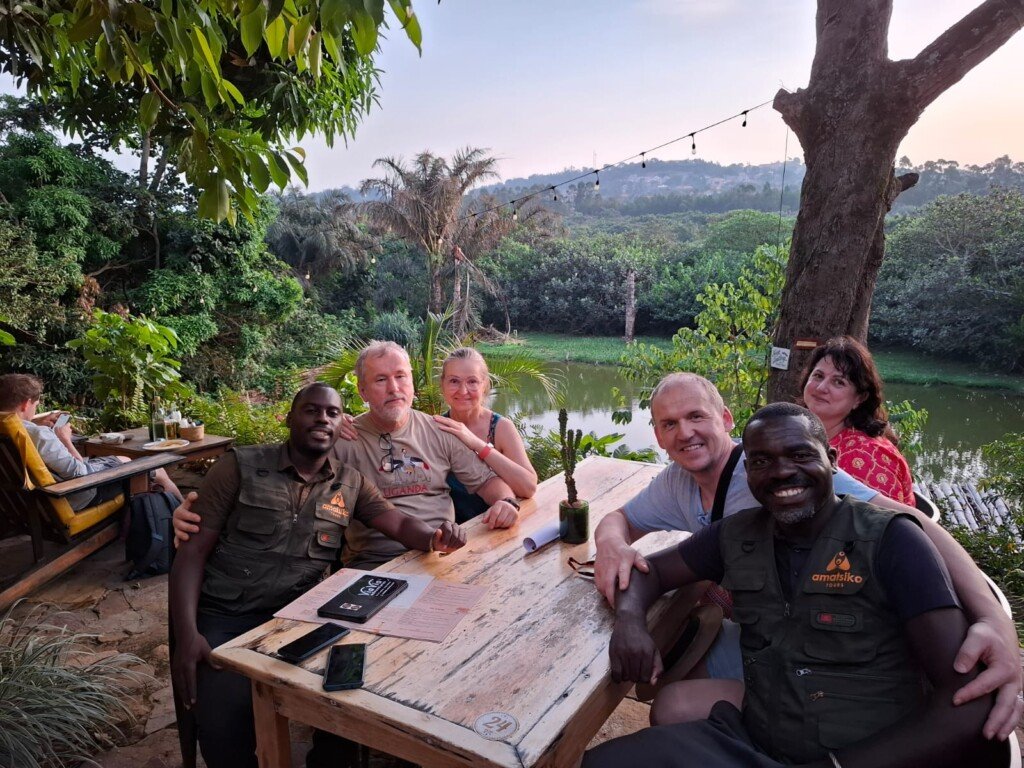
Uganda Group Tours at a Glance
If you’re looking for the perfect balance between wildlife, culture, friendship and meaningful travel, a small-group journey through Uganda can bring all four together.
Here’s what your adventure could include:
- Kampala: Your first taste of Ugandan food, culture and everyday life
- Bwindi: An unforgettable gorilla trekking experience
- Queen Elizabeth National Park: Savannah wildlife and the Kazinga Channel
- Kibale: Chimpanzees, rainforest and community experiences
- Bigodi: A community-led wetland experience
- Jinja: The Nile, adventure and Busoga culture
- Local communities: Food, crafts, stories and genuine human connections
And if you’re travelling alone?
That’s perfectly fine.
You may arrive solo.
But you probably won’t leave that way.
Why Choose Uganda Group Tours?
Uganda has a wonderful problem for travelers.
There is simply too much to see.
Mountain gorillas hide in ancient rainforest. Chimpanzees call from the canopy. Elephants cross golden savannah. Hippos crowd the waterways. The Nile cuts through the landscape. Hills roll toward the horizon around Kabale and Kisoro.
Then there are the people.
The farmers.
The guides.
The cooks.
The craft makers.
The conservation workers.
The families who have lived beside these landscapes for generations.
Trying to organize all of this alone can become complicated.
Which park should you visit?
How should you arrange transfers?
Where should you sleep before a gorilla trek?
Which Bwindi sector should you choose?
How do you combine wildlife with culture without spending half the holiday sitting in a vehicle?
This is where Uganda small group tours can make sense.
A good group itinerary takes care of the complicated logistics while giving you something a private itinerary cannot always provide: other people to experience the journey with.
And if you’re a solo traveler, sharing a safari vehicle can make the experience feel completely different.
You wake before sunrise together.
You search for wildlife together.
You laugh at the same unexpected moments.
You sit around the dinner table and discover where everybody came from.
By the end of the trip, the people who were strangers on day one may be the people you are messaging months later.
If you’re comparing different itinerary lengths, our guide to Uganda Small Group Travel Itineraries 2026/2027 is a useful next step.
1. Start in Kampala and Meet the Real Uganda
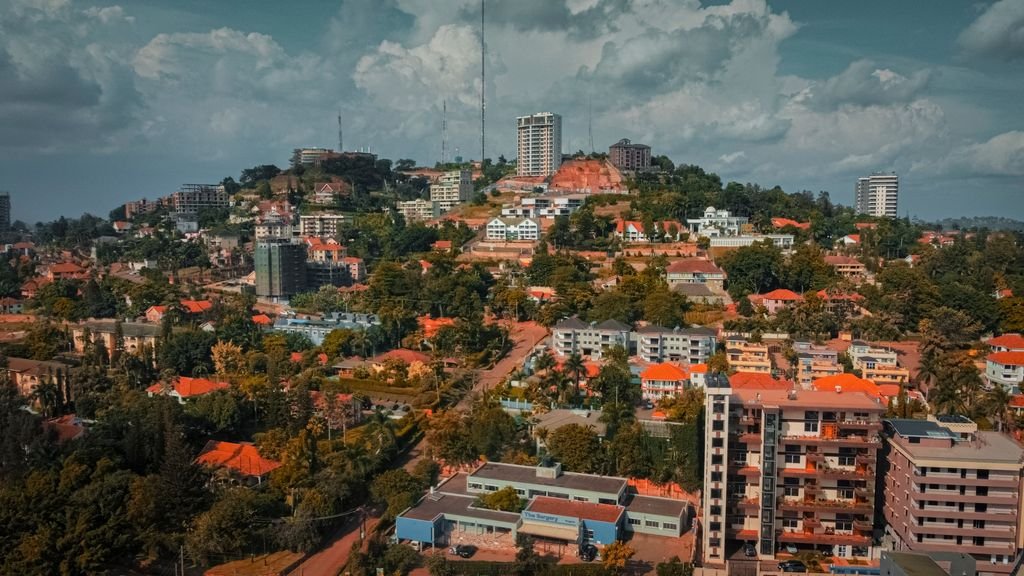
Before the forests and savannahs, let Uganda introduce itself through Kampala.
The capital isn’t simply a place to arrive and immediately leave.
Give it time.
Listen to the traffic.
Smell the food cooking beside the road.
Watch boda bodas weave through the streets.
Walk through a market.
Taste something you’ve never ordered before.
Talk to your guide.
Ask questions.
Where does this food come from?
Who made this craft?
What is this neighborhood known for?
The best cultural experiences often begin with curiosity rather than a checklist.
Kampala can be especially interesting for solo travelers because it immediately breaks the ice. You might arrive at breakfast not knowing anybody and leave the table talking about your home country with another traveler.
And this is also where responsible travel can begin naturally.
Choose locally owned restaurants when possible. Buy authentic crafts from local makers. Use local guides. Give your money opportunities to circulate within the communities you came to visit.
You don’t have to turn your holiday into a lecture about sustainability.
Simply make thoughtful choices.
Your breakfast can support a local restaurant.
Your souvenir can support an artisan.
Your walking tour can support a local guide.
Your story begins to connect with someone else’s livelihood.
For more cultural inspiration, explore our guide to Uganda Cultural Travel: Beyond Wildlife, Into the Soul of Africa.
2. Head Into the Wild on a Uganda Group Safari
Eventually the city disappears.
The road stretches ahead.
The landscape opens.
And suddenly, the safari begins.
This is where Uganda group safari experiences come alive.
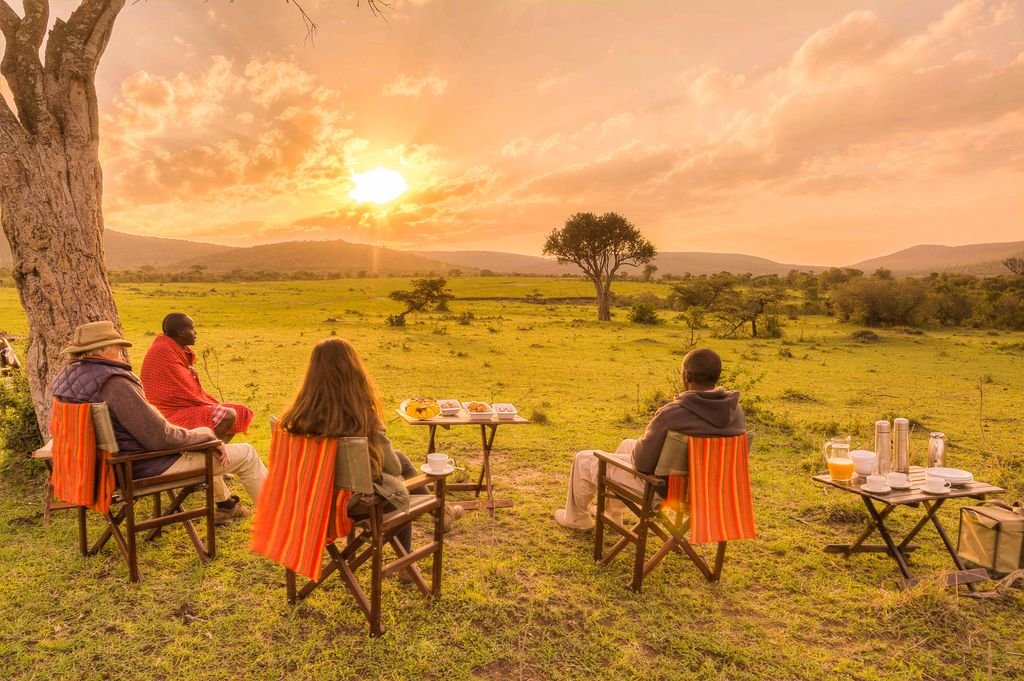
Imagine sitting in the vehicle before sunrise.
The windows are open.
The air is cool.
Everyone is scanning the grass.
Then your guide brakes gently.
There.
A herd of buffalo.
Further away, perhaps a giraffe.
A bird of prey circles above.
And suddenly someone spots an elephant before everyone else.
“Elephant!”
The whole vehicle turns.
That moment belongs to everybody.
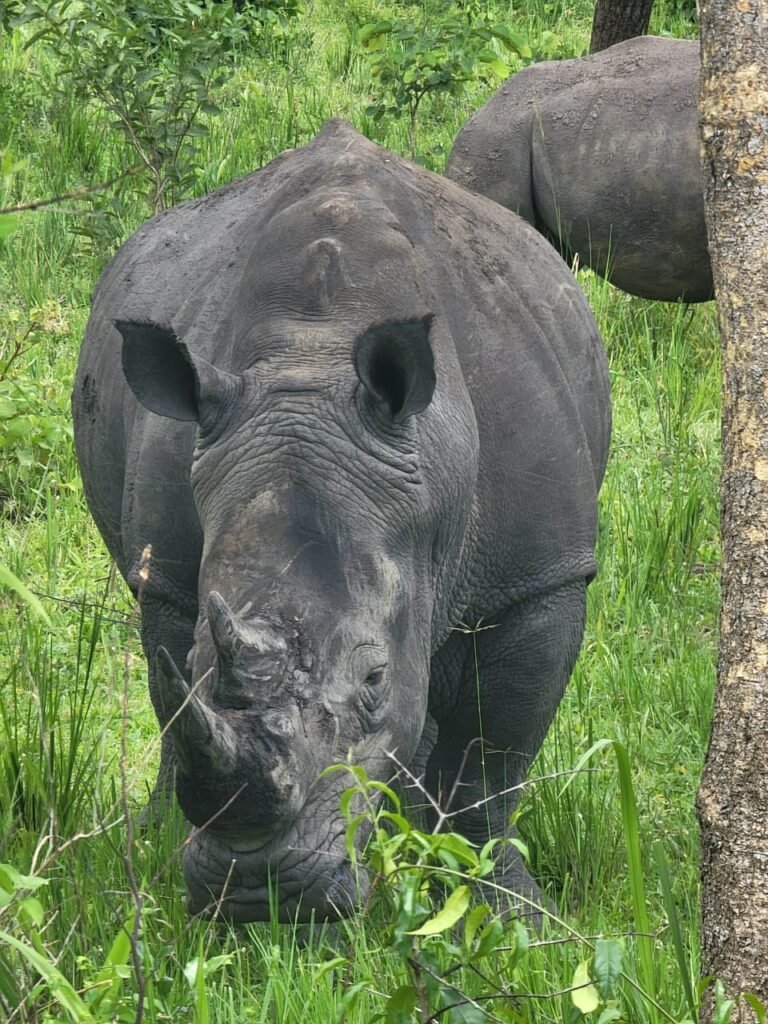
Uganda’s national parks offer very different wildlife experiences. Queen Elizabeth National Park combines savannah, wetlands and the Kazinga Channel. Murchison Falls brings dramatic river scenery and large wildlife populations. Kidepo offers a more remote wilderness experience, while Lake Mburo provides a very different landscape closer to Kampala.
You can discover more possibilities in our guide to Uganda Beyond the Gorillas.
The important thing is not to try to squeeze everything into one itinerary.
A good safari isn’t a race to collect national parks.
Sometimes one extra night is worth more than one extra destination.
You sleep properly.
You wake slowly.
You have time to watch wildlife.
You have time to talk.
And you have time to actually feel where you are.
3. Travel With a Local Guide, Not Just a Driver
A vehicle can take you somewhere.
A local guide can help you understand where you are.
That difference is enormous.
Your guide may notice a bird you would have walked straight past.
They may recognize animal tracks.
They may know the history of a village.
They may explain why a particular tree matters.
They may tell you something about Ugandan life that you could never learn from a guidebook.
This is one of the reasons I love the idea of small group safari Uganda experiences.
With fewer people, conversations with your guide can feel much more personal.
You can ask questions.
You can stop and look.
You can learn.
And the benefit goes both ways.
Choosing local guides means your tourism spending can support people whose knowledge and livelihoods are connected to the destination.
At Amatsiko Tours, being locally based in Kabale also shapes the way itineraries are planned. Our existing small-group itinerary guide explains why gorilla permit dates, trekking sectors and accommodation need to be considered together rather than separately.
That local knowledge becomes especially important around Bwindi, where the trekking sector you choose can affect your route and overnight base.
If gorilla trekking is part of your plan, read our detailed guide to Gorilla Trekking Small Group Tours in Uganda before deciding how to structure the trip.
4. Go Beyond Wildlife and Into Community Life
Wildlife may be the reason you first search for Uganda.
People may be the reason you remember it.
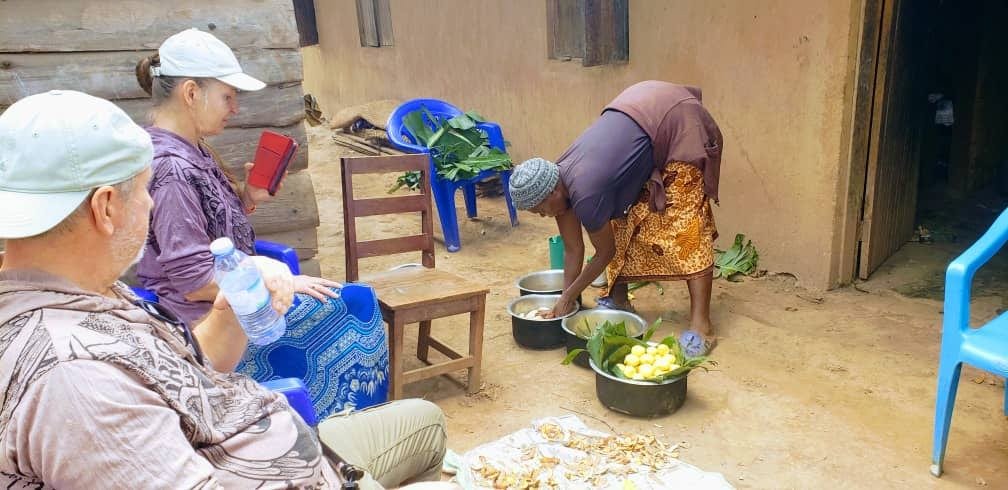
Imagine walking into a community where someone welcomes you with a smile.
You sit down.
Maybe there is food.
Maybe there is music.
Maybe someone demonstrates a craft.
Maybe you learn something about farming or traditional knowledge.
The experience doesn’t need to be elaborate.
Sometimes the simplest moments stay longest.
This is where Uganda cultural tours can add another dimension to a safari.
Instead of seeing Uganda only through the window of a vehicle, you begin to understand the people living alongside the landscapes.
But cultural tourism should always be approached with respect.
Ask before taking photographs.
Listen rather than expecting people to perform.
Pay fairly for experiences and crafts.
Choose community-led experiences where possible.
And remember that the people you meet are hosts, not attractions.
One of the best examples is Bigodi Wetland Sanctuary, near Kibale.
Bigodi is community-run, with tourism connected to local conservation and livelihoods. A guided walk takes you through wetland habitat while local guides help visitors understand the birds, plants, primates and community around the sanctuary.
That is the kind of experience that can transform a simple afternoon walk into something much more meaningful.
5. Follow Uganda’s Coffee Story From Farm to Cup
Here’s a simple question.
Have you ever wondered where your coffee comes from?
In Uganda, you can follow the story much further than the café.
Imagine walking through green hills.
The air is cool.
Coffee cherries hang among the leaves.
You pick one.
It’s red, shiny and surprisingly sweet.
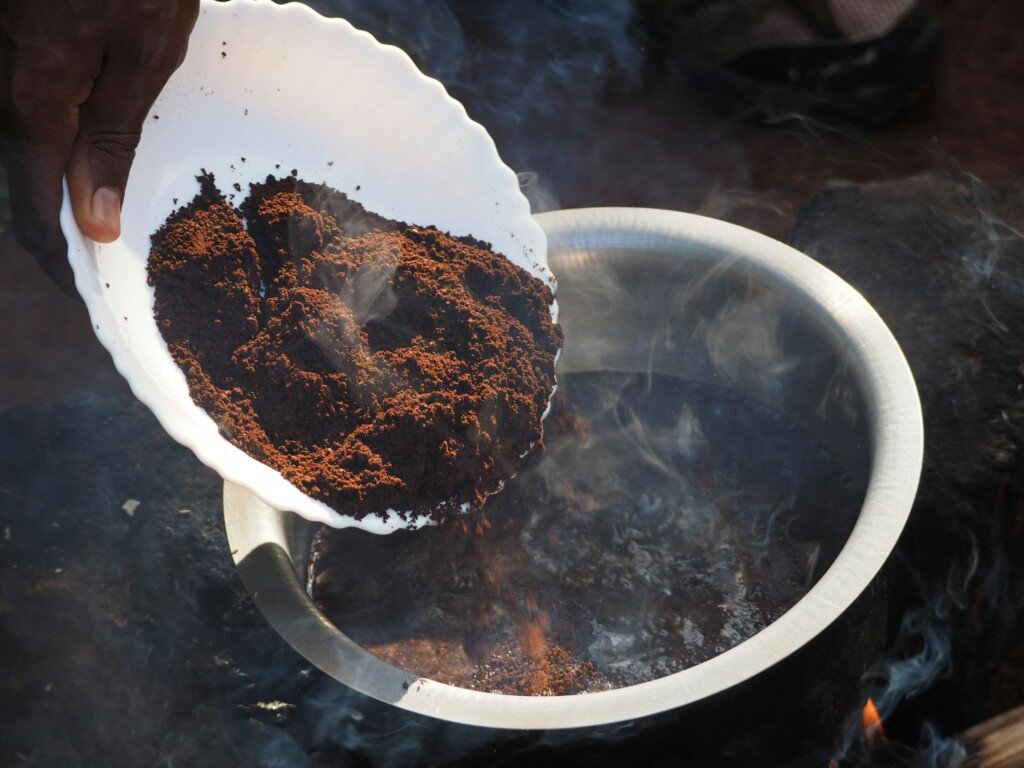
Later, you watch the beans being processed.
Then roasted.
Then ground.
Then brewed.
And suddenly that morning cup of coffee feels completely different.
A Uganda coffee tour is not simply a tasting experience.
It can be a chance to meet smallholder farmers and understand one of Uganda’s important agricultural stories.
For travelers interested in community tourism, experiences like this are particularly valuable because they connect your spending with people who produce something tangible.
Buy directly where possible.
Listen to the farmer.
Ask how the coffee is grown.
Taste it slowly.
And perhaps when you return home and make your next cup, you will remember the red soil, green hills and the hands that helped bring those beans to you.
That is what meaningful travel does.
It follows you home.

6. Walk Into the Forest for a Gorilla Encounter
Then comes the experience that brought many travelers to Uganda in the first place.
Gorillas.
The morning begins early.
The forest is cool and damp.
Your boots sink slightly into the earth.
Leaves brush your clothing.
You hear insects.
Birds.
Your own breathing.
Then your guide stops.
The forest seems to become even quieter.
Somewhere ahead is a gorilla family.
You move carefully.
Slowly.
And then you see them.
For a moment, the rest of the world disappears.
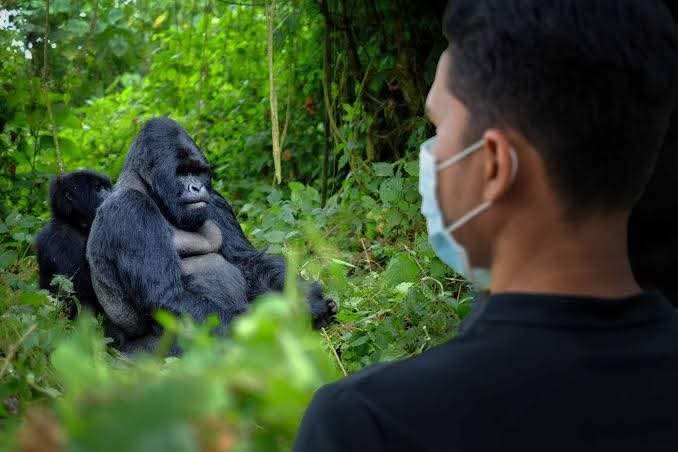
Uganda’s gorilla trekking takes place in Bwindi Impenetrable National Park and Mgahinga Gorilla National Park.
But this is not simply a wildlife encounter.
It is a conservation experience with strict rules designed to protect both visitors and gorillas.
Uganda Wildlife Authority provides the official guidance for gorilla tracking, including rules governing visitor behavior and the trekking experience.
Before booking, always check the latest information directly with Uganda Wildlife Authority.
Current UWA guidance includes a regulated observation period, restrictions on flash photography and requirements around visitor distance and health.
These rules are not there to spoil the moment.
They help protect it.
The gorillas are wild animals.
The forest is their home.
We are visitors.
That distinction matters.
For detailed planning, including sectors, logistics and permits, our Gorilla Trekking Safaris guide explains how the experience can also connect with community impact in Kabale.
7. Add Jinja, the Nile and a Completely Different Side of Uganda
After days of forests and wildlife, imagine hearing a different sound.
Water.
Lots of it.
The Nile rushing through rapids.
People laughing.
Kayaks moving across the river.
Adventure replacing safari silence.
Welcome to Jinja.
Jinja makes an excellent extension to a Uganda group itinerary because it changes the rhythm completely.
Our Jinja Uganda Travel Guide covers experiences ranging from the Nile and adventure activities to food and Busoga culture.
For a group, this can be especially fun.
Someone wants to try rafting.
Someone else wants to kayak.
Another traveler wants to sit beside the river with a cold drink and watch.
You don’t have to experience Uganda in only one way.
That’s the beauty of building a flexible itinerary.
Wildlife.
Forest.
Culture.
Adventure.
Food.
People.
The more dimensions you add, the more complete your understanding of the country becomes.
Come Solo, Leave With Friends
And this is where we return to the beginning.
Maybe you arrived in Uganda alone.
Maybe you were nervous.
Maybe you wondered whether joining a group would feel awkward.
Then the little moments begin.
Someone shares binoculars.
Someone saves you a seat.
Someone points out a monkey.
Someone makes a joke during a long drive.
You share dinner.
You compare photographs.
You talk about home.
You laugh.
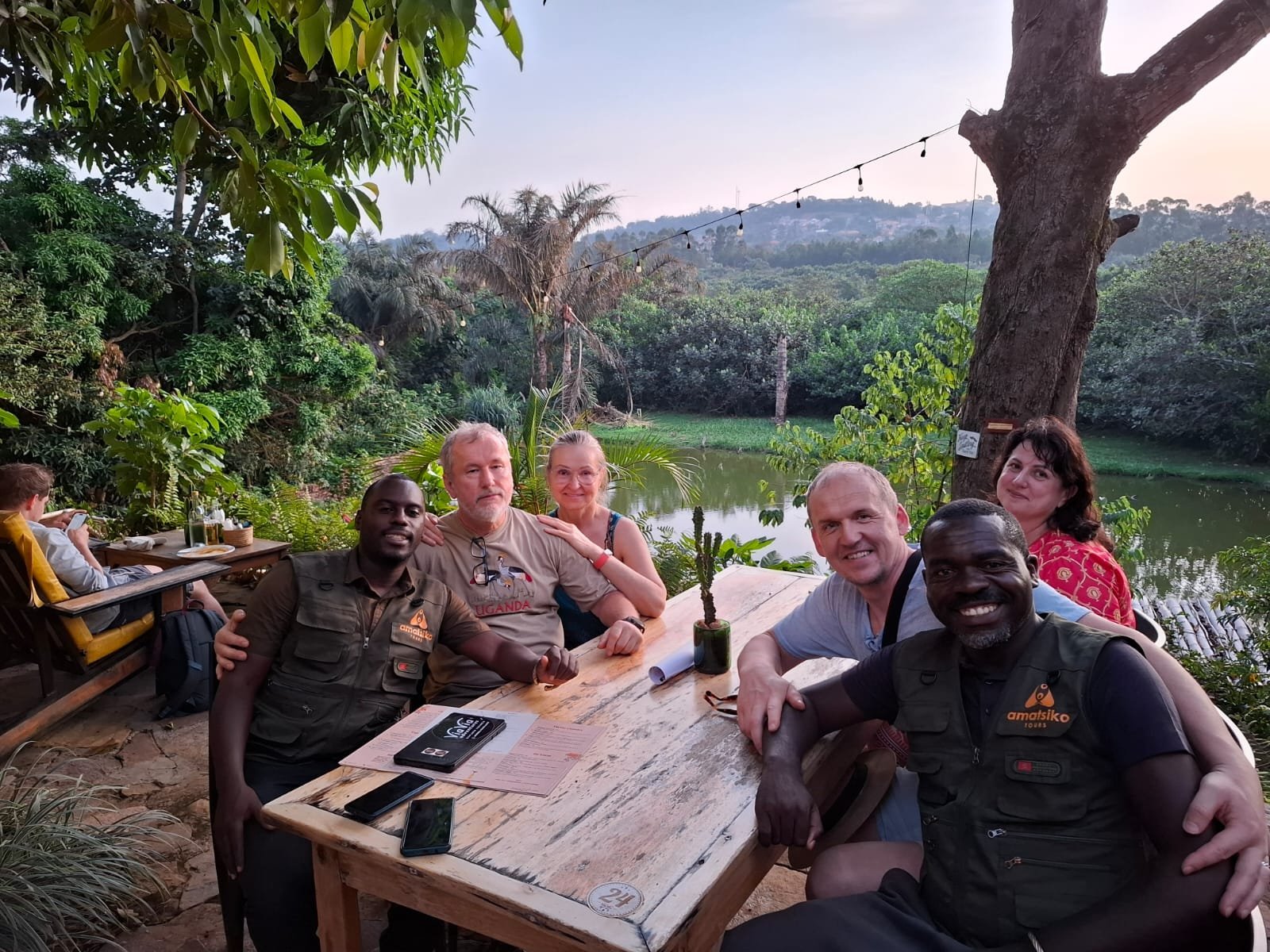
And somewhere between Kampala and Bwindi, between the first game drive and the last dinner, the strangers stop feeling like strangers.
That’s the secret of Uganda group tours.
The itinerary may be planned.
The friendships aren’t.
You can’t schedule the conversation around a campfire.
You can’t predict which person will become your favorite travel companion.
You can’t plan the moment when everyone in the vehicle suddenly shouts because somebody spotted a lion.
Those are the moments you remember.
And perhaps that’s why group travel works so beautifully in Uganda.
The country gives you extraordinary things to see.
But the people you meet give those experiences meaning.
How Your Uganda Group Tour Can Create Real Community Impact
A meaningful trip doesn’t require perfection.
It requires attention.
Pay attention to where your money goes.
Pay attention to who tells the stories.
Pay attention to whether local people are participants or simply spectators in the tourism economy.
At Amatsiko Tours, community impact is part of the story behind our operations in Kabale.
Our article How Your Trip to Uganda Supports Local Communities explains how tourism can contribute through employment, local guides, women’s groups, community experiences and education.
One of the projects especially close to our hearts is Amatsiko School.
Tourism revenue is connected to practical community support, including education and school needs.
You can also read about the connection between gorilla trekking and the school in Gorilla Trekking Safaris: How Your Trip Helps Amatsiko School.
The idea is simple.
Your holiday should not only be something you consume.
It can also be something you contribute to.
Travel Kindly: How to Leave a Positive Footprint in Uganda
Choose locally connected operators
Before booking, check who actually operates your safari and whether the company is licensed.
The Uganda Tourism Board provides tourism information and a licensed tour company directory.
Spend locally
Choose locally owned accommodation, restaurants, guides, crafts and community experiences where appropriate.
Your spending becomes more meaningful when it reaches people living in the places you visit.
Ask before taking photographs
A photograph is never more important than someone’s dignity.
Smile.
Ask.
Respect the answer.
Carry less plastic
Bring a reusable water bottle where practical.
Use refill stations when available.
And follow one simple rule in nature:
Whatever you bring in, take back out.
Respect wildlife
Never encourage your driver to chase an animal for a better photograph.
Don’t ask to go off-road.
Don’t feed wildlife.
Follow your guide and ranger’s instructions.
The quiet encounter is often the best encounter.
How to Choose the Right Uganda Group Tour
Not every group itinerary will suit every traveler.
Before booking, ask yourself—and your tour operator—some simple questions.
How big is the group?
If meeting people is important to you, a group can be wonderful.
But if you want a more intimate experience, ask for the expected group size.
How much time will you spend driving?
Uganda is beautiful, but distances can be significant.
A good itinerary balances wildlife experiences with realistic travel times.
Our 10 Days in Uganda itinerary provides another example of how gorillas, parks and culture can be combined without turning every day into a race.
Which gorilla sector will you use?
If gorilla trekking is included, the sector matters.
Buhoma, Ruhija, Rushaga and Nkuringo have different access logistics.
Your permit should influence your accommodation and route.
Who are the guides?
Ask whether your guides are local and experienced.
A great guide can transform an ordinary safari into an extraordinary journey.
Where does your money go?
Ask questions.
Look for transparent community partnerships, local employment and conservation connections.
You shouldn’t feel uncomfortable asking.
You are not being difficult.
You are being an informed traveler.
Uganda Group Tours: Practical Planning Guide
How many days do you need?
For a first Uganda group tour combining wildlife, primates and culture, 7–10 days can create a strong introduction.
If gorilla trekking is the centerpiece and you want more relaxed pacing, extending the trip can make a major difference.
If you want to add Jinja, coffee experiences or additional national parks, consider a longer itinerary.
When should you travel?
Uganda can be visited throughout the year.
The experience changes with the seasons, however.
Drier periods can make some roads and trekking conditions more comfortable, while wetter periods can bring lush landscapes and different travel conditions.
Instead of choosing dates based on a generic “best month,” choose according to the experiences you care about most.
Our guide to the Best Time for Uganda Safaris can help you compare seasonal conditions.
How should you plan gorilla trekking?
Start with the permit.
Then confirm your trekking sector.
Then choose accommodation and transfers around that sector.
This prevents one of the most common planning mistakes: booking a beautiful lodge that is inconveniently far from your trekking briefing point.
For more detailed planning, see our Uganda Small Group Travel Itineraries.
What should you pack?
Keep it practical:
- Comfortable walking shoes
- Waterproof jacket
- Long trousers
- Lightweight layers
- Insect repellent
- Sun protection
- Reusable water bottle
- Binoculars
- Small daypack
- Camera
- Any essential medication
For gorilla trekking, waterproof and comfortable footwear is particularly important.
Frequently Asked Questions About Uganda Group Tours
Are Uganda group tours good for solo travelers?
Yes. In fact, solo travelers can be some of the best candidates for small-group safaris because the trip provides shared transport, guides and activities while creating opportunities to meet other travelers.
You arrive alone.
You experience Uganda together.
Are Uganda small group tours cheaper than private safaris?
They can be, because the cost of vehicles, guides and some trip logistics can be shared between travelers.
However, the final price depends on the itinerary, accommodation, permits, group size, season and activities included.
If you’re comparing prices, our guide to Affordable Uganda Group Safaris is a useful place to start.
How many people should be in a Uganda group safari?
There isn’t one perfect number.
Some travelers prefer very small groups for flexibility and personal interaction. Others enjoy a larger social atmosphere.
Ask the operator for the expected group size before booking.
Can I combine gorilla trekking with a wildlife safari?
Absolutely.
Gorilla trekking can be combined with destinations such as Queen Elizabeth National Park and Kibale National Park, depending on your available time and route.
The key is avoiding an itinerary that tries to cover too much too quickly.
Is Uganda good for responsible and community-based tourism?
Yes, Uganda offers opportunities to combine wildlife travel with community-led experiences, cultural tourism and locally operated activities.
The important question is not simply whether a tour uses the word “sustainable.”
Ask what actually happens on the ground.
Who is employed?
Who benefits?
Who owns the experience?
Where does your money go?
Our guide to Regenerative Tourism in Uganda explores this idea in greater depth.
The Journey Is Bigger Than the Safari
There is a version of Uganda where you simply collect photographs.
And then there is another version.
You sit with people.
You listen.
You taste something new.
You learn a name.
You wake before sunrise.
You drive through golden grassland.
You hear a chimpanzee calling somewhere in the forest.
You stand quietly beneath the trees of Bwindi.
You watch a gorilla family and realize that, for one extraordinary hour, you are simply a visitor in their world.
You buy something made by someone’s hands.
You drink coffee grown on Ugandan soil.
You share a meal.
You laugh with people who were strangers when you arrived.
And eventually, the journey ends.
Your suitcase goes home.
Your photographs go online.
But something else stays with you.
A collection of stories.
A handful of new friendships.
A deeper understanding of Uganda.
And, hopefully, the feeling that your visit gave something back as well as taking something away.
That is the kind of travel worth remembering.
So if you’ve been waiting for the perfect travel companion, perhaps you don’t need one.
Come solo.
Travel together.
Discover Uganda.
And when you return home, don’t just tell people what you saw.
Tell them who you met.
Tell them what you learned.
Tell them why you want to go back.
Because the best Uganda group tours don’t simply take you from one destination to another.
They connect you to a country.
And sometimes, they connect you to people you never expected to meet.
Uganda is waiting.
Start Planning Your Uganda Group Tour
Ready to experience Uganda with a small group, local guides and a journey designed around wildlife, culture and meaningful community connections?
Explore Amatsiko Tours and start planning your journey to the Pearl of Africa.
Come alone if you have to.
We’ll help you travel together.