Bigodi Wetland Sanctuary: How Community Tourism Protects Uganda’s Richest Swamp
Table of Contents
At a Glance
Bigodi Wetland Sanctuary is a community-run, 4 sq km sanctuary near Kibale Forest, Uganda.
It boasts rich biodiversity with over 200 bird species and 8 primate species.
Entry fees directly support local schools, water projects, and healthcare.
Guided tours offer insights into the area’s wildlife and community initiatives.
Birding and primate tours highlight unique species like the Great Blue Turaco and grey-cheeked mangabey.
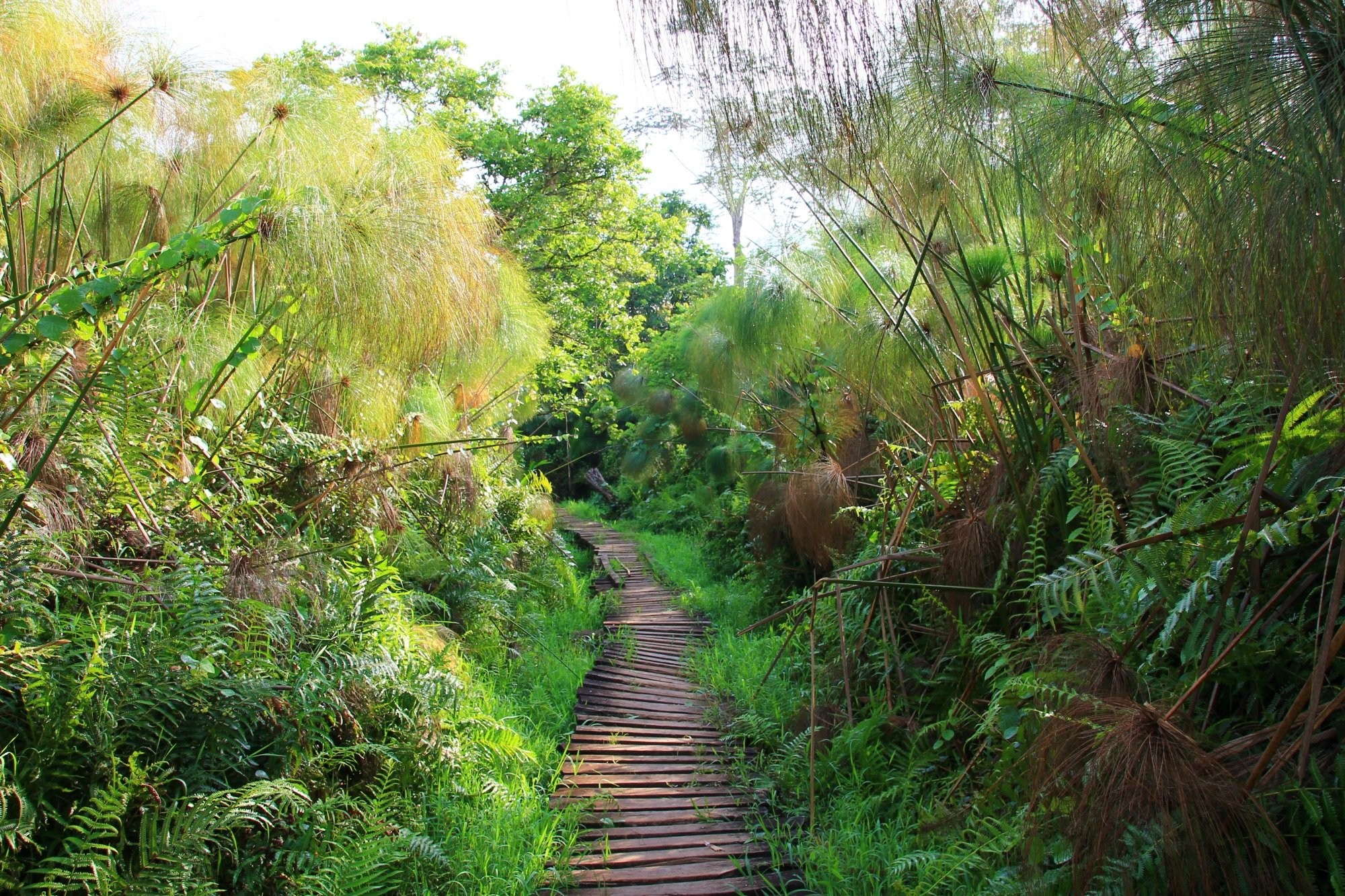
Bigodi Wetland Sanctuary sits about 6 kilometers from Kibale National Park’s Kanyanchu gate, and it’s run entirely by the local community. What makes Bigodi special is that tourism here is closely connected to the local community and its conservation efforts. No government agency manages the trails. No outside NGO collects the fees. The Kibale Association for Rural and Environmental Development (KAFRED), founded by residents of Bigodi trading center in 1992, operates everything: the guides, the trail maintenance, the revenue distribution.
The sanctuary itself covers roughly 4 square kilometers of papyrus swamp fed by the Magombe River. It borders Kibale Forest, creating a remarkable meeting point between wetland and forest ecosystems. Over 200 bird species have been recorded, along with several primate species. A guided nature walk usually takes around 2–3 hours, giving visitors time to explore the wetland, watch birds and look for primates with a local guide.
Things to Do in Bigodi Wetland Sanctuary
Bigodi Wetland Sanctuary is an important habitat for several primate species, particularly along the swamp margins and surrounding forest patches. Eight species inhabit the swamp margins and surrounding forest patches, including red colobus monkeys, L’Hoest’s monkeys, grey-cheeked mangabeys, and olive baboons. The grey-cheeked mangabey is the one most visitors want to see. They’re loud. You’ll hear them before you spot them, crashing through the canopy maybe 15 meters above the trail.
Birding tours in Bigodi are the primary draw for serious naturalists. The Great Blue Turaco, Uganda’s largest turaco at roughly 70 centimeters, is almost guaranteed here. Your guide will point out the call first (a low, rolling coo that carries across the swamp), then track the bird through the canopy. Other reliable sightings include the African pygmy kingfisher, grey-headed kingfisher, white-spotted flufftail, and papyrus gonolek.
The swamp itself holds bushbuck, mongoose, and the occasional sitatunga, though that last one requires patience and luck. Sitatungas are semi-aquatic antelopes that stay deep in the papyrus. Honestly, I think most visitors won’t see one. But the guides know their movement patterns, and early morning walks (starting around 7am) give you the best odds.
Species Group | Notable Species | Likelihood |
|---|---|---|
Primates | Grey-cheeked mangabey, red colobus, L’Hoest’s monkey | High |
Birds | Great Blue Turaco, papyrus gonolek, African pygmy kingfisher | High |
Mammals | Bushbuck, mongoose | Moderate |
Mammals | Sitatunga | Low (early morning only) |
Birding Tours in Bigodi: Why Birders Keep Coming Back
Bigodi Wetland is one of Uganda’s rewarding birding sites, especially for travelers who want to combine birdwatching with a community-based nature experience. A few hours on the trail can reveal a surprising variety of wetland and forest-edge species, particularly when you walk with a knowledgeable local guide.Early morning is particularly rewarding, when the wetland is cooler and bird activity is often at its liveliest.
The best time for birding tours in Bigodi is between June and September, when migratory species overlap with residents and the trails are drier underfoot. November through February brings a second wave of Palearctic migrants. Your guide carries a laminated checklist, and most of them can identify species by call alone.

A few species that make birders rearrange their itineraries: the papyrus canary (restricted range, hard to find elsewhere in Uganda), the white-spotted flufftail (skulking, frustrating, but present), and the yellow-billed barbet. If you’re combining this with Uganda’s national parks, Bigodi adds species you won’t tick anywhere else on a standard safari route.
The wetland’s vegetation layers create distinct microhabitats. Papyrus dominates the waterlogged center. Polita fig trees and wild palms line the edges. And the transition zone between swamp and farmland attracts seed-eaters and raptors. Your guide adjusts the route based on recent sightings.
Community Tourism in Bigodi: Where Your Money Goes
KAFRED’s model is direct. Every shilling from Bigodi Wetland tours stays in the community. No middlemen. No international headquarters taking a percentage. The association publishes how funds are allocated: school bursaries, a community library, clean water infrastructure, and guide salaries.
The guides themselves are all from Bigodi village. They train for months before leading walks, learning bird calls, primate behavior, and medicinal plant identification. When you walk with them, you’re getting local knowledge that no textbook replicates. They know which fig tree the mangabeys visited yesterday. They know where the papyrus gonolek nests this season.
This matters if you’re the kind of traveler who wants to verify impact. You can visit the school. You can see the water project. The transparency is built into the experience, not bolted on as marketing. Amatsiko Tours operates on a similar principle, with 20% of every tour fee funding Amatsiko School in Kabale, supporting over 400 children.
Community tourism in Bigodi has been running for over 30 years. That longevity tells you something. Projects that don’t deliver real benefit to residents don’t survive three decades.
Nature Walks Near Kibale: Combining the Wetland with Forest Treks
Bigodi Wetland Sanctuary works best as a half-day addition to Kibale Forest National Park activities. Most visitors do chimpanzee tracking in Kibale Forest in the morning (starting at 8am from Kanyanchu), then drive the 6 kilometers to Bigodi for an afternoon nature walk. The two experiences complement each other. Kibale gives you closed-canopy forest and chimpanzees. Bigodi gives you open wetland, different primates, and far better birding.
If you’re planning a longer 10-day Uganda itinerary, Bigodi fits naturally into the Kibale segment. Spend one night at a lodge near Fort Portal or Kanyanchu, do the chimp trek and wetland walk on consecutive days, and you’ve covered two of western Uganda’s strongest wildlife experiences without rushing.
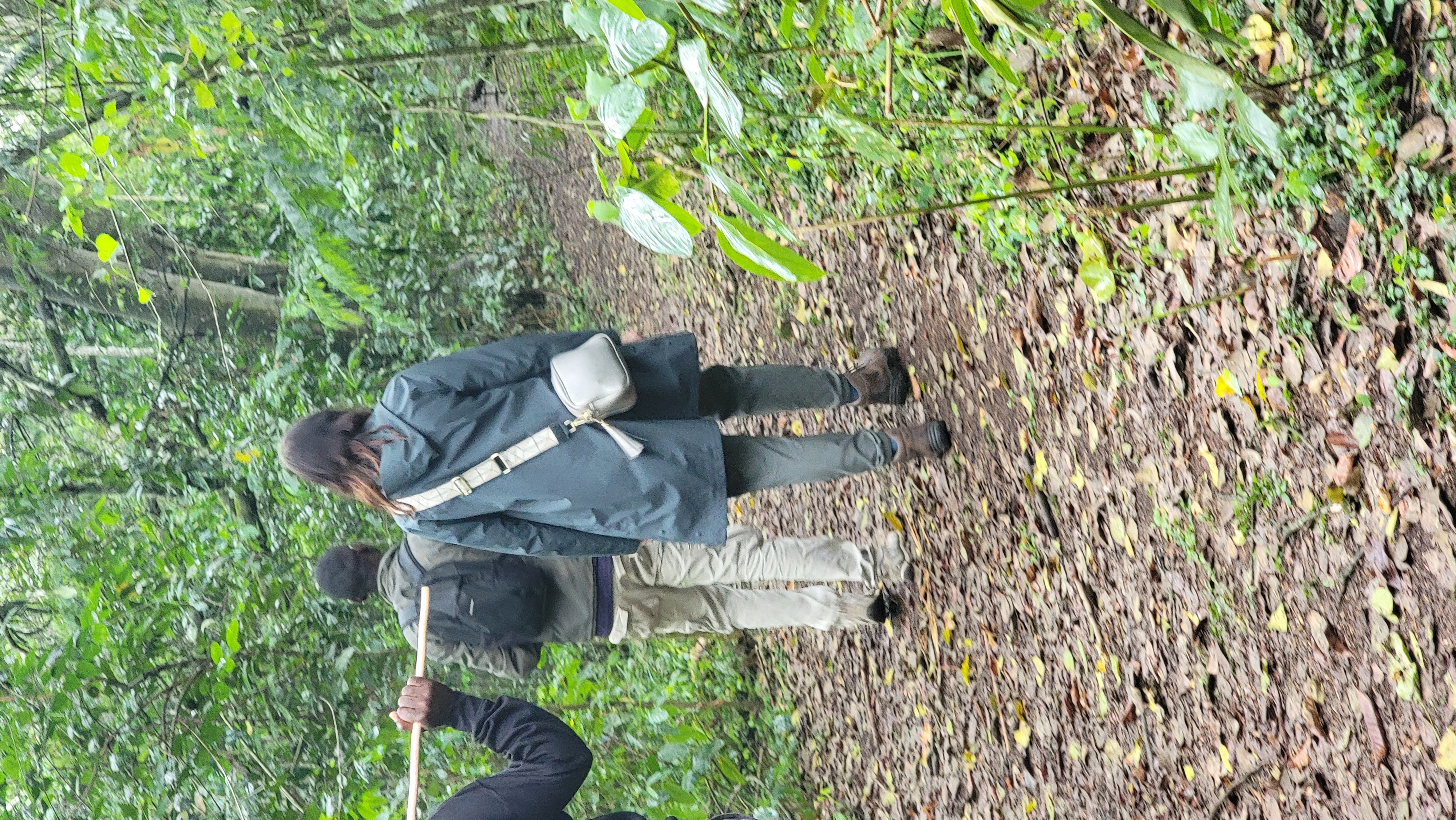
Nature walks near Kibale don’t require the fitness level of gorilla trekking. The Bigodi trail is flat, well-maintained, and suitable for most ages. Rubber boots are available if sections are muddy (common after rain, especially March through May). The pace is slow and deliberate. Your guide stops frequently.
Tips for Visiting Bigodi Wetland Sanctuary
The practical details that shape your experience:
Timing: Start before 8am or after 3pm. Midday heat suppresses bird and primate activity. The best time for guided tours in Bigodi is early morning, when the swamp is coolest and the canopy is active.
Duration: Allow 2.5 to 3.5 hours for the full loop trail. Don’t rush it.
What to bring: Binoculars (essential, not optional), a hat, sunscreen, water, and long pants. The trail passes through tall grass in places.
Footwear: Waterproof hiking boots or the rubber boots available at the trailhead. Sneakers will get soaked between April and November.
Guides: You don’t choose your guide. KAFRED assigns them on rotation to distribute income fairly. All are knowledgeable.
Where to book Bigodi Wetland tours: arrange through your accommodation near Kibale, or through a locally operated tour provider who includes the sanctuary in a broader itinerary. Booking through community-guided tours near Kibale ensures the full fee reaches KAFRED.
What to see in Bigodi Wetland beyond wildlife: the village walk component. Many visitors skip this, which is a mistake. KAFRED offers a separate community walk through Bigodi trading center, where you visit a local healer, a banana beer brewer, and a basket weaver. It takes about an hour. The smell of fermenting banana mash is strong and sweet, and the healer’s garden has over 50 labeled medicinal plants.
Primate Tours in Bigodi: Beyond Chimpanzees
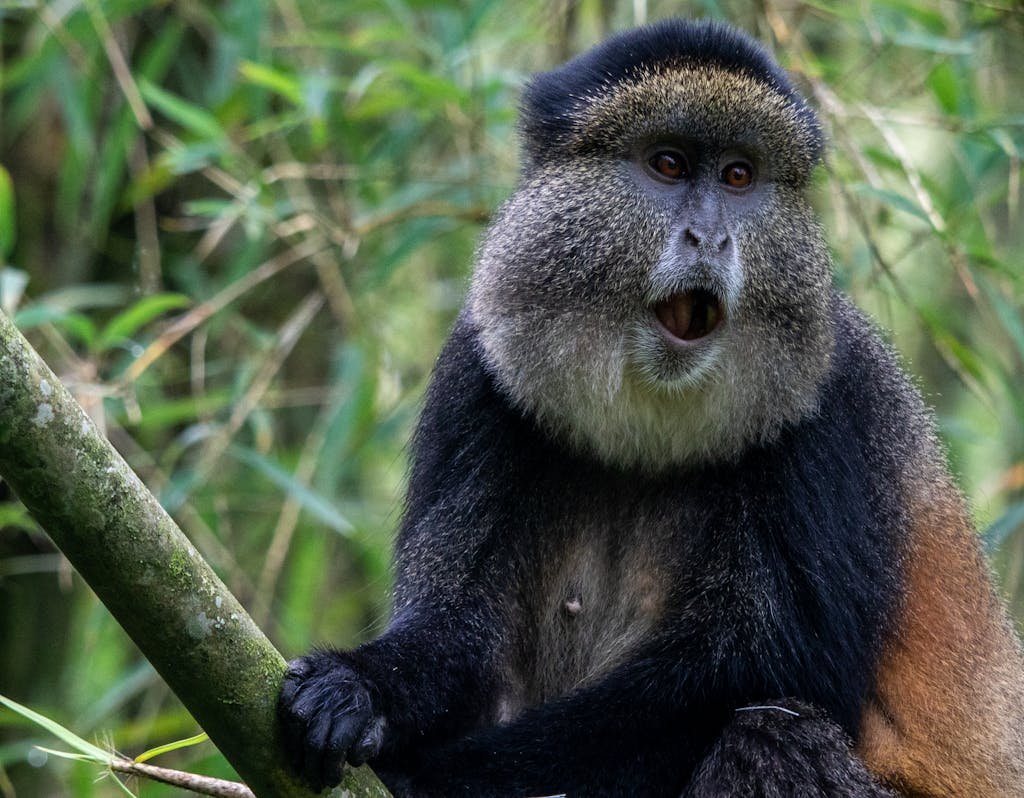
If your Uganda trip centers on primates, Bigodi adds species you won’t see on a standard gorilla or chimp trek. The grey-cheeked mangabey is the headline. These are large, dark-furred monkeys that move in troops of 15 to 30 through the forest canopy bordering the swamp. Their whooping calls carry hundreds of meters.
Red colobus monkeys are the other draw. They’re endangered, and Bigodi’s population is healthy. You’ll spot them in the fig trees along the wetland edge, often in mixed groups with black-and-white colobus. L’Hoest’s monkeys are shyer. They stay lower, often on the ground, and your guide will slow the pace when they’re nearby.
Primate tours in Bigodi pair well with gorilla trekking in Bwindi or chimpanzee tracking in Kibale. Together, these three experiences give you exposure to 12 or more primate species across different habitats. That’s a concentration few countries on earth can offer. Uganda is home to roughly 5,000 wild chimpanzees, with almost 1,500 in Kibale Forest National Park alone.
Uganda Wildlife Authority manages the national parks, but Bigodi operates independently under KAFRED’s community governance. The distinction matters: your Bigodi fee supports the village directly, while park fees support national conservation infrastructure.
Why Visit Bigodi Wetland Sanctuary?
Bigodi Wetland Sanctuary covers 4 square kilometers, supports over 200 bird species and 8 primate species, and has been community-managed since 1992. Guided tours take 2.5 to 3.5 hours. Every fee funds local schools, water projects, and guide salaries through KAFRED. It’s one of the clearest examples of community tourism working at scale in East Africa, and it sits 6 kilometers from one of Uganda’s most important forests.
Frequently Asked Questions
What to see in Bigodi Wetland?
Bigodi Wetland Sanctuary offers a rich biodiversity with over 200 bird species and eight primate species. Visitors can spot the Great Blue Turaco, grey-cheeked mangabey, and red colobus monkeys. The sanctuary’s blend of swamp and forest edges provides a unique wildlife experience.
Where to book Bigodi Wetland tours?
You can book Bigodi Wetland tours through local accommodations near Kibale or a locally operated tour provider. Booking through community-guided tours near Kibale ensures that the full fee supports the local community via KAFRED’s initiatives.
Tips for visiting Bigodi Wetland Sanctuary?
For the best experience, visit early morning or late afternoon to avoid the midday heat, which reduces wildlife activity. Plan for a 2.5 to 3.5-hour trail, and bring essentials like binoculars, water, and suitable footwear. Ensure to book guided tours in Bigodi Wetland Sanctuary for local insights.
What is the best time for guided tours in Bigodi?
The best time for guided tours in Bigodi is early morning when the swamp is coolest and wildlife is most active. Birding tours are particularly rewarding between June and September when migratory and resident species overlap.
What are the benefits of community guided tours near Kibale?
Community-guided tours near Kibale ensure that fees directly support local schools, water projects, and healthcare. Operated by KAFRED, these tours provide genuine local insights and contribute to the community’s sustainable development.
 Powered by TypeHero