Regenerative Tourism Uganda: How Your Safari Can Give Back to Nature and Communities
Travel That Gives Back
Table of Contents
One moment, you are watching a chimpanzee swing through the emerald canopy of Kibale Forest. The next, the call of a bird rises above the trees, red earth warms beneath your boots, and somewhere beyond the forest edge, a family is preparing a meal using ingredients grown nearby.
Then comes the unforgettable moment: standing quietly in Bwindi Impenetrable Forest as a mountain gorilla emerges from the green.
But what if your journey could mean more than beautiful memories?
What if the money you spend, the people you meet, the places you visit and even the choices you make as a traveler could help strengthen the communities and landscapes that make Uganda so extraordinary?
That is where regenerative tourism in Uganda becomes more than an idea, it becomes a way of travelling.
Regenerative tourism goes beyond simply trying to reduce the negative effects of travel. The ambition is to make tourism part of a positive cycle—supporting conservation, local livelihoods, cultural heritage and healthier destinations.
Uganda is already building many of the foundations for this approach. Uganda Tourism Board’s current tourism strategy emphasizes sustainable and inclusive development, while Uganda Wildlife Authority operates revenue-sharing and community-conservation programmes around protected areas. In 2026, Uganda also participated in international discussions specifically focused on sustainable and regenerative tourism.
So let me take you on a five-day journey—not simply to see Uganda, but to understand how your visit can become part of the story of its future.
Regenerative Tourism Uganda: Your Journey at a Glance
- Day 1: Kampala & Entebbe — Begin with people, food and local enterprise
- Day 2: Bwindi — Discover how gorilla tourism can support conservation and communities
- Day 3: Queen Elizabeth — Experience wildlife while understanding life beside the park
- Day 4: Kibale — Walk into the forest and connect conservation with community tourism
- Day 5: Your regenerative safari — Learn how to leave Uganda stronger than you found it
What Is Regenerative Tourism in Uganda?
Imagine two travelers arriving in the same destination.
Both stay in accommodation, eat meals, hire transport and visit wildlife areas.
The first traveler asks only, “What can I see?”
The second asks, “What happens because I came?”
That second question is at the heart of regenerative travel.
Regenerative tourism in Uganda is an approach to travel that seeks to create positive benefits for ecosystems, wildlife, communities and cultural heritage not simply minimize the environmental footprint of a holiday.
It does not mean that every safari suddenly becomes a conservation project. Nor does it mean that travelers need to spend their holiday feeling guilty about their environmental impact.
Quite the opposite.
It means making thoughtful choices that connect your enjoyment with the wellbeing of the places you visit.
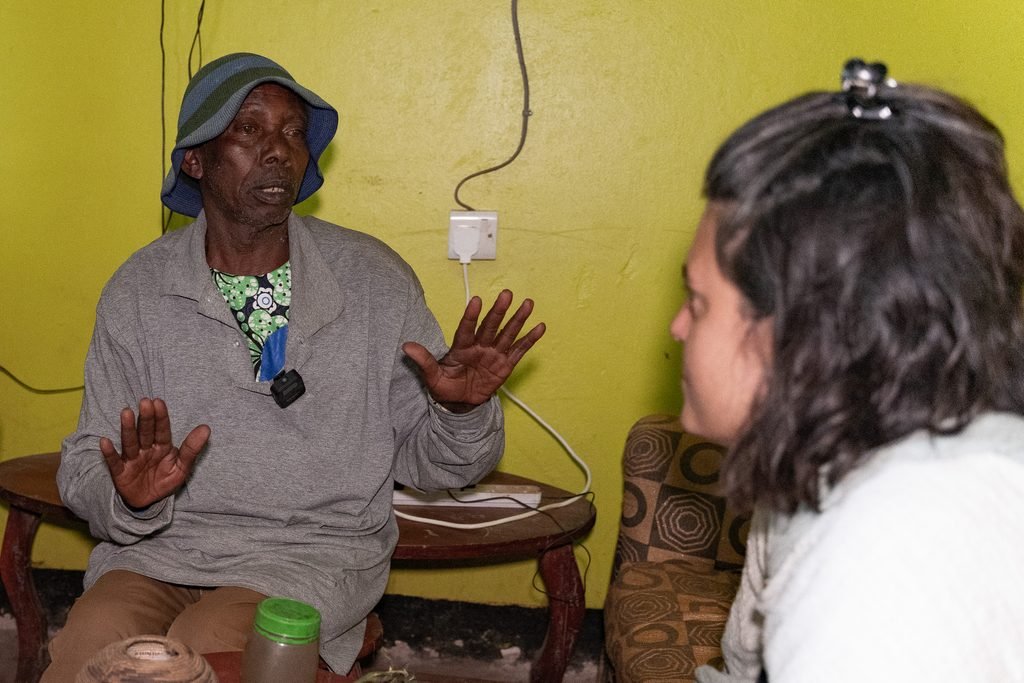
Uganda already has systems that make this possible. Uganda Wildlife Authority says it shares 20% of annual park revenue with communities surrounding national parks and wildlife reserves. At Bwindi, UWA also identifies a US$10 share from each gorilla-tracking permit for community benefits. Revenue-sharing funds can support livelihoods, tree planting, beekeeping, education, health facilities, water infrastructure and measures intended to reduce human-wildlife conflict.
That doesn’t mean every tourist purchase directly funds a village project. It means Uganda has created a mechanism through which tourism revenue can contribute to communities living alongside protected areas.
And that distinction matters.
Ready to experience Uganda beyond the usual safari?
Let us help you build a journey that connects you with wildlife, local communities and the landscapes that make Uganda special. Talk to Amatsiko Tours about your safari →
Day 1: Kampala & Entebbe — Begin With the People
Before heading into Uganda’s famous forests and savannahs, slow down.
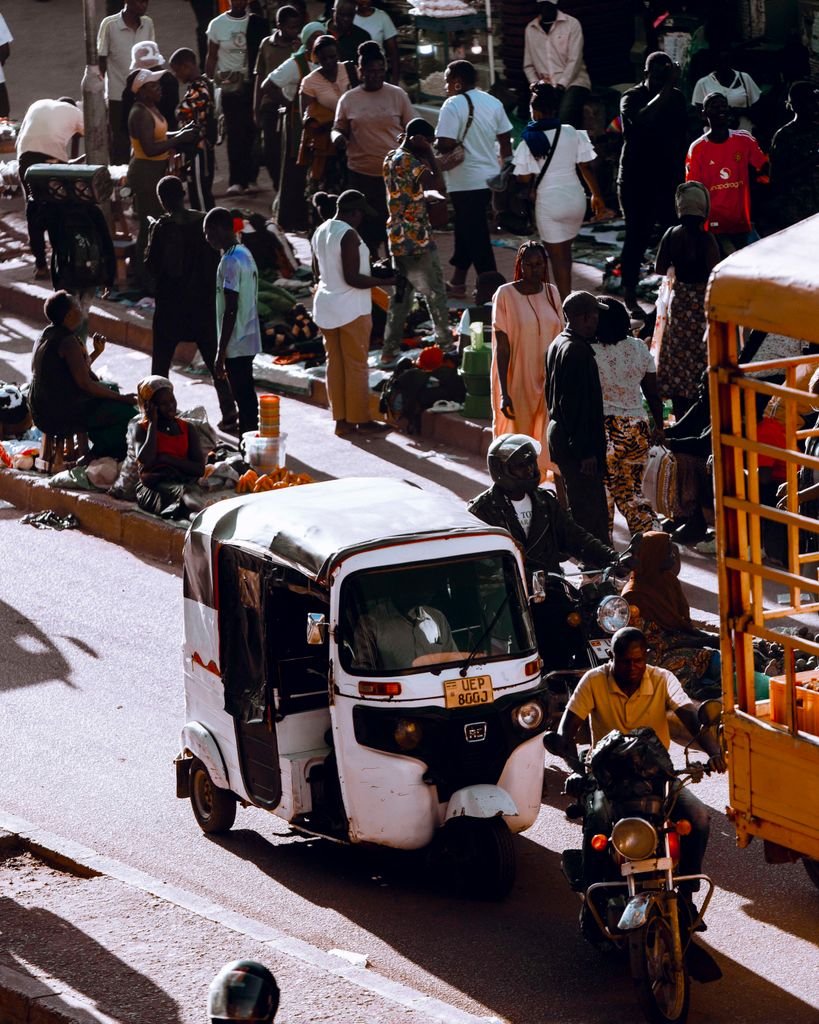
Kampala is not simply a place to pass through on your way to safari country. It is a city of movement, conversation, food, music and entrepreneurship.
Motorcycles weave through the streets. Markets overflow with color. The smell of grilled meat mingles with fresh fruit, coffee and spices. In small workshops, hands turn wood, fabric, beads and other materials into products that carry stories far beyond the souvenir shelf.
This is where your regenerative journey should begin: by recognizing that tourism is an economic relationship.
Choose locally owned restaurants when possible. Buy directly from artisans rather than automatically choosing mass-produced souvenirs. If you hire a guide, driver or cultural host, ask about their experience and whether they are locally based. And when you find something beautiful to take home, learn who made it.
A small purchase can become much more meaningful when you know the person behind it.
Uganda Tourism Board’s 2026 positioning of the country places particular emphasis on sustainable, inclusive and community-led tourism, reflecting a wider shift toward tourism that connects visitors with people, culture and local economic opportunity.
As evening falls over Kampala, perhaps over a plate of matoke, grilled tilapia or another local favorite, you can already begin thinking differently about your safari.
You are not simply buying a holiday.
You are entering a network of people whose work makes that holiday possible.
And tomorrow, that network stretches toward the forest.
Day 2: Bwindi — Where Gorilla Tourism Meets Conservation
The road toward Bwindi changes the rhythm of the journey.
The city disappears. Hills rise and fall across the landscape. The air becomes cooler. Green seems to take over everything.
Then comes the forest.
Bwindi Impenetrable National Park is one of the world’s great places to encounter mountain gorillas, and gorilla tracking is carefully managed to protect both visitors and wildlife. Uganda’s official tracking guidelines identify Bwindi and Mgahinga as the country’s two gorilla destinations and set designated tracking entry points including Buhoma, Ruhija and Nkuringo.
But the regenerative story begins before you even see a gorilla.
It begins with the people living around the forest.
Communities beside protected areas can experience both the benefits and costs of conservation. Wildlife protection creates extraordinary tourism opportunities, but living next to a protected forest also means living alongside restrictions, conservation pressures and the possibility of human-wildlife conflict.
This is why tourism revenue matters.
UWA’s revenue-sharing system is designed to ensure communities around protected areas receive a portion of tourism revenue. In June 2025, UWA reported the disbursement of approximately UGX 2.20 billion in revenue-sharing funds to communities around the Bwindi-Mgahinga Conservation Area. The funds were intended to support local development and strengthen community participation in conservation.
That figure turns an abstract idea into something tangible.
Your gorilla trek is not simply a spectacular morning in the forest. It exists within a much larger conservation economy involving rangers, guides, researchers, hospitality workers, drivers, communities, local authorities and conservation organizations.
And then comes the encounter.
You hear branches moving.
The guide raises a hand.
Everyone becomes still.
A dark shape appears through the vegetation.
For a few seconds, the forest seems completely silent.
The gorilla looks toward you.
There is no performance here. No cage. No stage. Just an animal living in its natural environment, and you standing quietly at the edge of its world.
That is the moment when regenerative travel stops being a theory.
You realize that protecting this forest is not only about protecting an animal. It is about protecting an ecosystem, supporting people who live beside it and ensuring future generations can experience the same wonder.
After the trek, extend that benefit.
Eat locally. Hire local guides where appropriate. Purchase crafts directly from community enterprises. Stay at accommodation with credible local employment and conservation practices.
Your safari becomes richer because your money and curiosity reach beyond the park gate.
Day 3: Queen Elizabeth- Where Wildlife and Communities Share the Landscape
Now travel north toward Queen Elizabeth Conservation Area.
The landscape opens.
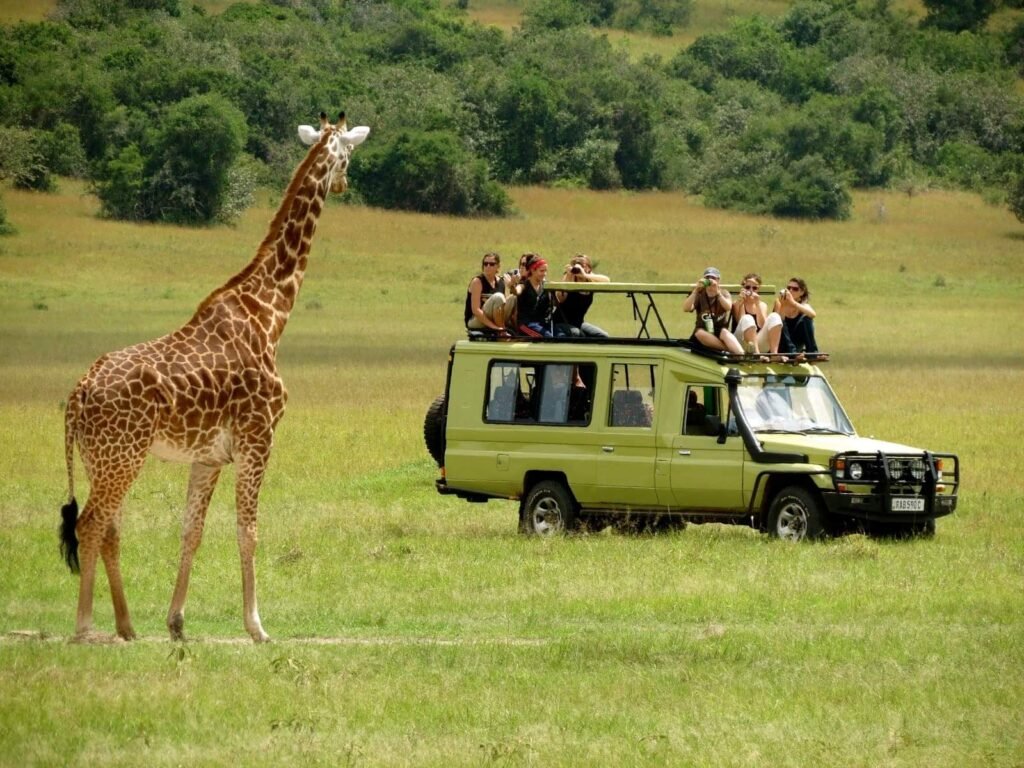
Savannah replaces dense forest. Lakes shimmer beneath the sky. Herds of antelope move across the grassland, and if you are lucky, elephants appear in the distance like enormous gray silhouettes against the horizon.
This is the Uganda of the classic safari dream.
But regenerative tourism asks us to look beyond the animals.
What does it mean to live beside a national park?
For communities bordering protected areas, conservation can bring employment, infrastructure and tourism income. But it can also bring difficult realities, particularly human-wildlife conflict and crop damage.
That is why community participation cannot be treated as a decorative extra on a safari itinerary.
In 2024, UWA reported releasing approximately UGX 1.54 billion in revenue-sharing funds to districts neighbouring the Queen Elizabeth Conservation Area. The authority said the funds were intended for community development projects including education, healthcare and infrastructure, while also supporting stronger cooperation around conservation.
More recently, UWA reported that in the 2024/25 financial year it distributed more than UGX 10.2 billion in revenue-sharing funds to districts surrounding several protected areas, including Murchison Falls, Queen Elizabeth, Kibale, Mgahinga and Bwindi.
Numbers like these help explain why community conservation matters.
But don’t spend your afternoon thinking about statistics.
Go outside.
Meet a community guide.
Listen to stories about the landscape.
Try local food.
Walk a community trail where appropriate.
Learn about traditional knowledge and the relationship people have with land and wildlife.
The experience becomes different when you stop seeing local residents simply as people who happen to live near a tourist attraction.
They become part of the destination itself.
And perhaps that is one of the most important principles of regenerative travel in Uganda: the destination isn’t only the national park.
The destination is the whole living landscape.
Day 4: Kibale — Into the Forest
Kibale brings another transformation.
The forest feels almost alive around you.
Leaves tremble overhead. Insects hum in the vegetation. Somewhere above, a chimpanzee calls, and another answers from deeper in the forest.
Kibale is famous for its primates, particularly chimpanzees, but the experience becomes even more meaningful when you understand that forests like this are valuable far beyond the animals visitors come to see.
They store carbon, support biodiversity, protect ecological processes and sustain communities around them.
This is where a regenerative safari can become slower.
Instead of rushing from one photographic opportunity to another, spend time with a knowledgeable local guide. Ask questions. Learn about plants. Notice the smaller things.
A forest walk can teach you that conservation isn’t only about charismatic animals.
Sometimes it is about the tree you almost walked past.
Sometimes it is about the bird you didn’t recognize.
Sometimes it is about the community member whose livelihood is connected to visitors choosing to stay another night.
Research into community-based tourism around Kibale and Queen Elizabeth has highlighted the potential contribution of community participation to biodiversity conservation, cultural heritage and local welfare, while also identifying challenges such as skills, infrastructure, product development and competition. That last point is important: community tourism needs genuine economic opportunity, not simply good intentions.
So when you choose a community experience, look for authenticity rather than a staged encounter.
Pay fairly.
Ask permission before taking photographs of people.
Listen more than you speak.
And remember that cultural knowledge is not a free souvenir.
If someone shares their story, skill or tradition with you, treat that exchange with respect.
By the end of the day, your understanding of Uganda should feel wider.
You came for chimpanzees.
You discovered a forest.
You came for a forest.
You discovered the people connected to it.
Day 5: How to Make Your Uganda Safari More Regenerative
On the final morning, imagine packing your bags.
Your camera is full.
Your shoes are dusty.
Your clothes smell faintly of the road, campfire and forest.
You have seen gorillas, chimpanzees, elephants or perhaps none of the animals you dreamed about.
But you have also met people.
And that is where the real question begins:
What will your visit leave behind?
A regenerative safari does not require perfection. It requires intention.
Choose local value
Whenever practical, use locally owned restaurants, guides, accommodation providers, craftspeople and community tourism businesses.
The more of your travel spending that remains within the destination, the greater its potential contribution to local livelihoods.
Stay longer and travel slower
A rushed itinerary can turn Uganda into a collection of photographs.
Staying longer gives you more opportunities to use local services, explore communities, hire guides and build meaningful relationships.
Respect wildlife rules
Keep your distance. Follow your guide. Never feed wildlife. Never encourage a guide or driver to break park rules for a photograph.
The perfect wildlife encounter is never worth stressing an animal.
Reduce waste
Carry a reusable water bottle where practical and refill it at safe, trusted stations. Avoid unnecessary single-use plastics. Keep every piece of waste with you until you can dispose of it properly.
The forest doesn’t need another souvenir from your lunch.
Ask where your money goes
This may be the most powerful question of all.
When choosing a lodge, tour operator or experience, ask:
Who owns it? Who works there? What does it contribute locally? What conservation or community initiatives does it support?
Good tourism businesses should be able to explain their impact clearly.
Travel Kindly: How to Leave a Positive Footprint in Uganda
1. Put local people at the centre of your spending.
Buy directly from artisans and community enterprises when possible, eat local food and use qualified local guides.
2. Don’t treat culture as entertainment.
Ask permission before photographing people, respect religious and cultural practices, and approach community visits as exchanges rather than performances.
3. Follow wildlife regulations without exception.
The animals are residents, not attractions created for tourists.
4. Choose businesses that can demonstrate their impact.
Look beyond words such as “eco” and “green.” Ask practical questions about local employment, ownership, waste, energy, conservation and community partnerships.
5. Give yourself time.
A slower Uganda safari can create more opportunities for local businesses and communities—and often gives you the richer travel experience too.
Why Regenerative Tourism Could Matter for Uganda’s Future
Uganda does not need to invent tourism from scratch.
It already has extraordinary wildlife, forests, wetlands, cultural traditions, community enterprises and conservation landscapes.
The opportunity is to connect these strengths more deliberately.
Uganda Wildlife Authority’s community-conservation model recognizes communities as important stakeholders in wildlife protection and encourages visitors to experience local culture and contribute to community businesses and causes.
Uganda Tourism Board is also positioning the country around sustainable, inclusive and community-led tourism, while its participation in the 2026 IMPACT Sustainability Travel & Tourism Summit placed Uganda within a global conversation about moving from traditional sustainability toward regenerative approaches.
That makes this an exciting moment for travelers.
Regenerative tourism Uganda is not a promise that tourism automatically fixes every problem.
It is an invitation to travel differently.
To ask better questions.
To spend more thoughtfully.
To stay curious.
And to recognize that conservation works best when people living alongside nature can also see a future in protecting it.
Frequently Asked Questions About Regenerative Tourism in Uganda
What is regenerative tourism in Uganda?
Regenerative tourism in Uganda is an approach to travel that aims to create positive benefits for nature, wildlife, communities and cultural heritage. It goes beyond reducing tourism’s negative impacts by looking at how visitor spending and experiences can contribute to conservation, livelihoods and destination resilience.
Is regenerative tourism the same as sustainable tourism?
Not exactly. Sustainable tourism generally focuses on reducing environmental, cultural and social harm and ensuring tourism can continue over the long term. Regenerative tourism goes a step further by asking how tourism can actively contribute to restoring or strengthening the places and communities it depends on.
How can a safari support communities in Uganda?
Uganda Wildlife Authority operates a revenue-sharing programme through which 20% of annual park revenue is shared with communities surrounding national parks and wildlife reserves. At Bwindi, UWA also identifies a US$10 share from each gorilla-tracking permit. Funds can support livelihood and community projects.
How can I make my Uganda safari more responsible?
Choose local businesses where possible, use qualified guides, respect wildlife regulations, reduce waste, avoid exploitative cultural experiences and ask tourism providers about local employment and conservation contributions.
Where can I experience regenerative tourism in Uganda?
There is no single “regenerative tourism park.” Instead, look for experiences and businesses that connect tourism with conservation and community benefit. Bwindi, Queen Elizabeth and Kibale provide particularly strong examples of the relationship between wildlife, protected landscapes and surrounding communities.
Useful Information Box
Best time to visit:
Uganda can be visited throughout the year, but the drier periods are generally popular for wildlife viewing and trekking. Conditions vary by region, so check current park and operator information before booking.
Suggested duration:
For the journey described here, allow approximately 5 days, although a meaningful Uganda safari is better experienced over a longer period if your schedule allows.
Starting point:
Kampala or Entebbe, depending on your international arrival and itinerary.
Gorilla trekking:
Gorilla tracking takes place in Bwindi Impenetrable National Park and Mgahinga Gorilla National Park. Use official Uganda Wildlife Authority information when checking current rules, designated entry points and permit requirements.
Official tourism information:
Uganda Tourism Board
Wildlife and conservation information:
Uganda Wildlife Authority
Community revenue sharing:
UWA Revenue Sharing Programme
Useful planning principle:
Before booking, ask operators specifically about local ownership, local employment, conservation partnerships, community benefits, waste management and how they measure their impact.
Final Thoughts: Travel That Leaves Something Behind
Uganda has a way of staying with you.
Perhaps it is the deep green of Bwindi.
Perhaps it is a chimpanzee calling from the forest canopy.
Perhaps it is an elephant crossing the savannah at sunset.
Or perhaps, weeks after returning home, you remember the person who welcomed you, the guide who explained the forest, the meal cooked with local ingredients or the community story that changed the way you understood conservation.
That is the deeper promise of regenerative tourism in Uganda.
Not simply that you see something beautiful.
But that your presence becomes part of something positive.
Your safari can support conservation.
Your meals can support local producers.
Your guide can earn a livelihood.
Your accommodation can create local employment.
Your curiosity can help keep cultural knowledge alive.
And your choices can help make tourism a stronger force for the landscapes and communities that welcome you.
Because perhaps the best souvenir from Uganda isn’t something you put in your suitcase.
It is knowing that, in some small way, your journey helped protect the place you came to love.
When you visit Uganda, don’t only ask what the country can give you.
Ask what your journey can give back.
And that is where the real adventure begins.