Gorilla Around Bushes on an African Safari

Discover Mountain Gorillas with Gorilla Trekking Uganda: A Once-in-a-Lifetime Adventure

Deep within the emerald folds of southwestern Uganda, where mist clings to ancient trees and the forest breathes with life, lies one of the most powerful wildlife encounters on Earth. Bwindi Impenetrable Forest, thick with vines, moss, and centuries-old roots, is home to one of our planet’s rarest and most moving treasures: the mountain gorillas. Gorilla trekking Uganda is an adventure that awaits here.

Embarking on gorilla trekking Uganda allows you to connect with these magnificent creatures in their natural habitat, an experience that is both exhilarating and humbling.

Coming face to face with these gentle giants during gorilla trekking in Uganda is not just a travel experience — it’s a moment that reshapes how you see nature, wildlife, and even yourself. The air feels heavier here, the silence deeper, broken only by birdsong and the rustle of leaves as gorillas move quietly through the undergrowth.

Ultimately, gorilla trekking Uganda not only offers adventure but also a chance to contribute to the conservation of these incredible animals.

This experience of gorilla trekking Uganda is not just a travel experience — it’s a moment that reshapes how you see nature, wildlife, and even yourself.

Whether you’re a first-time visitor to Africa, a wildlife enthusiast, or an adventurous traveler seeking a once-in-a-lifetime journey, trekking mountain gorillas in Bwindi is one of those rare experiences that stays with you long after you’ve left the forest. And when done responsibly, it also plays a vital role in protecting these magnificent animals and supporting the local communities who live alongside them.

The Enchanting Bwindi Impenetrable Forest

Located in southwestern Uganda, Bwindi Impenetrable National Park is a UNESCO World Heritage Site. This primeval forest stretches across more than 320 square kilometres of rugged terrain. Its name is no exaggeration—“impenetrable” aptly describes the dense layers of vines, ferns, and towering trees that form this lush, tropical rainforest. But as challenging as it is to navigate, Bwindi’s beauty and biodiversity make it a treasure trove for nature enthusiasts.

Home to over 400 species of plants, 120 mammals, and over 350 species of birds, Bwindi is most famous for its resident population of mountain gorillas. In fact, nearly half of the world’s remaining mountain gorillas—around 459 individuals—call this forest home.

Meet the Gorilla Families

Nestled in the rolling hills of southwestern Uganda, Bwindi Impenetrable Forest is a UNESCO World Heritage Site and one of Africa’s most extraordinary wildlife destinations. Spanning over 320 square kilometres of rugged terrain, the forest lives up to its name: dense, mysterious, and breathtakingly alive. Thick layers of vines drape from towering trees, sunlight filters through a canopy of emerald leaves, and the air carries the earthy scent of moss and wet soil — a perfume unique to primeval forests.

Bwindi is a paradise for wildlife lovers. It shelters more than 400 plant species, over 120 mammals, and upwards of 350 birds, making every step a potential encounter with the unexpected. Its most famous residents, the mountain gorillas, are the forest’s true jewels — nearly half of the world’s remaining population, around 459 individuals, call this rainforest home.

For those planning gorilla trekking in Uganda, Bwindi offers not just a hike, but an immersive journey into one of the planet’s last untouched ecosystems. Local guides and trackers, many of whom have grown up among these forests, provide insights into the forest’s delicate balance and its vital conservation efforts. By visiting responsibly, travelers directly contribute to protecting the gorillas and the communities that depend on the forest.

Gorilla Trekking Uganda: A Journey into the Wild

Gorilla trekking Uganda

Your adventure begins early in the morning at one of the park’s trekking headquarters. After a briefing on safety and gorilla trekking etiquette, you’ll be assigned a guide and a gorilla family to visit. Each group of trekkers is small, ensuring a more personal experience and reducing the impact on the gorillas’ environment.

The trek itself is as much a part of the adventure as the gorillas. With every step deeper into the forest, you’ll feel the pulse of the wild. The path is rarely easy—it can be steep, muddy, and at times, you’ll find yourself ducking under branches, navigating through tangles of vines, and scrambling over rocks. Depending on where the gorillas are that day, your trek might take anywhere from 1 to 6 hours. The gorilla families are always on the move, so your guide will be in constant contact with trackers to lead you in the right direction.

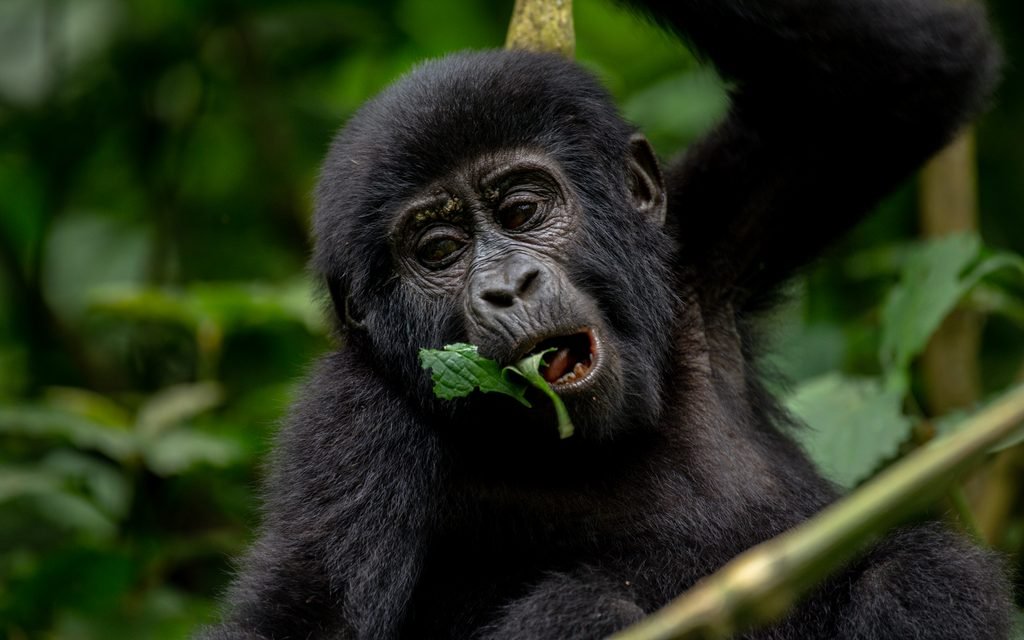
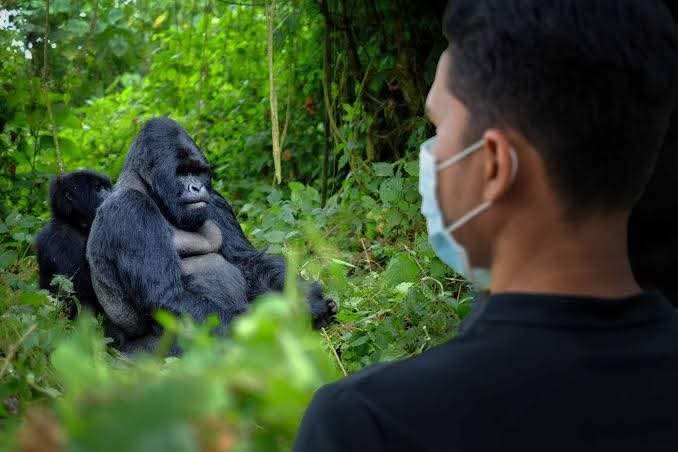
But the moment you catch your first glimpse of a mountain gorilla, the challenges of the trek fade away. As you approach, the atmosphere shifts—there’s a sense of reverence and excitement in the air. When you finally stand just metres away from these incredible animals, you’ll be struck by their sheer size and strength, but also by their gentleness and the deep, almost human emotions reflected in their eyes.

A Precious Hour in the Presence of Giants

Bwindi Mountain Gorilla thinking

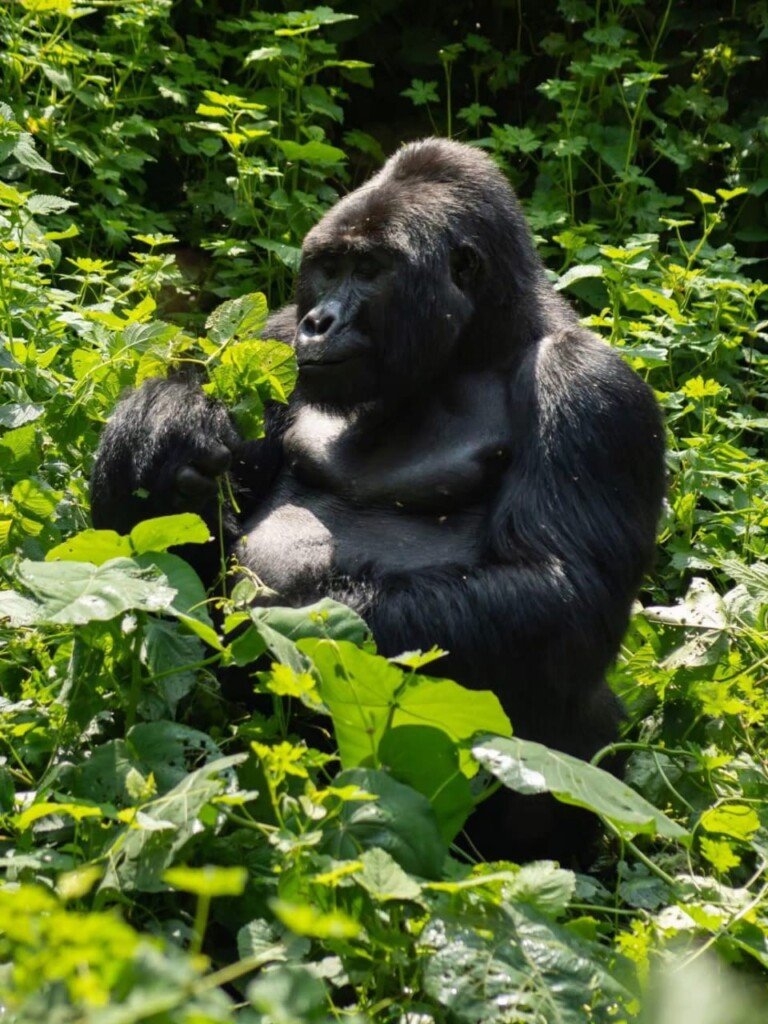
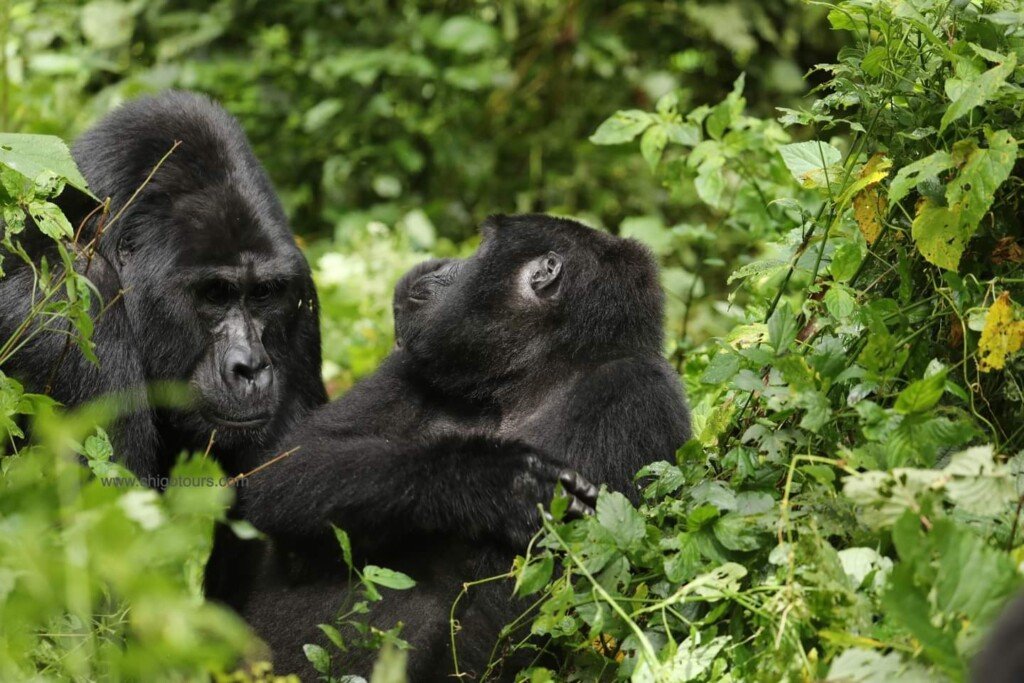
In Bwindi, mountain gorillas live in tight-knit social groups known as families, each led by a dominant silverback. These silverbacks, with their striking grey backs and commanding presence, are the guardians of their family, deciding when to move, rest, or forage. Observing them is like peering into a parallel world, where relationships, emotions, and hierarchy are all expressed with subtle gestures and soulful eyes.

Bwindi currently hosts over 20 habituated gorilla families, spread across four sectors: Buhoma, Ruhija, Rushaga, and Nkuringo. Each family has its own character: some are playful and mischievous, with youngsters tumbling over roots and vines; others are calm and contemplative, with older gorillas quietly watching over the forest. As you trek through the dense undergrowth, you may catch a young gorilla practicing chest-beating, or witness the tender bond of a mother cradling her infant, completely unaware of your presence just meters away.

The guides, many of whom have spent their entire lives alongside these gorillas, bring each encounter to life. They share fascinating insights: how families communicate through grunts, how the silverback maintains harmony, and how conservation efforts — like anti-poaching patrols and community education — have helped increase the gorilla population over the past decades. Trekking with a guide isn’t just about spotting wildlife; it’s about understanding and respecting the intricate social world of one of Earth’s closest relatives.

gorilla trekking Uganda

The Conservation Success Story

Gorilla trekking in Uganda is more than an unforgettable adventure — it’s a vital part of mountain gorilla conservation. A portion of your trekking permit fee goes directly toward protecting gorillas and their habitats, funding anti-poaching patrols, and supporting community-led initiatives that provide sustainable livelihoods for locals.

Thanks to decades of careful conservation, the population of mountain gorillas has steadily increased, offering hope for their survival. Trekking with responsible operators ensures that your visit contributes positively: you are helping the forest, the gorillas, and the local communities thrive. Every trek is a small but meaningful step in safeguarding one of Earth’s most extraordinary species.

What to Expect and How to Prepare

Trekking to see mountain gorillas in Bwindi Impenetrable Forest is a physically demanding adventure, but it’s incredibly rewarding for travelers of all levels of experience. The terrain is often steep, muddy, and uneven, with dense undergrowth and hidden roots. Each step immerses you deeper into the forest’s pulse, where the smells of damp earth, moss, and fresh rain mingle with the distant calls of birds and monkeys.

Here’s how to prepare for the journey:

Book in Advance
Gorilla trekking permits are limited and often sell out months in advance, especially in peak season (June–September and December–February). Early booking ensures the best experience.

Gear Up Smartly

Sturdy hiking boots and long trousers are essential to navigate slippery trails.

A rain jacket or lightweight poncho protects you from sudden tropical downpours.

Many trekkers bring a walking stick (porters often provide one) to aid balance.

A small backpack with water, snacks, camera, and insect repellent is ideal.

Hire a Porter
Not only does a porter carry your gear, but hiring one supports local communities and creates a safer, more comfortable trekking experience.

Fitness & Timing
A moderate level of fitness is recommended. Treks can last anywhere from 1 to 6 hours depending on gorilla movement. Start early in the morning to enjoy cooler temperatures and better wildlife activity.

Health & Safety

Avoid visiting if you are unwell, as gorillas are highly susceptible to human-borne diseases.

Follow all guidelines from your guide: maintain distance, avoid flash photography, and respect the forest.

A Memory That Will Last a Lifetime

Travel Kindly: How to Leave a Positive Footprint

Experiencing mountain gorillas in Bwindi is transformative. But the journey is not just about witnessing wildlife — it’s about respecting the forest, the animals, and the communities that protect them. Here’s how to make your visit truly meaningful:

  1. Support Local Communities – Hire local guides and porters, purchase crafts from village markets, and stay in community-run lodges. Your spending helps create sustainable livelihoods.
  2. Respect the Gorillas – Always maintain distance, avoid touching or feeding, and follow your guide’s instructions. Human illness can be deadly to gorillas.
  3. Minimize Waste – Bring reusable water bottles and avoid single-use plastics. Leave no trace on trails.
  4. Follow Trail Etiquette – Stay on marked paths, keep noise low, and tread lightly to preserve the forest ecosystem.
  5. Learn & Share – Educate yourself on gorilla behavior and conservation efforts, and inspire others to travel responsibly.

Final Wrap-Up & Invitation

Visiting Bwindi’s mountain gorillas is more than a bucket-list adventure; it’s a profound connection to nature. As you watch a silverback gaze serenely across the forest or a mother cradle her infant, you’ll feel the deep rhythm of the wild and the impact of conservation efforts.

This journey reminds us why we travel: to connect, to learn, and to leave the world a little better than we found it. When you go, remember that your choices matter — and that every step you take can help preserve this extraordinary forest and its incredible inhabitants.

If you visit, I’d love to hear your story and see how these gentle giants touched your heart. 🌿💚

Useful Info Box: Gorilla Trekking in Bwindi

  • Best Time to Visit: June–September, December–February
  • How to Get There: Flights from Entebbe to Kihihi or Kisoro; transfer to trekking sectors (Buhoma, Ruhija, Rushaga, Nkuringo)
  • Approximate Trek Duration: 1–6 hours depending on gorilla movement
  • Recommended Local Guides & Operators:

5 FAQs: Gorilla Trekking Uganda

1. How fit do I need to be for gorilla trekking in Bwindi?
Moderate fitness is recommended. Treks range from 1 to 6 hours over uneven terrain. Porters are available to assist.

2. Can I trek year-round?
Yes, but the dry seasons (June–September, December–February) offer easier hiking conditions and more reliable sightings.

3. How close can I get to the gorillas?
You must stay at least 7 meters away, following your guide’s instructions, to protect both gorillas and visitors.

4. Are children allowed?
Children over 15 are generally allowed. Always check with local authorities for sector-specific rules.

5. How can I make my visit sustainable?
Hire local guides and porters, use reusable water bottles, follow all park rules, and support community-led accommodations and initiatives.

Read more

2 Comments

  1. This is such a beautifully written and engaging article about gorilla trekking in Uganda! It captures the magic of the experience while providing insightful details about the conservation efforts that make it possible. Bwindi Impenetrable Forest truly is a gem, and the description here paints such a vivid picture of the adventure.
    I especially appreciate how the article emphasizes the significance of conservation and community involvement. It’s heartwarming to know that gorilla trekking not only offers a once-in-a-lifetime encounter but also contributes directly to protecting these majestic creatures and their habitat.

    Keep up the great work, Amatsiko Tours! Sharing stories like these inspires travelers to explore responsibly and connect with nature in meaningful ways. Looking forward to reading more from your blog!

Leave a Reply

Your email address will not be published. Required fields are marked *