Gorilla and Chimpanzee Trekking Safaris: Your Complete Uganda Planning Guide 2026/2027
At a Glance
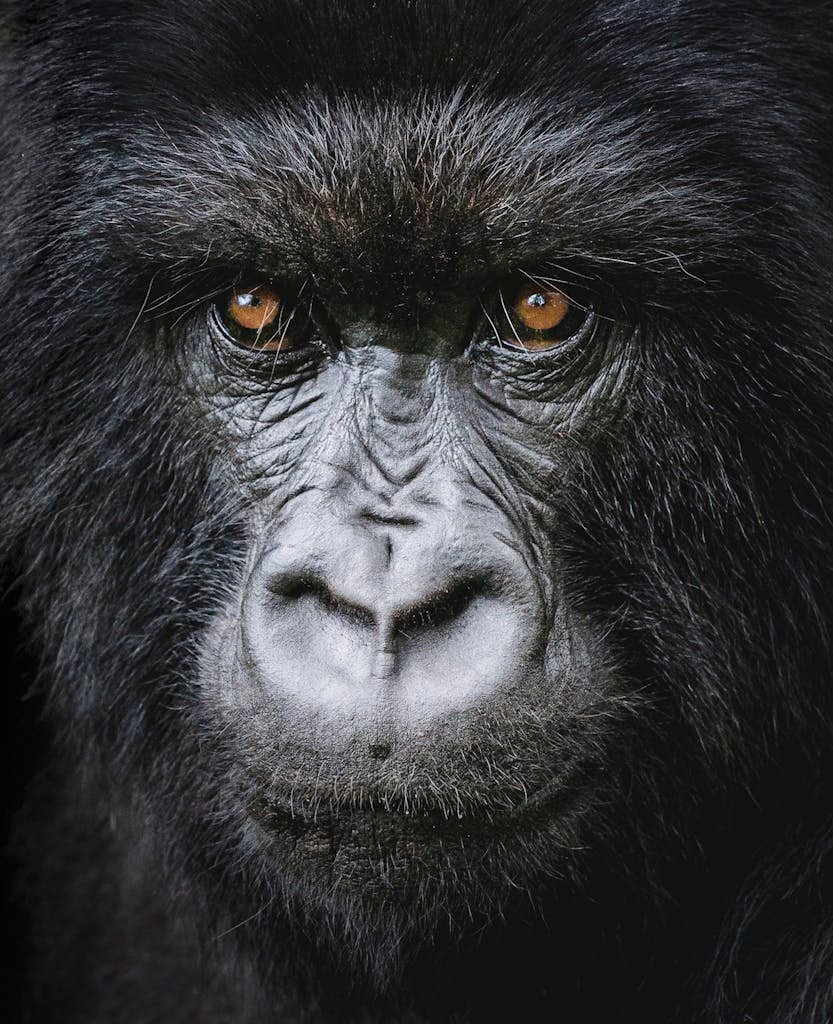
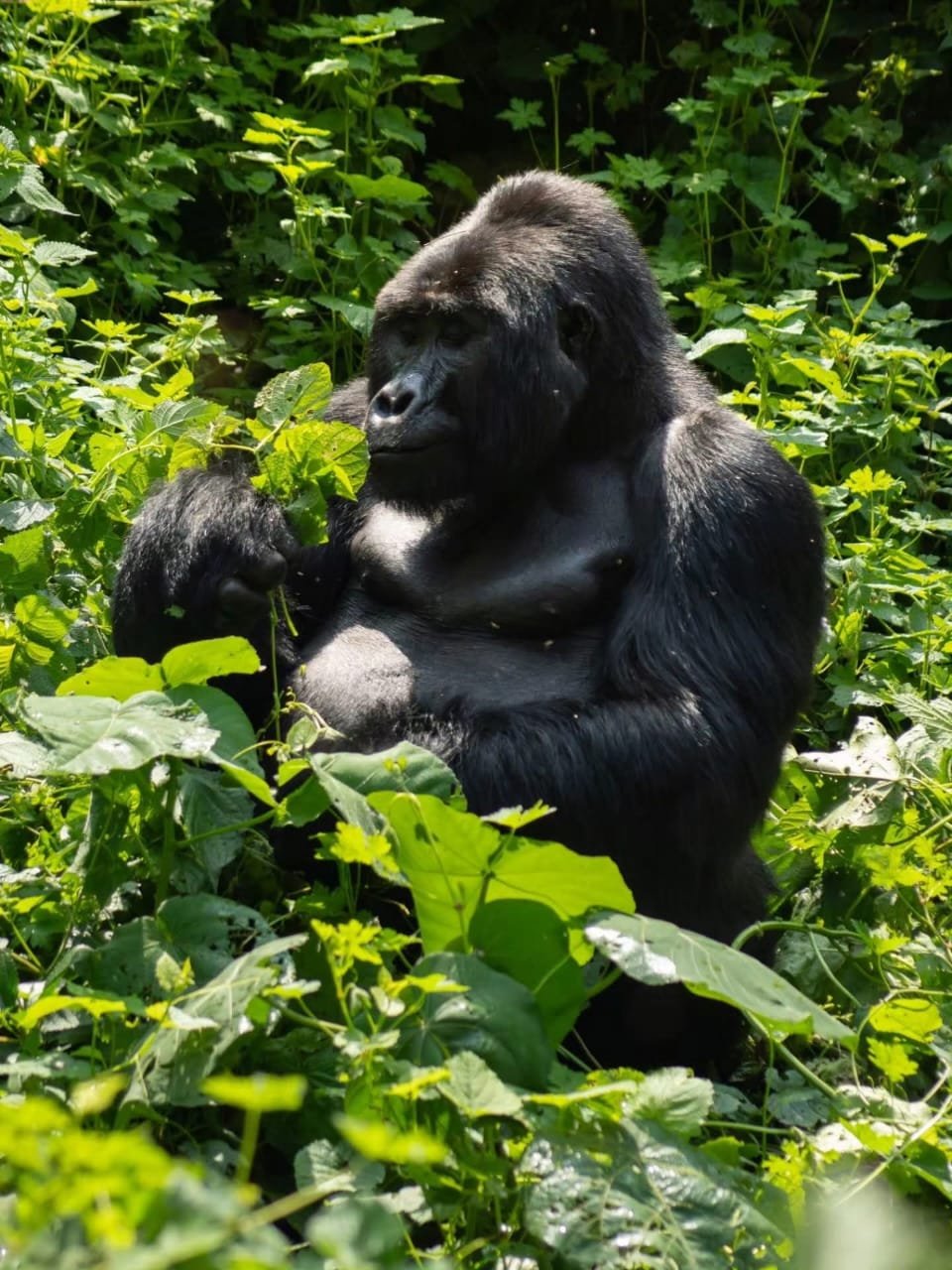
Uganda is home to half of the world’s mountain gorillas and 1,500 chimps in Kibale Forest.
Table of Contents
Gorilla trekking permits cost $800, while chimpanzee permits are $200.
Bwindi and Mgahinga National Parks are key gorilla trekking sites.
Trekking involves early starts, muddy terrain, and brief gorilla encounters.
Safari tours support local education, directly benefiting Amatsiko School.
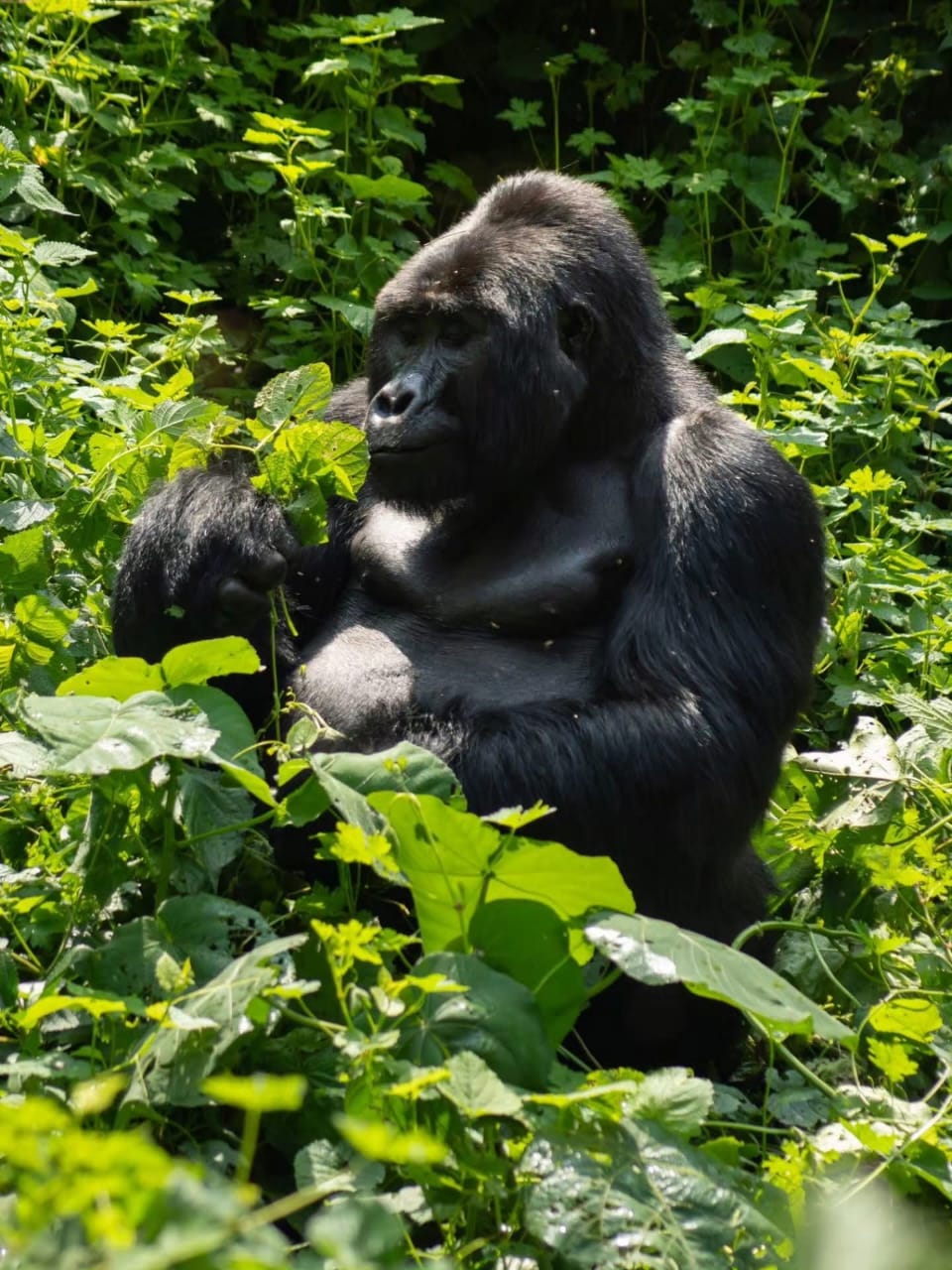
Bwindi Impenetrable National Park sits above 6,600 feet, and the morning air there bites your skin before the forest canopy swallows the sound of everything except your own breathing. Gorilla and chimpanzee trekking safaris in Uganda put you inside that forest, face to face with primates you’ve only seen on screens, in a country compact enough to cover four national parks in a single 10-day trip. Uganda holds roughly half the world’s remaining mountain gorillas. And the chimpanzee populations in Kibale Forest National Park number over 1,500 individuals across 795 square kilometers. These aren’t abstract numbers. They’re the reason you’ll wake up at 5:30am, pull on muddy boots, and walk into terrain that hasn’t changed much in a few thousand years.
We run gorilla and chimpanzee tours across Uganda’s key primate regions, and 20% of every booking fee goes directly to Amatsiko School in Kabale, which educates over 400 children. You can verify that independently. That matters if you’re the kind of traveler who wants to trace where your money actually lands.
Gorilla Trekking Uganda: What Happens on the Ground
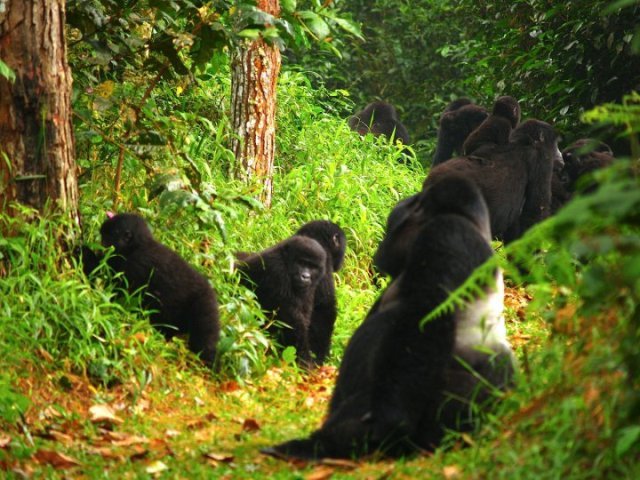
Gorilla trekking in Uganda takes place in two parks: Bwindi Impenetrable National Park and Mgahinga Gorilla National Park. Bwindi hosts the majority of permits because its gorilla families are more reliably located. Only 72 trekkers enter Bwindi on any given day, split into groups of 8, each assigned to a specific habituated gorilla family.
You arrive at the briefing point by 7:30am. Rangers assign your group based on fitness level and gorilla family location. Some treks take 45 minutes. Others push past 4 hours through steep, wet terrain.
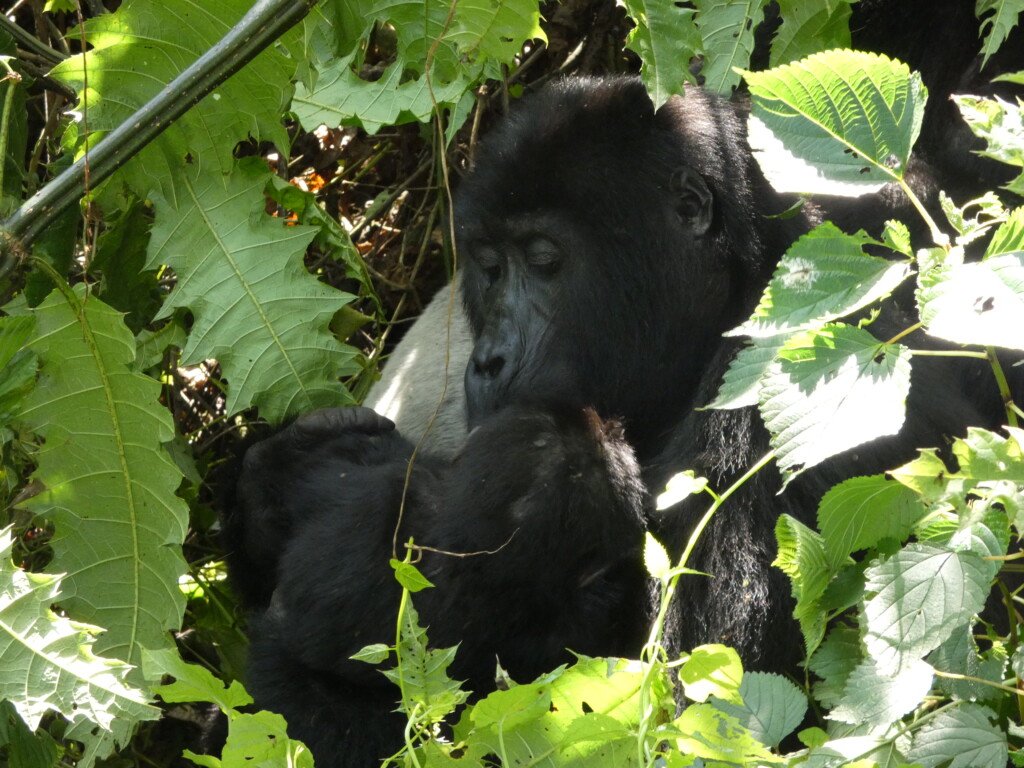
Once you reach the gorillas, you get 40 minutes to one hour. No flash photography. Keep your voice low. The silverback will probably glance at you and go back to eating bamboo shoots, which is (honestly) more moving than any dramatic encounter you might imagine.
The standard gorilla trekking permit costs $800 per person through the Uganda Wildlife Authority. A gorilla habituation experience, where you spend a full day with researchers training wild gorillas to accept human presence, runs $1,500. Only 4 people are allowed per habituation session.
If you’re booking through a safari operator like us, the permit fee is typically included in your full tour package with no additional service charge.
Client Impact & Real-World Validation
Unforgettable Primate Safari
“Amatsiko Tours is owned and operated by Alex and Alphonse, who have dedicated their working lives to helping the most vulnerable in their communities. Alex curated a two weeks itinerary for us that provided the most amazing and memorable experiences: visiting remote communities and schools, welcomed by so many people in out of the way places, gaining insights into community life and culture, walking with rhinos, giraffes and zebras, and of course gorilla and chimpanzee trekking.”
— lorrainebL9532PA, Verified TripAdvisor review, 5.0
Exceptional Journey Through Uganda
“Alex took great care of us and had developed an incredible itinerary which covered all aspects of Uganda… gorillas, chimps, wildlife, fabulous accommodation and visits with Communities to learn about the cultural history. I thoroughly recommend Amatsiko Tours to anyone wishing to experience Uganda.”
— marilynj479, Verified TripAdvisor review, 5.0
Transformative Experience with Amatsiko
“If you’re considering a trip to Uganda, stop searching. Amatsiko Tours is in a class entirely of its own. From the moment we arrived, everything was handled with a level of care and professionalism that made the entire experience effortless.”
— 565carolyno, Verified TripAdvisor review, 5.0
Unique and Impactful Adventure
“Off the beaten path, we saw Uganda like no others do, yet we were happy and comfortable the whole time. Incredible experiences like gorilla tracking were even better because they gave us the best advice on how to prepare.”
— Sophie Schneeberger, Verified Google review, 5.0
Chimpanzee Trekking Uganda: Kibale Forest and Beyond
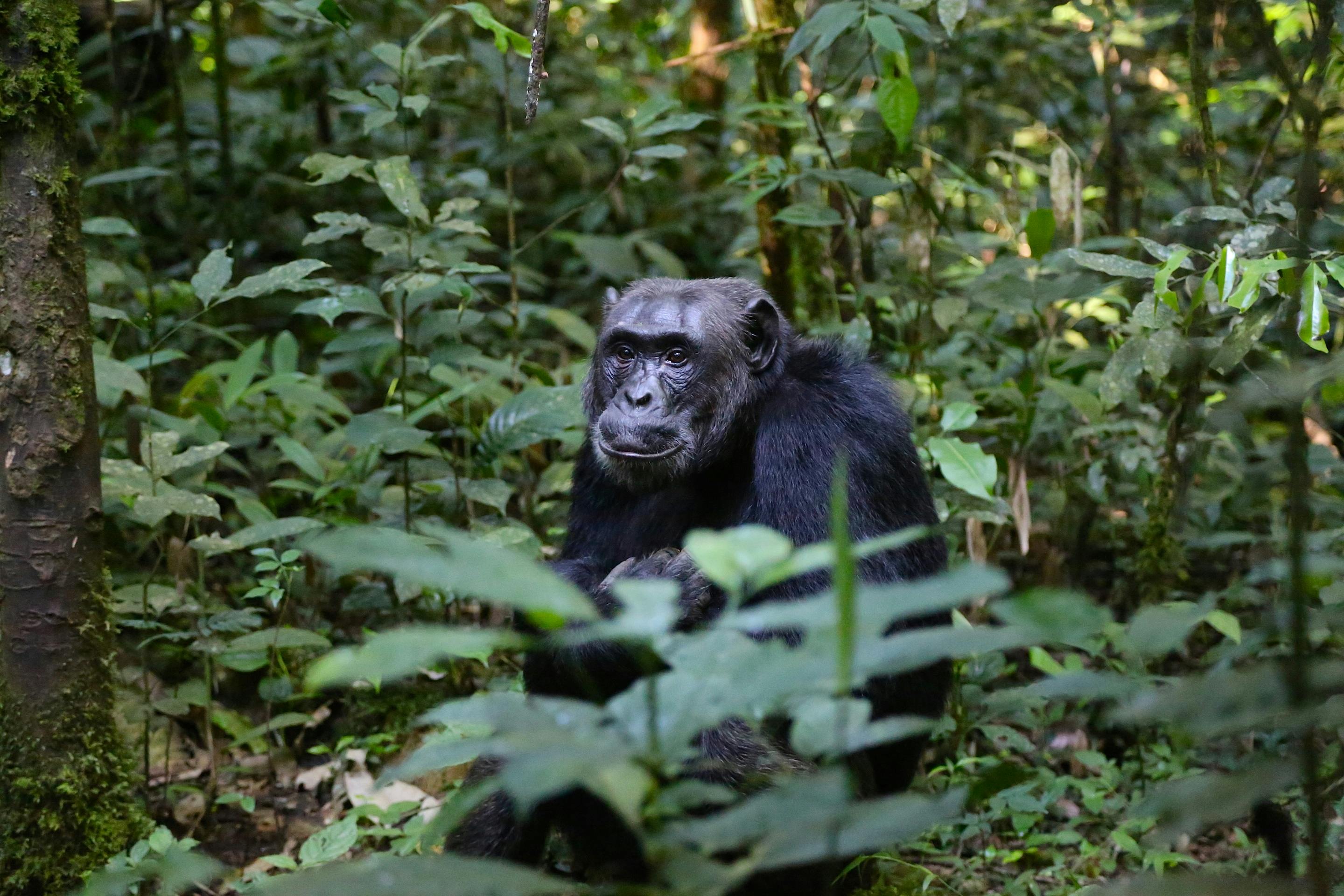
Kibale Forest National Park in western Uganda is the single best location in East Africa for chimpanzee trekking. The park holds an estimated 1,500 chimpanzees, and the Kanyanchu tracking area offers morning and afternoon sessions with habituated communities.
Chimpanzee trekking permits in Uganda cost $200 per person for a standard 1-hour encounter. A full-day habituation experience is available for $250. Both are issued by the Uganda Wildlife Authority.
The trek itself is different from gorilla tracking. Chimps move faster, vocalize constantly, and swing between canopy levels. You’ll hear them before you see them. The forest floor in Kibale is flatter than Bwindi, so the physical demand is lower, though the undergrowth can be thick and the humidity sits heavy on your clothes by mid-morning.
But Kibale isn’t the only option. Queen Elizabeth National Park’s Kyambura Gorge (sometimes called the Valley of Apes) holds a smaller chimp community in a narrow, steep-sided river gorge. The descent is about 100 meters down, and the tracking feels more intimate because of the confined space. It’s a good add-on if your itinerary already passes through Queen Elizabeth for game drives and the Kazinga Channel boat safari.
Building a Gorilla and Chimpanzee Trekking Itinerary
A well-designed gorilla and chimpanzee trekking itinerary covers more than just primates. Uganda is small (about the size of the UK), and the distances between parks are manageable by road. Here’s how the major routes connect:
Route | Distance | Drive Time | What You’ll See |
|---|---|---|---|
Kampala to Kibale Forest | 320 km | 5–6 hours | Chimpanzees, crater lakes, tea plantations |
Kibale to Queen Elizabeth NP | 50 km | 1 hour | Lions, hippos, elephants, Kazinga Channel |
Queen Elizabeth to Bwindi | 170 km | 4–5 hours | Mountain gorillas, Batwa community visits |
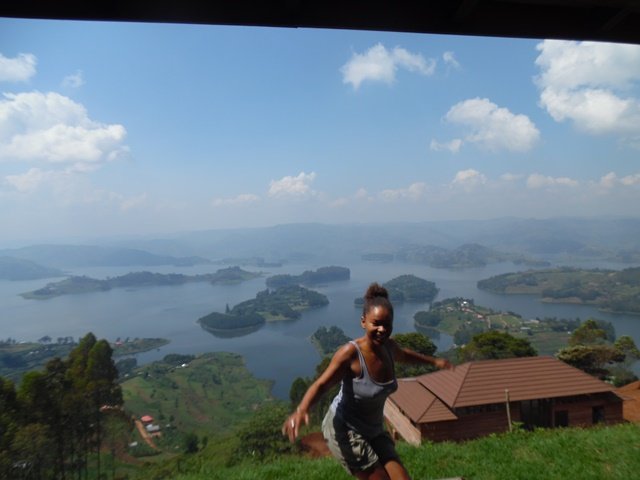
Bwindi to Lake Bunyonyi | 65 km | 1.5 hours | Island paddling, terraced hillsides |
Our 7-day Uganda safari covers Murchison Falls, Kibale Forest, and Queen Elizabeth National Park. The 10-day itinerary adds gorilla trekking in Bwindi and cultural encounters along the way.
I’d pick the 10-day option if your schedule allows it. The 7-day version moves quickly, and you’ll feel the pace by day five. The extra days give you time to absorb what you’re seeing, especially after a gorilla trek, which tends to leave you quiet for a few hours.
How to Prepare for Gorilla Trekking
Preparation is practical, not complicated. The forest is wet, steep, and unpredictable. Your gear matters more than your fitness level, though a reasonable ability to walk uphill for 2–3 hours without stopping helps.
What to bring:
Waterproof hiking boots with ankle support
Lightweight rain jacket and a cheap poncho (you’ll get snagged on branches)
Long pants, not shorts (stinging nettles are real)
Gardening gloves for grabbing vines and branches
Insect repellent with DEET
Camera with no flash enabled
At least 2 liters of water
Energy snacks
Skip the binoculars for gorilla trekking. You’ll be close enough to see the texture of their skin. Binoculars are more useful for birding in Kibale or scanning the Kazinga Channel.
Book gorilla trekking permits 6–12 months ahead during peak season (June through September, December through February). Off-peak months (March through May, October through November) bring rain and mud but fewer crowds, and permits are easier to secure. If you’re flexible on dates, the shoulder months can be deeply rewarding.
For a full packing list and travel advice, we’ve put together a detailed guide.
Uganda Primate Safaris and What Else You’ll Encounter
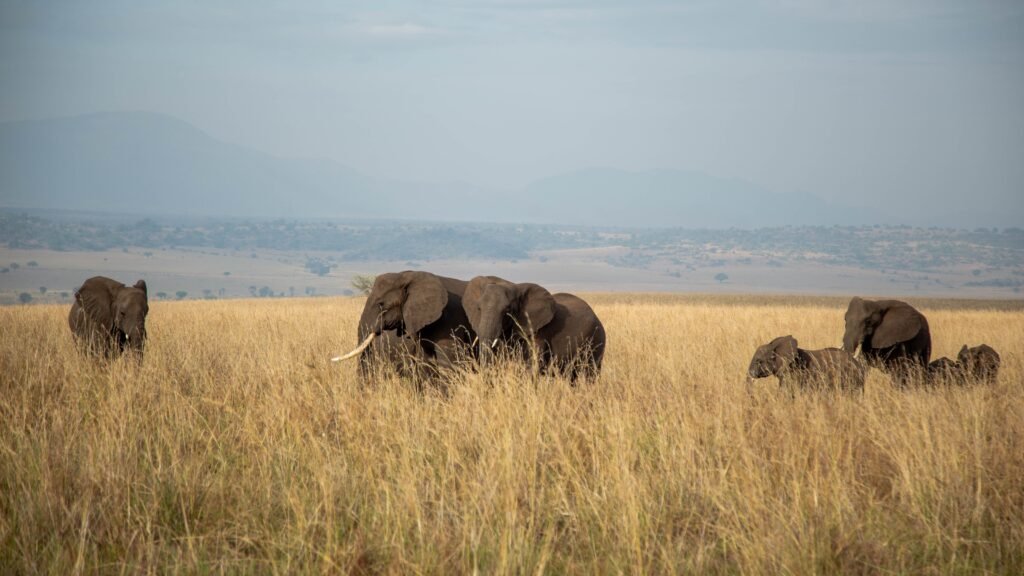
Uganda primate safaris go well beyond gorillas and chimps. On a 10-day circuit, you’ll cross through ecosystems that hold elephants, hippos, giraffes, lions (including the famous tree-climbing lions of Ishasha), leopards, and over 1,000 bird species.
Murchison Falls National Park in the north delivers the best game drives and a boat safari up the Victoria Nile to the base of the falls, where the entire river forces itself through a 7-meter gap in the rock. The spray hits you from 50 meters away.
Queen Elizabeth National Park stretches across 1,978 square kilometers and connects savanna, wetland, and forest habitats. The Kazinga Channel boat cruise runs about 2 hours and puts you within a few meters of hippo pods, buffalo herds, crocodiles, and fish eagles.

Between the parks, you’ll pass through communities where we arrange village experiences across Ankole, Busoga, Bakiga, and Batwa regions. These aren’t staged performances. They’re consent-led visits with families who’ve chosen to participate and who receive direct payment.
Gorilla Safari Uganda Compared to Rwanda
This comes up constantly. Both countries share the Virunga mountain range and the same gorilla population. The differences come down to cost, logistics, and what else you want from the trip.
Factor | Uganda | Rwanda |
|---|---|---|
Gorilla permit cost | $800 | $1,500 |
Total trip cost (7–10 days) | $1,500–$3,000+ | $2,500–$5,000+ |
Other wildlife parks | 4+ major parks | Fewer options |
Chimpanzee trekking | Kibale Forest (1,500+ chimps) | Nyungwe Forest |
Drive to gorilla park | 8–10 hours from Kampala | 2–3 hours from Kigali |
Cultural depth | Batwa, Bakiga, Ankole communities | Kigali Genocide Memorial, Iby’Iwacu |
Uganda gives you more wildlife variety for less money. Rwanda offers shorter travel times and a polished tourism infrastructure. If you want the best gorilla and chimpanzee trekking safaris in a single trip, Uganda is the stronger choice because Kibale’s chimp population is larger and more accessible than Nyungwe’s.
Our 14-day Uganda and Rwanda safari combines both countries for travelers who want the full East African primate experience.
Where Your Booking Goes
We’re locally founded and run by Alex and Alphonse from Kabale. Twenty percent of every tour fee funds Amatsiko School, which has provided education, meals, and support to over 400 children for 11 years. You can visit the school during your trip if your itinerary passes through the area.
Gorilla permits, park fees, local guides, and community contributions are all itemized. We don’t bundle costs into opaque packages. You’ll know exactly what you’re paying for and who receives it.
Planning Your Gorilla and Chimpanzee Trekking Safari
Uganda’s gorilla and chimpanzee trekking safaris combine two of the most significant primate encounters available anywhere, in parks separated by a 4–5 hour drive. Permits start at $200 for chimps and $800 for gorillas. A 10-day itinerary covers four national parks, game drives, boat safaris, and community visits, with direct, verifiable funding to local education. Book permits 6–12 months ahead for peak season, and bring waterproof boots you don’t mind getting muddy.
Frequently Asked Questions
What are the costs for gorilla trekking permits in Uganda?
The gorilla trekking permits in Uganda cost $800 per person through the Uganda Wildlife Authority. This fee grants you a one-hour encounter with a gorilla family. A more immersive gorilla habituation experience is available for $1,500, allowing a full day with researchers and limited to four participants.
How do I prepare for gorilla trekking in Uganda?
To prepare for gorilla trekking, bring waterproof boots, a rain jacket, and long pants to navigate the wet, steep terrain. Physical fitness to walk uphill for 2–3 hours without stopping is beneficial. Book permits 6–12 months in advance for peak seasons to secure your spot.
What should be included in a gorilla and chimpanzee trekking itinerary?
A comprehensive gorilla and chimpanzee trekking itinerary should include visits to Bwindi Impenetrable and Kibale Forest National Parks. Covering four national parks in a 10-day trip allows for game drives, boat safaris, and cultural visits, enriching your Uganda primate safaris experience.
What is the difference between gorilla trekking in Uganda and Rwanda?
Uganda offers more affordable gorilla trekking permits at $800 compared to Rwanda’s $1,500. Uganda also provides a richer wildlife variety and a larger, more accessible chimp population in Kibale Forest, making it a preferred choice for combined gorilla and chimpanzee tours.
How is the chimpanzee trekking experience in Uganda?
Chimpanzee trekking Uganda is best in Kibale Forest, where permits cost $200 for a 1-hour encounter. The trek involves tracking fast-moving chimps through a flatter terrain compared to gorilla trekking. A full-day habituation experience is also available for $250.
Alex Atuheire
 Powered by TypeHero