Is Uganda Safe for Tourists in 2026? Understanding Security, Travel Risks & How to Plan Safely
Table of Contents
At a Glance
Uganda is welcoming but requires careful planning for safety.
Anchor itineraries around daylight travel and check advisories.
Overnight stays should be near next day activities to avoid risky drives.
Stay updated on travel advisories and use predictable routes.
Health risks are manageable with good preparation and pacing.

Uganda terrorist threats for tourists sit in the same bucket as most real-world travel risk: you don’t “solve” it with optimism, you manage it with planning, routing, and local judgment. Uganda is also one of East Africa’s most welcoming places to travel, especially once you’re out of the cities and into the national parks and highland communities.
You’ll get the best Uganda travel safety outcome by anchoring your itinerary around daylight driving, sector-matched gorilla logistics, and a clear Uganda travel advisory check before you fly. And honestly, the biggest day-to-day risk most visitors feel is transport, not wildlife.
Uganda travel safety starts with where you spend your nights
Good Uganda travel safety comes from a simple rule: sleep close to tomorrow’s first activity, and don’t gamble on long, pre-dawn drives. In southwestern Uganda, that means matching your overnight base to your Bwindi Impenetrable National Park trekking sector, then building the rest of the route around that fixed point.
The practical reason is physical. Roads into the gorilla sectors can turn steep, narrow, and muddy, especially in rainy periods, and fatigue stacks fast when you’re trying to make an early briefing.
If you’re crossing overland from Rwanda, most travelers do one of two things: they overnight in Kabale (after Katuna) or Kisoro (after Cyanika), then push into the right Bwindi sector area.
Sector-matched bases that reduce risk
Pick the base that reduces the next morning’s uncertainty, not the one that sounds nicest on a map.
Kabale as a staging hub after Katuna border (Rwanda) ↔ Kabale (Uganda) for routes aligning toward Ruhija and some onward connections toward Buhoma
Kisoro as a staging hub after Cyanika border (Rwanda) ↔ Kisoro (Uganda) for Rushaga and Nkuringo, plus Mgahinga Gorilla National Park
Sector-area lodging when your permit is locked and you want the shortest possible trek-morning transfer
Lake Bunyonyi as a recovery stop after trekking (it’s a smart pacing choice if you want to feel human again)
For park planning, keep your research tight and practical. Start with national parks in Uganda planning notes and then narrow to the specific sector logistics you’re actually booking.
“We searched for a wholly local tour operator hoping our visit to Uganda might benefit local communities as well as including Uganda’s natural beauty and wildlife. Amatsiko Tours is owned and operated by Alex and Alphonse, who have dedicated their working lives to helping the most vulnerable in their communities. Alex curated a two weeks itinerary for us that provided the most amazing and memorable experiences: visiting remote communities and schools, welcomed by so many people in out of the way places, gaining insights into community life and culture, walking with rhinos, giraffes and zebras, and of course gorilla and chimpanzee trekking.”
— TripAdvisor, 5.00
“From the moment we arrived, everything was handled with a level of care and professionalism that made the entire experience effortless. Airport pickup, beautiful accommodations, seamless transportation, and delicious meals. Every detail was thoughtfully arranged. We were driven in a spotless, comfortable vehicle and never once had to worry about logistics. We could simply be present and absorb the experience.”
— 565carolyno, TripAdvisor, 5.00
“Wow where to begin with this experience! First, let’s say we were easily the most difficult clients they must have had, throwing them curve balls left and right. From missed flights, to missing baggage, to itinerary changes, plus the added challenge of us working on a film project while with them, Alex and Alfonse made us feel calm and easy in what otherwise would have been a very stressful situation.”
— Sophie Schneeberger, Google, 5.00
Uganda terrorist threats for tourists require route discipline and current checks
Uganda terrorist threats for tourists are managed through behavior and routing: you keep your movements predictable, avoid late-night transfers, and stay current on a Uganda travel advisory before and during your trip. This is not the part to “wing.” You want current information close to departure, then you plan your days around low-friction routines.
The most useful safety posture is boring on purpose. Daylight moves. Clear pickup points. Minimal wandering with valuables. And a driver-guide who knows which road sections slow down after rain.
Uganda travel advisory habits that actually change outcomes
Treat the Uganda travel advisory as a living document and build a quick routine around it.
Check your Uganda travel advisory once when you book flights, once again in the week before departure, and again after you land
Keep your route simple on transfer days, especially on cross-border days
Don’t stack long drives on the same day as border processing
Keep copies of key documents separate from the originals (bag vs daypack, not all together)
For operator-level guidance that’s written for travelers, use travel advice for visitors to Uganda as your baseline, then align it with your own government’s notices.
Cross-border transfers Kigali to Bwindi reduce exposure when timed correctly
The Kigali-to-Bwindi corridor is popular because it can be efficient, but it only stays efficient if you respect time and border variability. Typical road transfer time is 4–8+ hours driving (plus border time) depending on the border post and which Bwindi sector you’re targeting: Buhoma, Ruhija, Rushaga, or Nkuringo.
You’ll feel the difference in your body. A smooth day is engine hum, a couple of planned stops, and arriving with enough daylight to find your lodge without stress. A rough day is arriving tired, hungry, and guessing.
Cyanika vs Katuna border choice, tied to your trekking sector
Pick the border post that matches your permit sector. That’s the whole trick.
Route choice | Best alignment | Typical total transfer range | Best overnight base |
|---|---|---|---|
Kigali → Cyanika → Kisoro | Southern Bwindi (Rushaga/Nkuringo), Mgahinga | ~4–6 hours (incl. border) | Kisoro or sector-area lodge |
Kigali → Katuna → Kabale | Kabale staging, Lake Bunyonyi add-on, Ruhija access | ~5–7+ hours (incl. border) | Kabale or Lake Bunyonyi |
Kisoro → Rushaga/Nkuringo | Southern sector access | ~1–2+ hours | Rushaga/Nkuringo area lodges |
Kabale → Bwindi sectors | Sector-dependent, timing varies | timing varies | Kabale, Lake Bunyonyi, or sector-area lodge |
A small but real insider move: on transfer day, push to arrive for dinner, not for a late check-in. You want time to repack your day bag, set out your rain layer, and sleep.
For gorilla-specific logistics, keep one tab open on 7 Essential Tips for a Gorilla Trek Uganda Adventure and don’t overcomplicate it.
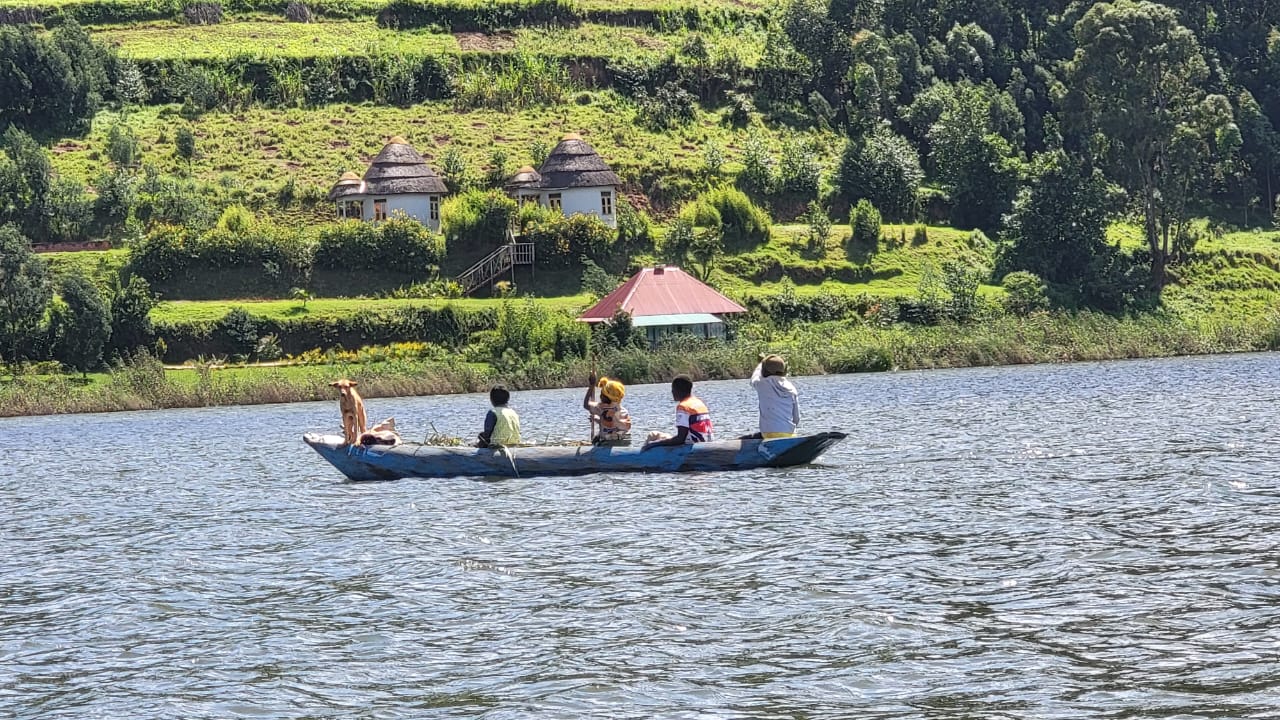
Border days come with their own soundtrack: idling engines, stamps hitting paper, and the low chatter of people comparing where they’re headed next.
Crime in Uganda for tourists stays manageable with simple city rules
Crime in Uganda for tourists is the category where your choices matter most: how you move around towns, how you handle phones and cash, and how late you stay out. Your best Uganda travel safety play is to treat urban time as functional, then spend your “experience hours” in parks, lodges, and community visits where the flow is controlled.
And yes, you should be picky. If you’re being waved toward an “easier” shortcut, skip it. Stick to known pickup points.
Street-level habits that lower risk fast
These are the habits we’d put in your hands on day one.
Keep your phone out of sight while walking in busy areas
Use small cash for daily purchases, keep the rest separate
Don’t walk long distances after dark in unfamiliar areas
Confirm your driver and vehicle before you get in, every time
Keep your passport secured and carry a copy for routine checks
If you want a deeper read on how we think about on-the-ground logistics, meet our team and note how often we talk about routing, timing, and local decision-making, not just attractions.
Uganda health risks for tourists are mostly preventable with prep and pacing
Uganda health risks for tourists are less about drama and more about basics: vaccines documentation where required, hydration, food choices on long drive days, and keeping a small kit that covers you when you’re hours from a pharmacy. The goal is consistency. You want stable energy for trekking mornings and long transfers.
You’ll feel the climate shifts too, especially in the highlands around Bwindi and Kabale. Mornings can feel cool and damp, and rain turns a “short drive” into a slow one.
Health and safety precautions when visiting Uganda that matter on safari days
We keep this list tight because you’ll actually use it.
Pack oral rehydration salts for long road days and post-trek fatigue
Carry hand sanitizer and use it before roadside snacks
Keep a light rain layer in your day bag, not your suitcase
Treat blister prevention as essential, not optional, for trekking
Eat simply on transfer days (heavy meals plus rough roads is a bad combo)
For a practical checklist, use health and emergencies in Uganda and pair it with vaccinations required for Uganda so your documents and your body are both ready.
Transportation is the daily driver of Uganda travel safety
Transportation shapes Uganda travel safety more than almost anything else: road conditions, weather, and timing decide how relaxed you feel. On the Rwanda side, major corridors are generally paved, but you still deal with traffic leaving Kigali and speed controls. On the Uganda side, approaches to Bwindi can include steep gradients, narrow stretches, and rough or muddy sections.
A 4×4 vehicle is strongly recommended for Bwindi sector access year-round. In wet months, it stops being a recommendation and starts being the thing that keeps your schedule intact.
Timing rules we use for safer days
Keep these rules and you’ll avoid most of the “why are we doing this” moments.
Leave early on transfer days, especially Kigali-to-Bwindi days
Build buffer time for border processing, it isn’t fixed
Avoid arriving to sector roads after dark
Don’t plan same-day Kigali-to-Bwindi arrivals for anything except dinner and sleep
If you’re packing for comfort and safety, what to pack for Uganda is the fastest way to avoid the classic misses (rain gear in the wrong bag, wrong shoes, no dry layer).

That damp-earth smell after rain is real up here. And it’s exactly when you’ll be glad you didn’t try to “save time” with a sedan.
Wildlife safety in Bwindi and Mgahinga is about rules, not bravery
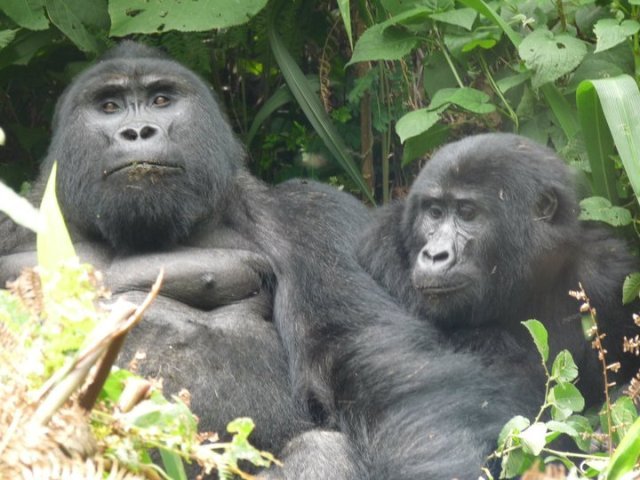
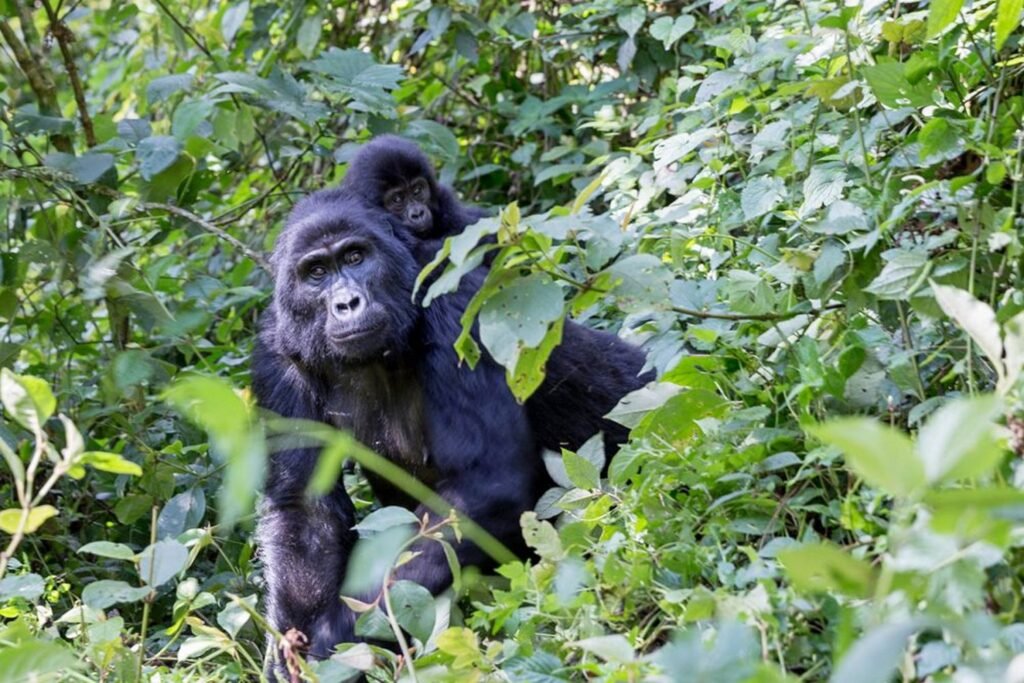
Wildlife safety around gorilla trekking is structured and regulated. Gorilla trekking in Uganda requires a permit issued by the Uganda Wildlife Authority (UWA), and permits are limited per day. That limit is a safety feature as much as it’s a planning constraint.
Once gorillas are found, visitors typically spend one hour with them on a standard habituated gorilla trek. You don’t negotiate that in the forest. You follow it.
Gorilla trekking behavior that keeps you safe and keeps gorillas safe
You don’t need hero energy here. You need calm.
Follow ranger instructions immediately, even if it interrupts your photo moment
Keep your voice low, the forest carries sound
Keep your distance and let the trackers manage positioning
Wear footwear that grips on wet roots and slick mud, not trail “fashion”
Bring a simple snack you’ll actually eat, long treks punish skipped calories
If you’re deciding between parks, remember the access logic: Mgahinga Gorilla National Park is commonly approached via Kisoro and the Cyanika corridor, while Bwindi Impenetrable National Park planning depends heavily on sector selection.
Practical booking choices that reduce safety risk
Safety improves when your itinerary has fewer moving parts and your permit date anchors the plan. Gorilla permits influence your trek date, your sector, your lodge location, and your border choice. Lock the permit strategy first, then match transport and lodging to it.
This is also where you stop guessing and start itemizing. We separate permit vs logistics vs accommodation because it keeps the plan honest.
A clean next step is to start with a clear itinerary framework at Uganda tours and safaris, then narrow to the trip length that fits your pace.
Key takeaways for Uganda travel safety and Uganda travel advisory planning
Uganda terrorist threats for tourists are best handled through current Uganda travel advisory checks, daylight routing, and sector-matched planning for Bwindi Impenetrable National Park. Cross-border transfers typically run 4–8+ hours plus border time, and the right border post depends on your trekking sector: Cyanika for Kisoro, Rushaga, Nkuringo, and Katuna for Kabale and Lake Bunyonyi staging. A 4×4 reduces schedule risk on steep, muddy sector roads, especially in wet periods.
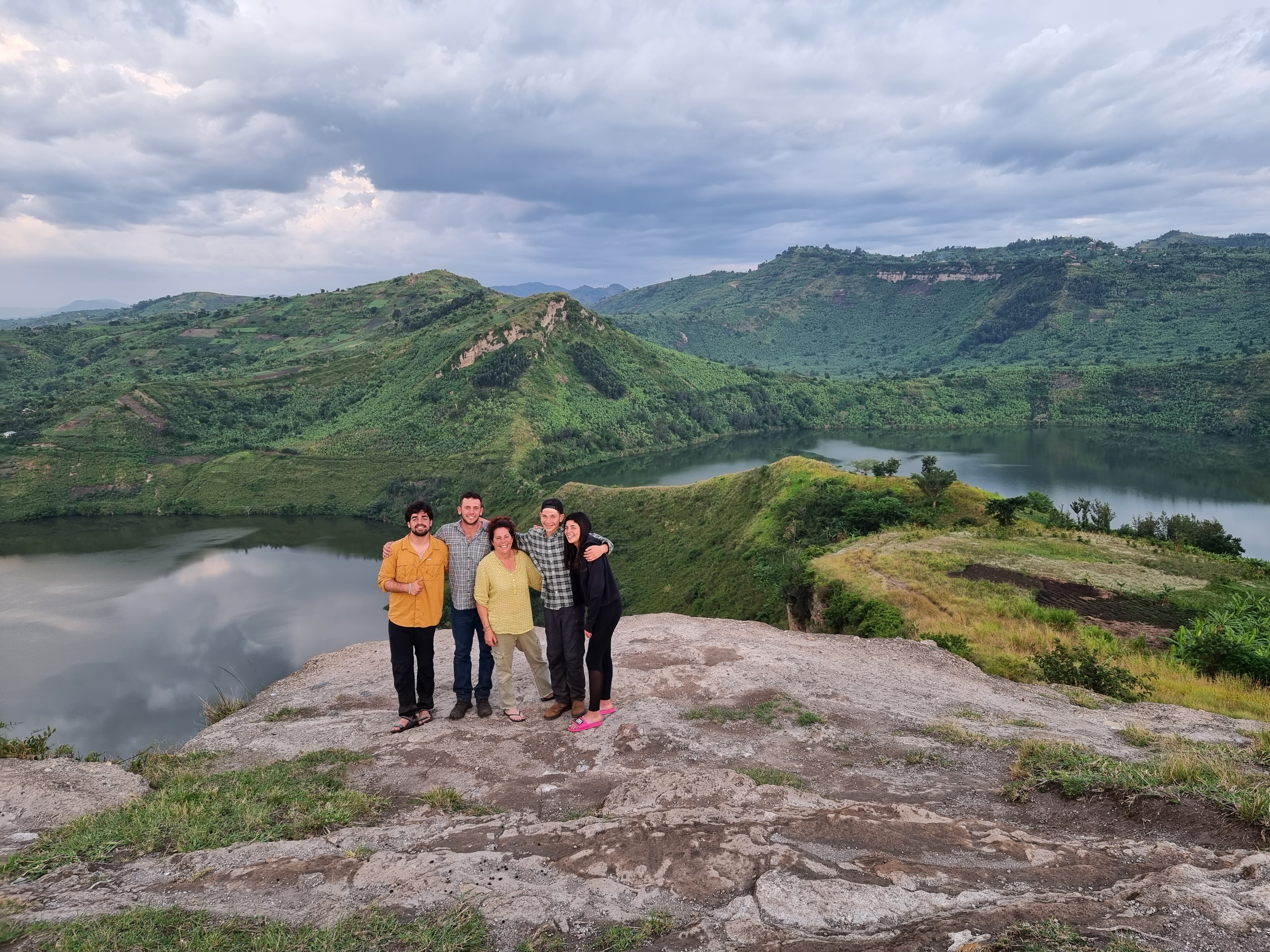
Evening is when the pace finally drops. You’ll hear lake water against the shore and the last birds settling in.
Frequently Asked Questions
1. How can I ensure safety while traveling in Uganda?
To ensure safety while traveling in Uganda, plan your itinerary around daylight travel, avoid late-night transfers, and check a Uganda travel advisory before and during your trip. Match your accommodation with your activities to minimize long drives and potential risks.
2. What should I consider when planning a gorilla trek in Bwindi Impenetrable National Park?
When planning a gorilla trek in Bwindi, it’s crucial to select a lodging base close to your trekking sector to avoid long pre-dawn drives. Ensure you have a gorilla permit issued by the Uganda Wildlife Authority, which is limited per day to ensure safety and conservation.
3. Are there specific health precautions tourists should take in Uganda?
Yes, it’s essential to stay hydrated, carry oral rehydration salts, and maintain personal hygiene by using hand sanitizer. Ensure vaccinations are up to date and pack a small health kit for emergencies. Be mindful of food choices on long travel days to prevent discomfort.
4. What are the road conditions like from Kigali to Bwindi?
The road transfer from Kigali to Bwindi can take 4–8+ hours, including border time. It’s recommended to choose the border post that aligns with your Bwindi sector, such as Cyanika for southern Bwindi or Katuna for the Kabale area. A 4×4 vehicle is advisable for navigating the steep and sometimes muddy roads.
5. How can tourists minimize crime risk while in Ugandan cities?
To minimize crime risk in Ugandan cities, keep valuables out of sight, use small amounts of cash for purchases, avoid unfamiliar areas after dark, and confirm the identity of drivers before entering vehicles. Spend more time in controlled environments like national parks and lodges.