Uganda Coffee Tours: How to Plan a Farm-to-Cup Journey
Table of Contents
Uganda Coffee Tours: How to Plan a Farm-to-Cup Journey
Uganda’s coffee story is getting bigger and more interesting. The country exported about 7.8 million 60-kilogram bags of coffee in the 2024/25 financial year, generating around US$2 billion in export revenue. But behind those impressive numbers is something much more personal: millions of smallholder farmers growing coffee among banana plants, beans, maize, and the red soils of Uganda’s hills.
That is where a Uganda coffee tour becomes special.
Let me take you away from the polished café for a moment. Imagine standing on a hillside near Kabale or Mount Elgon, with cool mountain air on your face and ripe coffee cherries glowing red among the green leaves. You pick one, squeeze it gently between your fingers, and discover that the fruit doesn’t taste anything like the roasted coffee you know. Later, you watch those cherries being processed, dried, roasted over a fire, ground by hand, and finally brewed into the cup in front of you.
This isn’t simply a coffee tasting. It is a chance to meet the people behind one of Uganda’s most important crops and see how coffee moves from the farm to your cup. And when you choose a locally run experience, buy directly from farmers, and spend money with community businesses, your visit can become part of the local economy rather than simply passing through it.
If you’re planning a Uganda coffee tour, the best approach is to combine coffee with the landscapes, wildlife, food, and communities that make each region different.
Why Coffee Farm Tours in Uganda Stand Apart
Uganda’s coffee story is, above all, a smallholder story. Much of the country’s coffee is grown by farming families rather than on enormous industrial estates. Coffee trees can share the same landscape with bananas, beans and other crops, creating a farming environment that feels very different from the huge commercial plantations many travelers might imagine.
That makes a coffee farm visit surprisingly intimate. You are not standing behind glass watching a demonstration. You can walk between the trees, touch the leaves, look closely at the cherries, and ask the farmer how the crop fits into everyday life. Depending on the farm and the season, you may help pick ripe cherries, see how they are processed and dried, and later watch them being roasted and prepared for drinking.
There is also no single “Ugandan coffee” experience. Robusta dominates Uganda’s overall coffee production, while Arabica is particularly associated with the country’s higher mountain areas, including Mount Elgon and the highlands of southwestern Uganda. The landscape, farming methods and character of the experience can therefore change dramatically from one region to another.
Honestly, I think that is the part most visitors don’t expect. Coffee sounds familiar until you see the fruit growing on the tree. The process is slower, more physical and much more connected to the land than a cup of coffee in a café suggests. And once you’ve followed that journey yourself, the next cup tastes a little different.
Top Destinations for Coffee Tours in Uganda
The best coffee tours in Uganda cluster around four growing regions, each with a different elevation, variety, and character. Here’s how they compare:
Where to Experience Coffee in Uganda
Region | What makes it interesting | Coffee focus | What to combine it with |
|---|---|---|---|
Kabale & Southwestern Highlands | Cool highland farms, dramatic terraced hills and smallholder experiences | Arabica | Lake Bunyonyi, Bwindi, Bakiga cultural experiences |
Mount Elgon & Sipi Falls | Mountain scenery and hands-on farm-to-cup experiences | Arabica | Sipi Falls, hiking and cultural experiences |
Rwenzori & Fort Portal | Green agricultural landscapes and access to western Uganda’s wildlife attractions | Arabica & Robusta | Kibale Forest, crater lakes and Fort Portal |
Central Uganda | The most accessible option for travelers with limited time | Mainly Robusta | Kampala, Entebbe and Jinja |
Robusta or Arabica? Your Coffee Story Starts in Different Landscapes
Before booking a coffee tour in Uganda, it helps to understand one simple distinction: Robusta and Arabica are not grown in exactly the same places or in exactly the same way.
Robusta makes up the majority of Uganda’s coffee production and is especially important in lower-altitude growing areas. Arabica, meanwhile, is associated with higher elevations and mountainous landscapes. That means an Arabica coffee experience around Mount Elgon or the southwestern highlands can feel very different from visiting a Robusta-growing farm closer to central or western Uganda.
For travelers, this isn’t about deciding which coffee is “better.” It is about understanding the landscape behind the cup. One visit might take you through steep mountain gardens and cool misty hills; another might introduce you to coffee growing alongside other crops in a warmer rural landscape.
So when you plan your itinerary, don’t simply search for “a coffee farm.” Look at the region, the type of coffee being grown, and the people you’ll meet. Those details can turn a standard farm visit into a much richer travel experience.
Kabale and the Southwestern Highlands
Kabale is one of the places where Uganda’s coffee landscape and travel experience come together beautifully. The hills rise and fall around you in layers, patches of cultivation covering the slopes while the air feels noticeably cooler than in Uganda’s lowlands. In the morning, the light catches the leaves of the coffee trees and the red cherries stand out against the green.
A coffee farm visit here works particularly well for travelers already exploring southwestern Uganda. You can combine the experience with Lake Bunyonyi, cultural activities and a visit to Bwindi for gorilla trekking. Instead of adding another major detour to your journey, coffee becomes part of the story of the region.
What I love about this kind of experience is the change of pace. After days of driving or wildlife viewing, you slow down. You walk at the farmer’s pace, learn how to recognize ripe cherries and see how much work goes into something that usually arrives in your life as a finished drink. If you buy beans during the visit, purchasing directly from the farmer or local producer also gives you a simple way to keep more of your spending within the community.
Mount Elgon and Sipi Falls
If Kabale gives you coffee among the steep green hills of southwestern Uganda, Sipi Falls gives you a completely different backdrop: the slopes of Mount Elgon, waterfalls, mountain paths and coffee gardens spread across the landscape.
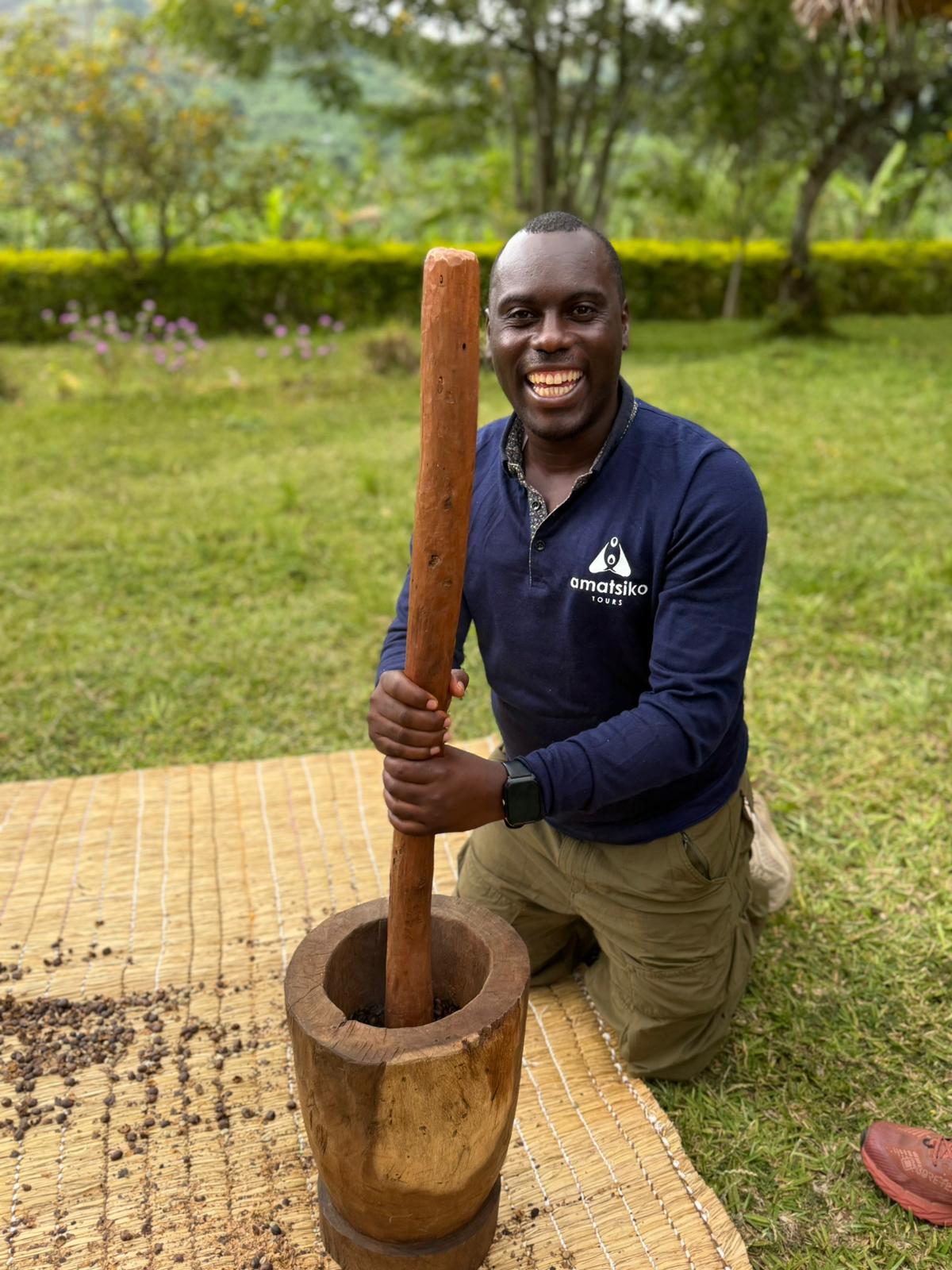
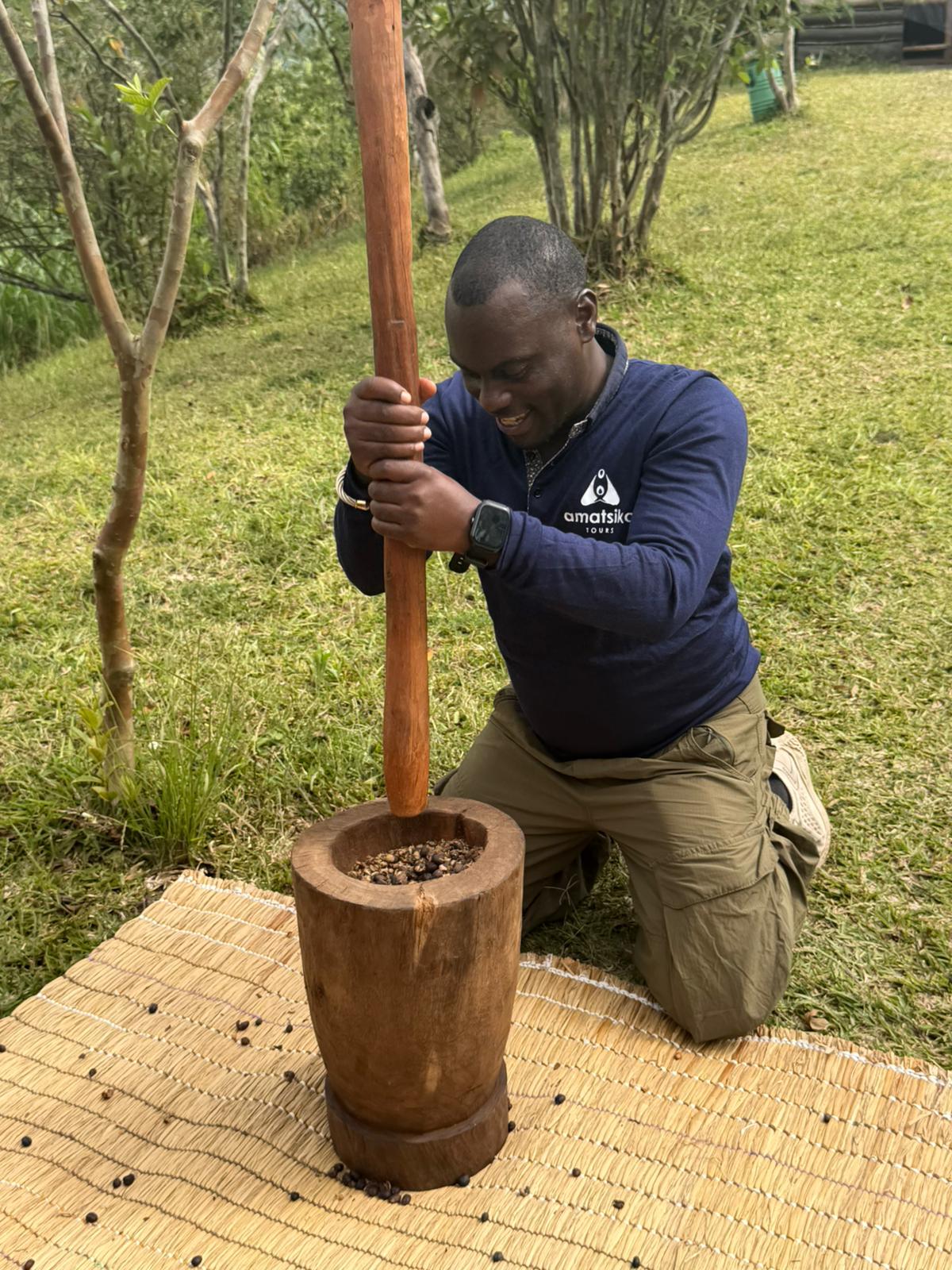
The coffee experience here can be wonderfully hands-on. Depending on the farm and season, you may start by seeing young coffee plants in the nursery before walking among mature trees and learning how farmers identify ripe cherries. From there, the journey can continue through harvesting, drying, hulling, roasting, grinding and brewing. By the time the coffee reaches your cup, you have seen and sometimes helped with many of the steps that normally happen far away from the person drinking it.
That is what makes Sipi such an appealing stop for travelers who want more than a tasting. You can spend the morning learning about coffee with local hosts and then return to the landscape itself: following trails, listening to falling water and looking out across the green slopes of Mount Elgon. Buying coffee locally or choosing a community-based experience gives the visit another layer, turning a sightseeing stop into a direct contribution to the people who make the experience possible.

What to Expect on a Uganda Coffee Tour
Every farm is different, but a good Uganda coffee experience should take you beyond simply drinking the finished product. The exact activities and processing methods vary by farm, coffee type and season, but the journey usually follows the same basic idea: start with the plant and finish with the cup.
First, meet the farmer and see the coffee trees. You may walk through the farm, learn how coffee is grown and discover what else the family cultivates alongside it. During harvest, you’ll have the chance to see ripe cherries being picked and may be invited to try picking some yourself.
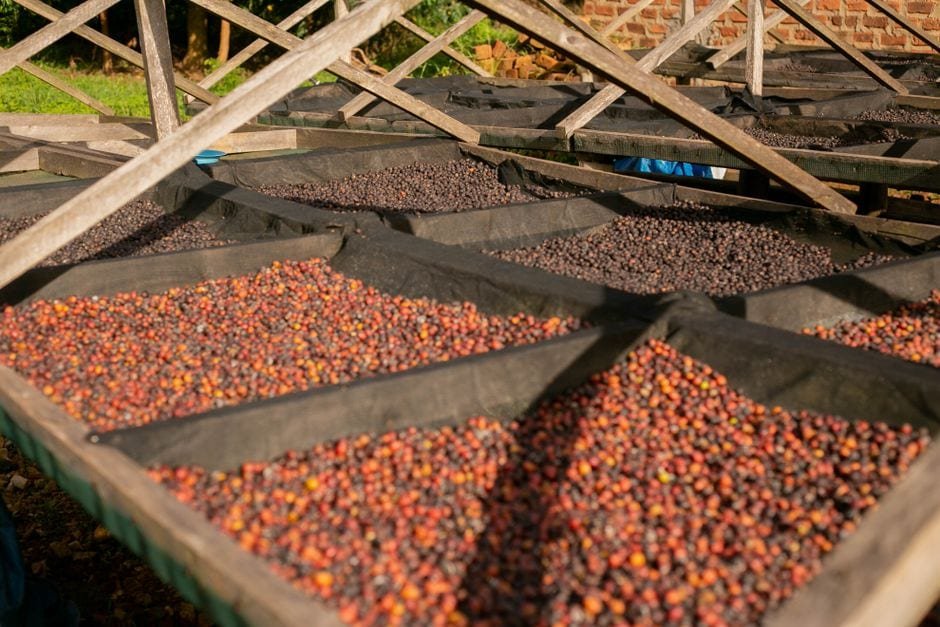
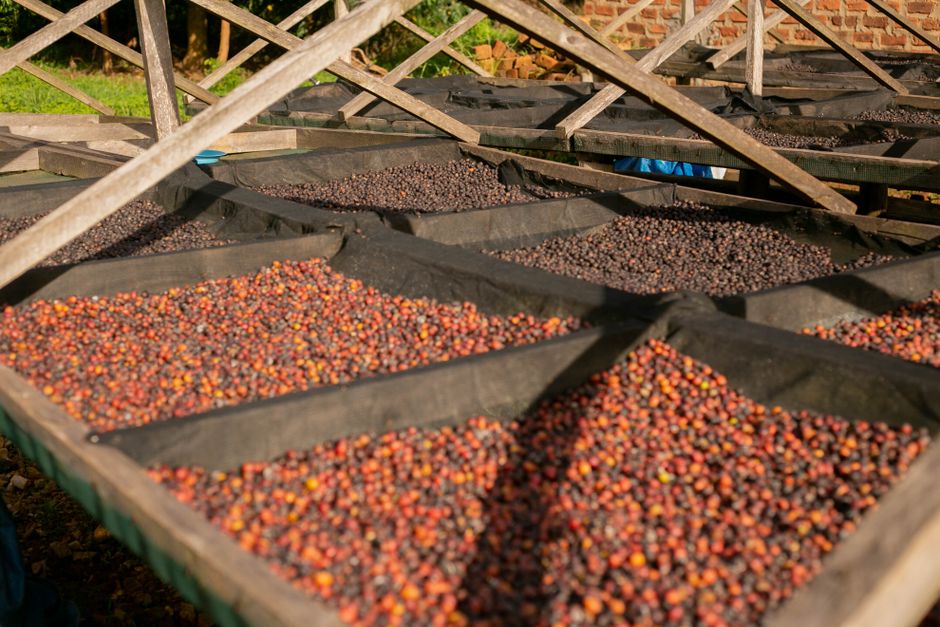
Next comes processing. This is where you’ll discover that coffee is a surprisingly complicated little fruit. Depending on the coffee and the farm, you may see cherries being pulped and wet-processed, or other methods of drying and processing. You’ll see the beans at a stage that looks nothing like the brown coffee beans you know.
Then comes the transformation. Green coffee is roasted until the beans darken and their familiar aroma begins to fill the air. On traditional farm experiences, roasting may happen over a fire using simple tools. The smell changes almost magically from grassy and raw to warm, nutty, caramel-like and smoky.
Finally, the beans are ground and brewed. This is the moment when everyone tends to become quiet for a second. You have followed the coffee from the tree to the cup, and now you’re tasting something connected to the place and the people you’ve just met.
Allow enough time to enjoy the conversation as well as the coffee. Ask questions, listen to the farmer’s stories, and ask permission before photographing people, homes or private property. If you want to take coffee home, buying directly from the farmer, cooperative or local producer is one of the simplest ways to make your visit more meaningful.
What to bring
Closed-toe shoes with good grip
A light rain jacket, particularly in the highlands
Comfortable clothing that can handle red soil and farm paths
Reusable water bottle
Small cash reserve for local purchases, while confirming payment options with your operator
A camera—but always ask before photographing people
For broader trip planning, check travel advice for visitors to Uganda before you go.
How to Plan a Uganda Coffee Tour Itinerary
The smartest way to plan a coffee trip in Uganda is to build coffee into a larger journey. The country’s coffee-growing regions sit close to some of its most memorable landscapes and wildlife experiences, so you don’t necessarily need a separate “coffee holiday.”
Option 1: Coffee, Wildlife and the Western Highlands — 7 Days
Day 1 — Entebbe/Kampala to Fort Portal
Travel west and settle into the green landscapes around Fort Portal.
Day 2 — Coffee and Kibale Forest
Start with a local coffee experience, then explore the Kibale area and its famous forest ecosystem.
Day 3 — Transfer to Queen Elizabeth National Park
Continue south through western Uganda and enjoy the changing landscapes along the way.
Day 4 — Wildlife and the Kazinga Channel
Combine a game drive with a boat cruise, keeping the day focused on wildlife rather than rushing to another destination.
Day 5 — Travel toward Kabale
Make the journey south toward the southwestern highlands. Treat the drive as part of the adventure rather than trying to squeeze in too many activities.
Day 6 — Coffee and Lake Bunyonyi
Spend the morning on a highland coffee farm and the afternoon beside Lake Bunyonyi. If possible, eat at a locally owned restaurant or arrange a community-led cultural experience.
Day 7 — Choose your ending
Depending on your onward plans, finish with a cultural experience around Kabale or continue toward Bwindi for a longer gorilla-trekking itinerary.
Option 2: Coffee and Gorillas — 5 to 7 Days
If gorilla trekking is already on your bucket list, I would simplify the route and concentrate on southwestern Uganda.
Spend time around Kabale and Lake Bunyonyi, add a coffee farm experience, then continue toward Bwindi Impenetrable National Park for gorilla trekking. This version gives you more time to experience the local landscape instead of spending much of the trip sitting in a vehicle between distant destinations.
The advantage of this approach is simple: coffee doesn’t become another item to tick off. It becomes part of the story of southwestern Uganda—the farms, hills, lakes, forests and communities all connected within the same journey.
This route covers two coffee regions, two national parks, and a community visit in seven days. If you have less time, the 7-day gorilla trekking and safari package already passes through coffee country in the southwest. Ask about adding a farm stop. It’s a half-day addition, not a full restructure.

Uganda Coffee Tour Packages and What They Include
Uganda coffee tour packages range from a single half-day farm visit to multi-day itineraries that weave coffee into wildlife and cultural programming. Here’s what to look for when comparing options:
Feature | Half-Day Farm Visit | Multi-Day Coffee & Safari Package |
|---|---|---|
Duration | 3–4 hours | 5–10 days |
Coffee stages covered | Picking, processing, roasting, tasting | Full chain plus cooperative visits |
Other activities included | None | Game drives, gorilla trekking, community tours |
Guide type | Local farmer + translator | Professional safari guide + local hosts |
Group size | 2–6 | 2–8 |
Amatsiko Tours builds guided coffee tours in Uganda into broader safari itineraries. Because we’re based in Kabale, the farms we visit are ones where Alex Atuheire and our team have long-standing relationships with the families. You’re not a stranger arriving unannounced. The farmer expects you, has prepared the roasting station, and often serves a meal after.
Twenty percent of every booking fee goes directly to Amatsiko School, which provides education and meals for over 400 children in the Kabale district. When you buy beans at the farm gate, that money stays with the farmer. When you book the tour, a verifiable portion funds a school you can visit yourself. That’s the model. No vague claims.
Why Uganda Deserves a Place on Your African Coffee Map
Ethiopia, Kenya, Rwanda and Tanzania may receive more attention from coffee travelers, but Uganda deserves a place on the map—especially for travelers who want to combine coffee with wildlife, mountains, lakes and cultural experiences.
Uganda’s particular strength is the combination. You can wake up surrounded by coffee-growing hills, spend the afternoon beside a crater lake or watching wildlife, and build another day around a forest or community experience. Coffee doesn’t have to replace the classic Uganda itinerary. It can add another layer to it.
There is also something appealing about the scale of many smallholder experiences. Instead of entering a large visitor complex built entirely around tourism, you may find yourself walking through an ordinary working farm, talking with the family and seeing coffee as part of everyday life.
Visit during a period when harvesting is happening and you may see more activity in the gardens. Visit outside the main harvest period and the experience can shift toward processing, drying, roasting and learning about the wider farming cycle. Either way, the most rewarding approach is to arrive curious rather than expecting a perfectly staged coffee show.
Practical Details for Planning Your Visit
Best time to go: Coffee harvesting varies by region, elevation and coffee type, so there is no single nationwide “coffee season.” If seeing cherries being picked is your priority, ask your chosen farm or tour operator what is happening locally when you plan to visit. If you’re traveling outside harvest, the experience can still be worthwhile because processing, drying, roasting and brewing can be part of the visit.
Getting there: Most coffee experiences are reached by road, and the best route depends on the region you choose. Kabale works particularly well as part of a southwestern Uganda itinerary that includes Lake Bunyonyi and Bwindi. Sipi Falls is naturally combined with a Mount Elgon trip, while Fort Portal works well with Kibale and western Uganda. Confirm current road conditions, transfer times and domestic flight schedules before departure.
Visa: Travelers who require a Ugandan visa should apply online before traveling through Uganda’s official immigration system. The current single-entry tourist visa is listed at US$50, but requirements can vary according to nationality and travel history. Always check the latest official requirements before booking.
Health: Travel-health requirements can change. Uganda travelers should seek current professional travel-health advice before departure, including advice about malaria prevention and recommended vaccinations. Yellow-fever vaccination is particularly important because Uganda requires proof of vaccination for eligible arriving travelers.
What to pack: Comfortable walking shoes are essential for farm paths. Bring lightweight layers, sun protection and a light rain jacket, particularly if you’re visiting the highlands. A reusable water bottle is also useful.
Money: Carry some Ugandan shillings for small purchases, especially in rural areas, but don’t assume every farm uses the same payment method. Confirm whether your tour, accommodation and coffee purchases can be paid by cash, mobile money, bank transfer or card before you travel.
Buying coffee: Ask your host what coffee is available to purchase and whether the money goes directly to the farmer, cooperative or local business. Buying a bag of locally produced coffee is a wonderful souvenir—and one you can actually enjoy long after the journey is over.
What Coffee Tourism Means for the Communities You Visit
A coffee tour can be more than an interesting morning if the money you spend reaches the people who make the experience possible.
That starts with something very simple: paying fairly for what you receive. When you buy coffee directly from a farmer, cooperative or local producer, you are creating a direct market for the person who grew it. When you eat locally, hire local guides and choose locally operated experiences, more of your travel spending remains in the destination.
Amatsiko Tours has built a community element into its own model. The company currently states that 20% of tour fees goes directly toward running Amatsiko School, which serves around 400 children in the Kabale area. The school is also working toward a permanent facility as it responds to infrastructure and safety requirements.
For a traveler, this makes the idea of “giving back” much more tangible. You don’t need to arrive with gifts or try to solve a community’s problems yourself. Sometimes the most useful thing you can do is choose a locally connected experience, pay the agreed price, buy locally, and take the time to understand where your money is going.
That is the kind of tourism I prefer: not charity disguised as travel, but a journey where local people are participants, hosts, business owners and beneficiaries of the experience.
Key Takeaways for Your Uganda Coffee Tour
Uganda is a major African coffee producer, with coffee exports reaching record levels in recent years.
Robusta dominates national production, while Arabica is especially important in Uganda’s higher mountain-growing regions.
Kabale, Mount Elgon/Sipi and the Rwenzori/Fort Portal area offer different ways to experience coffee alongside Uganda’s landscapes and wildlife.
A good farm-to-cup experience lets you see more than the finished bean: you can learn about growing, harvesting, processing, roasting and brewing.
Buying locally and choosing community-connected experiences can help keep more tourism income within the communities you visit.
Coffee works best as part of a wider Uganda journey, particularly when combined with Lake Bunyonyi, Bwindi, Kibale, Queen Elizabeth or Sipi Falls.
Frequently Asked Questions
What is the best place for a coffee tour in Uganda?
There isn’t one single best destination. Kabale and the southwestern highlands are particularly attractive for travelers interested in high-altitude Arabica and combining coffee with Lake Bunyonyi and Bwindi. Sipi Falls is another excellent choice for coffee experiences among the slopes of Mount Elgon.
Can I visit a Ugandan coffee farm outside the harvest season?
Yes. Harvesting is only one part of the coffee journey. Depending on the farm and season, you may still see processing, drying, roasting, grinding and brewing. Ask your tour operator what activities will be available on your chosen date.
How long does a Uganda coffee tour take?
It depends on the experience. Some farm visits are only a few hours, while others are incorporated into longer cultural or safari itineraries. Amatsiko Tours currently lists its Coffee Making Experience at approximately two hours.
Can I combine a coffee tour with gorilla trekking?
Yes. Southwestern Uganda is particularly convenient for this combination. A coffee experience around Kabale can be paired with Lake Bunyonyi and then continued toward Bwindi for gorilla trekking.
What is the difference between Robusta and Arabica coffee in Uganda?
Robusta makes up most of Uganda’s coffee production and is commonly grown in lower-altitude areas. Arabica is strongly associated with higher-altitude mountain regions such as Mount Elgon and parts of southwestern Uganda. The farming landscape and visitor experience can therefore vary considerably between the two.
Can I buy coffee directly from farmers?
Often, yes, depending on the farm or cooperative. Ask your host what coffee is available and how payment works. Buying directly from local producers is also a simple way to support the people behind the experience.
Are Uganda coffee tours suitable for families?
Many farm experiences can work well for families, particularly because they are hands-on and outdoors. However, activities and walking conditions vary, so families should confirm the minimum age, walking requirements and activities with the individual operator before booking.
Your Coffee Journey Starts With a Cherry
The next time you lift a cup of Ugandan coffee, imagine the journey behind it.
Imagine the red soil beneath your shoes, the green hills stretching toward the horizon, the farmer reaching between the leaves for a perfectly ripe cherry. Imagine the smell of coffee roasting over a fire and the sound of conversation as the beans crackle in the pan.
That is what makes a Uganda coffee tour worth doing. You’re not simply tasting coffee. You’re slowing down enough to understand where it comes from and meeting some of the people whose work makes that morning cup possible.
And when you travel this way—buying locally, listening to your hosts, respecting their homes and choosing experiences that create real local income—you leave with more than a photograph. You leave knowing that your visit was part of the story.
So when you come to Uganda, don’t just drink the coffee.
Follow it home.
If you’ve experienced a Ugandan coffee farm, I’d love to hear about it. What surprised you most—the cherries, the roasting, the landscape, or that first cup?
Alex Atuheire
 Powered by TypeHero