
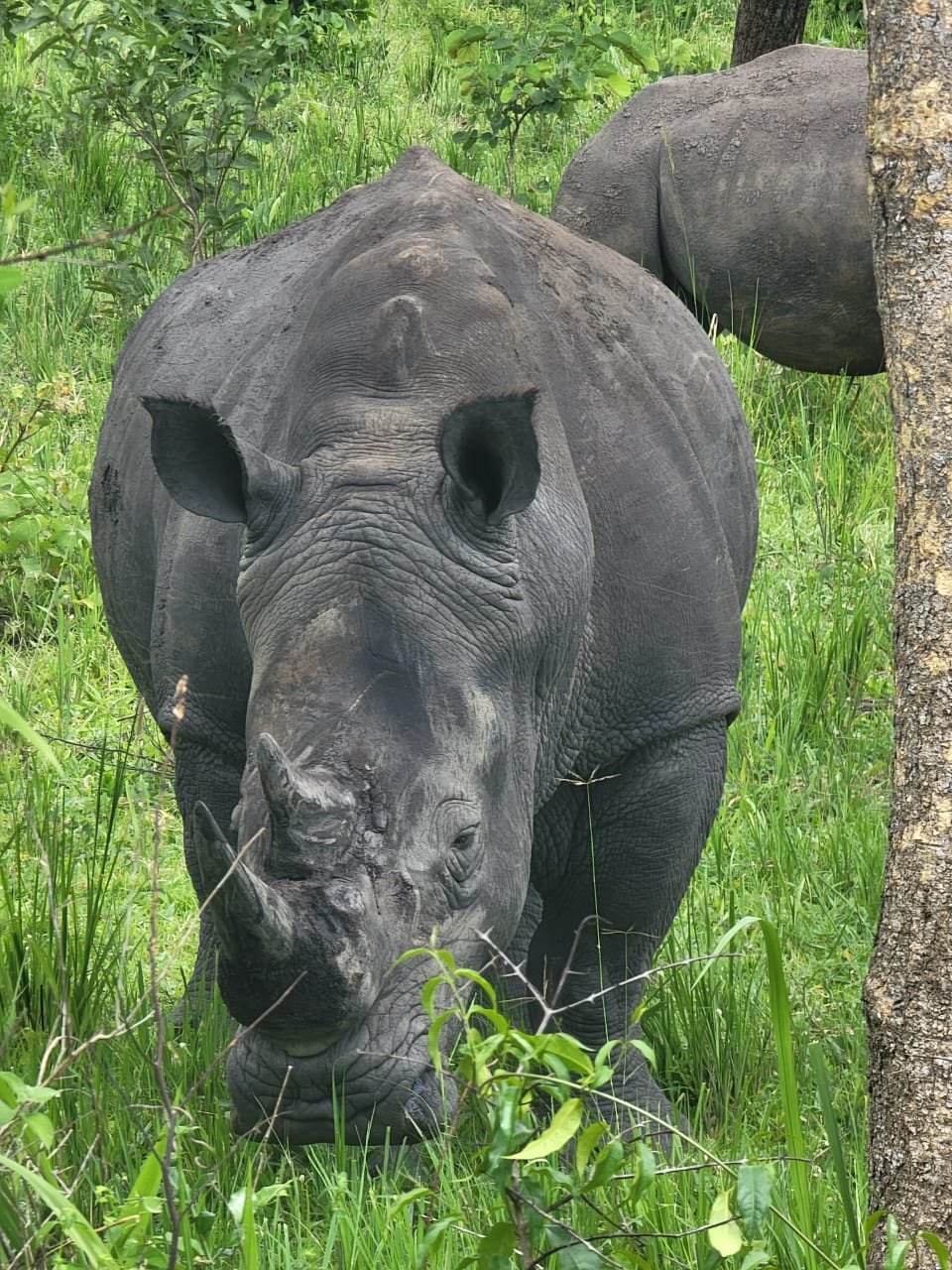
Ziwa Rhino Sanctuary: The Incredible Uganda Rhino Comeback Guide (2026)
Uganda’s Wild Comeback
There’s a moment on the road from Kampala to Murchison Falls when the chaos of the city slowly fades away. The air becomes warmer, roadside fruit stalls replace traffic lights, and long stretches of savannah begin unfolding across northern Uganda. Most travelers rushing toward Murchison Falls National Park barely realize that one of the country’s greatest wildlife conservation stories lies quietly along this highway.
Table of Contents
Welcome to Ziwa Rhino Sanctuary, the only place in Uganda where you can track wild rhinos on foot.
But Ziwa Rhino Sanctuary is far more than just a safari stopover. It is the place where Uganda’s rhinos returned from extinction. It is a story of vision, sacrifice, international conservation, and hope. It is the story of one land donation that helped revive an entire species in Uganda.
And if you’re traveling from Kampala or Entebbe toward Murchison Falls, stopping at Ziwa Rhino Sanctuary may become the most meaningful part of your entire journey.
Why Ziwa Rhino Sanctuary Matters
For decades, Uganda was home to both black and white rhinos. They roamed freely through places like Murchison Falls National Park and Kidepo Valley National Park. But years of civil unrest, poaching, and political instability devastated wildlife populations across the country.
By the early 1980s, rhinos had completely disappeared from Uganda.
For more than 20 years, the country had no wild rhinos left.
Then came a bold dream: to bring them back.
That dream became Ziwa Rhino Sanctuary, a protected conservation area located in Nakasongola District along the Kampala–Gulu highway. Today, the sanctuary has become one of Uganda’s greatest conservation success stories, helping rebuild the country’s rhino population through careful breeding and protection.
For travelers, visiting Ziwa Rhino Sanctuary is not just another safari activity. It is a chance to witness a living conservation miracle.
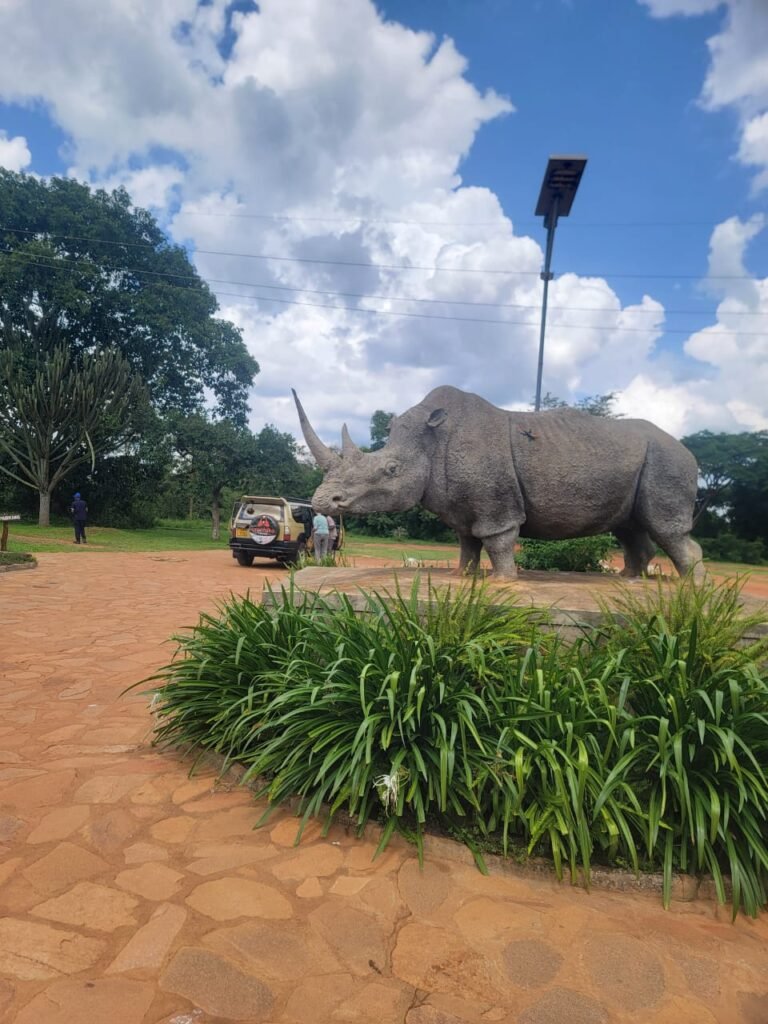
The Remarkable Story Behind Ziwa Rhino Sanctuary
How Rhinos Disappeared From Uganda
Uganda once had thriving rhino populations spread across several national parks. But during the turbulent years of the 1970s and early 1980s, poaching escalated dramatically. Rhinos were hunted heavily for their horns, while years of conflict weakened wildlife protection systems.
Eventually, the last rhinos in Uganda vanished.
The silence they left behind lasted for decades.
Who Started Ziwa Rhino Sanctuary?
The idea of restoring rhinos to Uganda came through collaboration between conservationists, Rhino Fund Uganda, the Uganda Wildlife Authority, and private supporters who believed Uganda’s wildlife heritage deserved another chance.
One of the most important figures in this story was Captain Joe Roy, the landowner who donated thousands of hectares of land that would later become Ziwa Rhino Sanctuary.
Without that land donation, Uganda’s rhino comeback story may never have happened.
Today, many visitors track rhinos across those same grasslands without realizing they are walking through land that was once offered purely in the spirit of conservation and national restoration.
That human story makes Ziwa Rhino Sanctuary deeply emotional. This is not simply a tourist attraction. It is a symbol of what can happen when conservation becomes personal.
The First Rhinos From Kenya and the USA
The sanctuary officially began receiving rhinos in the mid-2000s.
The first rhinos came from two different parts of the world:
- some arrived from Solio Ranch in Kenya,
- while others were donated from Disney’s Animal Kingdom in Orlando, USA.
That international collaboration transformed Ziwa Rhino Sanctuary into a global conservation effort.
The goal was simple but ambitious:
breed rhinos safely in Uganda again and eventually return them to the country’s protected national parks.
And against all odds, it worked.
The Story Behind Baby Obama
One of the sanctuary’s most famous rhinos became a symbol of that international partnership.
The first baby rhino born at Ziwa Rhino Sanctuary was named Obama.
The reason was unforgettable:
- the mother came from the United States,
- the father came from Kenya,
- and the calf was born during the excitement surrounding Barack Obama’s rise to the American presidency.
Today, visitors still love hearing the Obama rhino story during guided tours. It gives the sanctuary personality, warmth, and humanity beyond wildlife statistics.
The Ultimate Kampala to Ziwa to Murchison Falls Road Trip
One of the best things about Ziwa Rhino Sanctuary is its location.
It sits directly along the route connecting Kampala to Murchison Falls National Park, making it the perfect wildlife stopover before continuing north.
Distance Guide
| Route | Approximate Distance | Travel Time |
|---|---|---|
| Kampala to Ziwa Rhino Sanctuary | 170 km | 3–4 hours |
| Entebbe to Ziwa Rhino Sanctuary | 210 km | 4–5 hours |
| Ziwa Rhino Sanctuary to Murchison Falls National Park | 100–140 km | 2–3 hours |
Because the sanctuary lies almost halfway to Murchison Falls, many travelers stop here for:
- rhino tracking,
- lunch,
- overnight stays,
- or shoebill canoe excursions.
The road trip itself is part of the experience. Along the way, roadside markets overflow with pineapples, roasted maize, cassava, and sweet bananas. Local trading centers pulse with life while cattle graze quietly under giant acacia trees.
This stretch of Uganda feels raw, open, and deeply authentic.
What Rhino Tracking at Ziwa Rhino Sanctuary Feels Like
Tracking rhinos on foot is completely different from seeing wildlife from a safari vehicle.
At Ziwa Rhino Sanctuary, visitors walk through the bush accompanied by armed rangers and experienced guides. There’s something incredibly thrilling about hearing your guide suddenly whisper:
“They’re close.”
Then comes silence.
You hear birds rustling through the trees. Grass moving softly in the wind. Your heartbeat quickening.
And then suddenly, you see them.
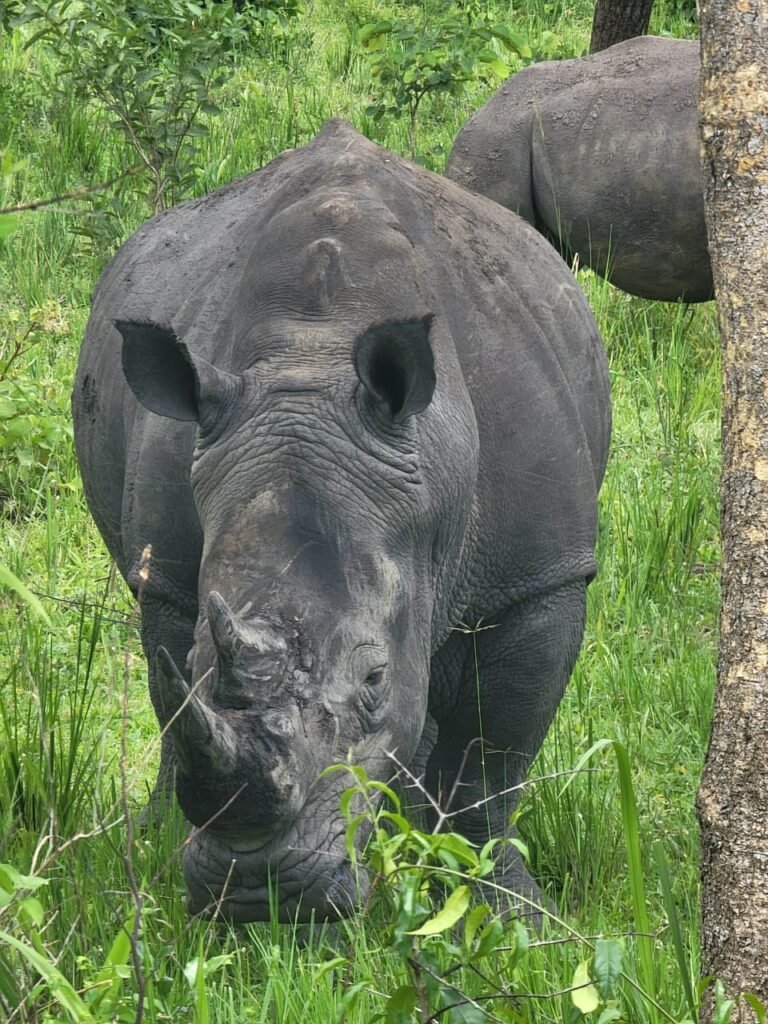
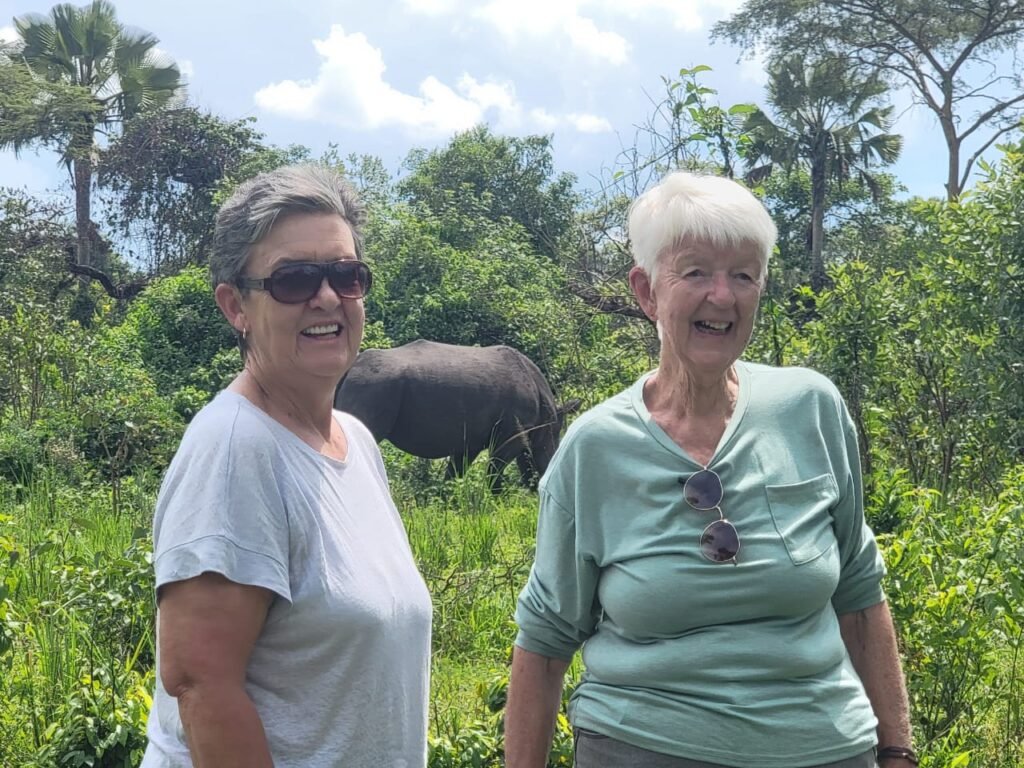
Massive white rhinos standing quietly in the grasslands, surprisingly calm yet overwhelmingly powerful. Seeing such enormous animals without the barrier of a vehicle creates an emotional connection that feels primal and unforgettable.
The guides at Ziwa Rhino Sanctuary are excellent storytellers too. They explain each rhino’s personality, family history, and conservation journey. Some rhinos are playful. Others are protective mothers guarding calves nearby.
Every trek feels personal.
And because the sanctuary limits interactions carefully, tourism directly supports rhino protection and conservation work.
Ziwa Rhino Sanctuary Prices (2026)
Prices may change slightly over time, so travelers should always confirm through the official booking page before visiting.
Rhino Tracking Fees
| Category | Price |
|---|---|
| Foreign Non-Residents (FNR) | USD 60 |
| Foreign Residents (FR) | USD 50 |
| East African Citizens (EAC) | UGX 30,000 |
| Shoebill Experience FNR/ FR | USD 20/ USD 15 |
The sanctuary also offers:
- shoebill tracking,
- canoe rides,
- nature walks,
- birdwatching,
- and overnight accommodation packages.
For official updated rates and bookings, visit:
Best Lodges and Hotels Near Ziwa Rhino Sanctuary
Adding an overnight stay transforms the experience completely.
Instead of rushing through, you get to enjoy sunrise bird calls, evening campfires, and the peaceful atmosphere of Uganda’s northern savannah.
Amuka Safari Lodge
Amuka Safari Lodge is the most famous accommodation near Ziwa Rhino Sanctuary. Built with natural materials and surrounded by woodland, it blends luxury with nature beautifully.
The lodge is ideal for:
- couples,
- photographers,
- and travelers wanting a relaxed safari atmosphere before continuing to Murchison Falls.
The swimming pool becomes especially refreshing after rhino trekking under Uganda’s midday sun.
Ziwa Rhino Guesthouse
For budget and mid-range travelers, the sanctuary guesthouse offers simple but comfortable accommodation close to the rhino tracking area.
Staying inside or near the sanctuary allows visitors to:
- join early morning activities,
- increase chances of shoebill sightings,
- and support conservation directly.
Camping Near Ziwa Rhino Sanctuary
Adventure travelers can also camp in designated areas. Nights here are peaceful, with sounds of insects, birds, and distant wildlife creating a true wilderness atmosphere.
Camping is one of the most affordable ways to experience the sanctuary while staying connected to nature.
Travel Kindly: How to Leave a Positive Footprint Here
Ziwa Rhino Sanctuary exists because people chose conservation over exploitation. Visitors can help continue that mission through simple responsible travel choices.
1. Support Local Guides
Hiring local guides and staying in locally managed lodges helps tourism income remain within surrounding communities.
2. Avoid Plastic Waste
Carry reusable water bottles and avoid leaving litter behind during road trips.
3. Respect Wildlife Distance
Even though rhino tracking happens on foot, visitors should always follow ranger instructions carefully and avoid disturbing the animals.
4. Stay Longer
Spending a night near Ziwa Rhino Sanctuary supports local jobs and creates deeper travel experiences beyond quick stopovers.
5. Combine Ziwa With Murchison Falls
Choosing conservation-focused travel routes helps support Uganda’s broader wildlife protection economy.
Frequently Asked Questions About Ziwa Rhino Sanctuary
Is Ziwa Rhino Sanctuary worth visiting?
Absolutely. Ziwa Rhino Sanctuary offers Uganda’s only rhino tracking experience and provides one of the country’s most meaningful conservation stories.
How far is Ziwa Rhino Sanctuary from Kampala?
Ziwa Rhino Sanctuary is approximately 170 kilometers from Kampala, taking about 3–4 hours by road depending on traffic.
Can you visit Ziwa Rhino Sanctuary on the way to Murchison Falls?
Yes. The sanctuary lies directly along the Kampala–Murchison Falls highway and makes a perfect stopover.
Why was the first baby rhino called Obama?
The calf’s mother came from the USA and the father came from Kenya. The rhino was born during the rise of Barack Obama, inspiring the famous name.
How long does rhino tracking take at Ziwa Rhino Sanctuary?
Most rhino tracking experiences last between 1.5 and 2.5 hours depending on where the rhinos are located.
What is the best time to visit Ziwa Rhino Sanctuary?
The dry seasons between December–February and June–August are ideal for rhino tracking and road trips toward Murchison Falls.
Final Reflections
There are many places in Africa where you can see wildlife.
But very few places tell a story like Ziwa Rhino Sanctuary.
This is not just about rhinos. It is about restoration. About second chances. About people refusing to let extinction become permanent.
As you continue north toward the thunder of Murchison Falls, Ziwa stays with you. The silence of the grasslands. The weight of those giant footprints in the soil. The realization that conservation is not an abstract idea, it is something built slowly by ordinary people making extraordinary choices.
And perhaps that is what makes Ziwa Rhino Sanctuary unforgettable.
Not just the rhinos themselves.
But the hope they represent.
Useful Information
Best Time to Visit
- June to August
- December to February
Ideal Trip Duration
- Half-day stopover
- Overnight recommended
Main Activities At Ziwa Rhino Sanctuary
- Rhino tracking
- Shoebill trekking
- Canoe rides
- Birdwatching
- Nature walks
Nearby Destination
- Murchison Falls National Park
Have you ever experienced wildlife in a way that truly changed you?
Ziwa Rhino Sanctuary is more than a safari stop, it’s a reminder that conservation works when people care enough to act. Book your trip today!
If this journey inspired you, share this article with another traveler dreaming of Uganda, and when you finally stand face-to-face with a rhino in the wild, I’d love to hear your story too.

One Comment