Luxury Fly-In Safaris Uganda: Explore Gorillas, Wildlife & Exclusive Adventures
Table of Contents
At a Glance
Luxury fly-in safaris in Uganda save time by using flights instead of long road transfers.
Key parks include Bwindi, Kibale, Queen Elizabeth, and Murchison Falls.
Gorilla trekking permits dictate schedules; plan around UWA permits.
Best travel months are June-August and December-February for smooth logistics.
Packing for weather and terrain is essential, especially for gorilla trekking.

Imagine waking above Uganda’s green hills, crater lakes, and forests as your aircraft carries you closer to some of Africa’s most extraordinary wildlife experiences. A luxury fly-in safari in Uganda allows travelers to spend less time on long road transfers and more time discovering mountain gorillas, chimpanzees, savannah wildlife, and authentic community experiences.
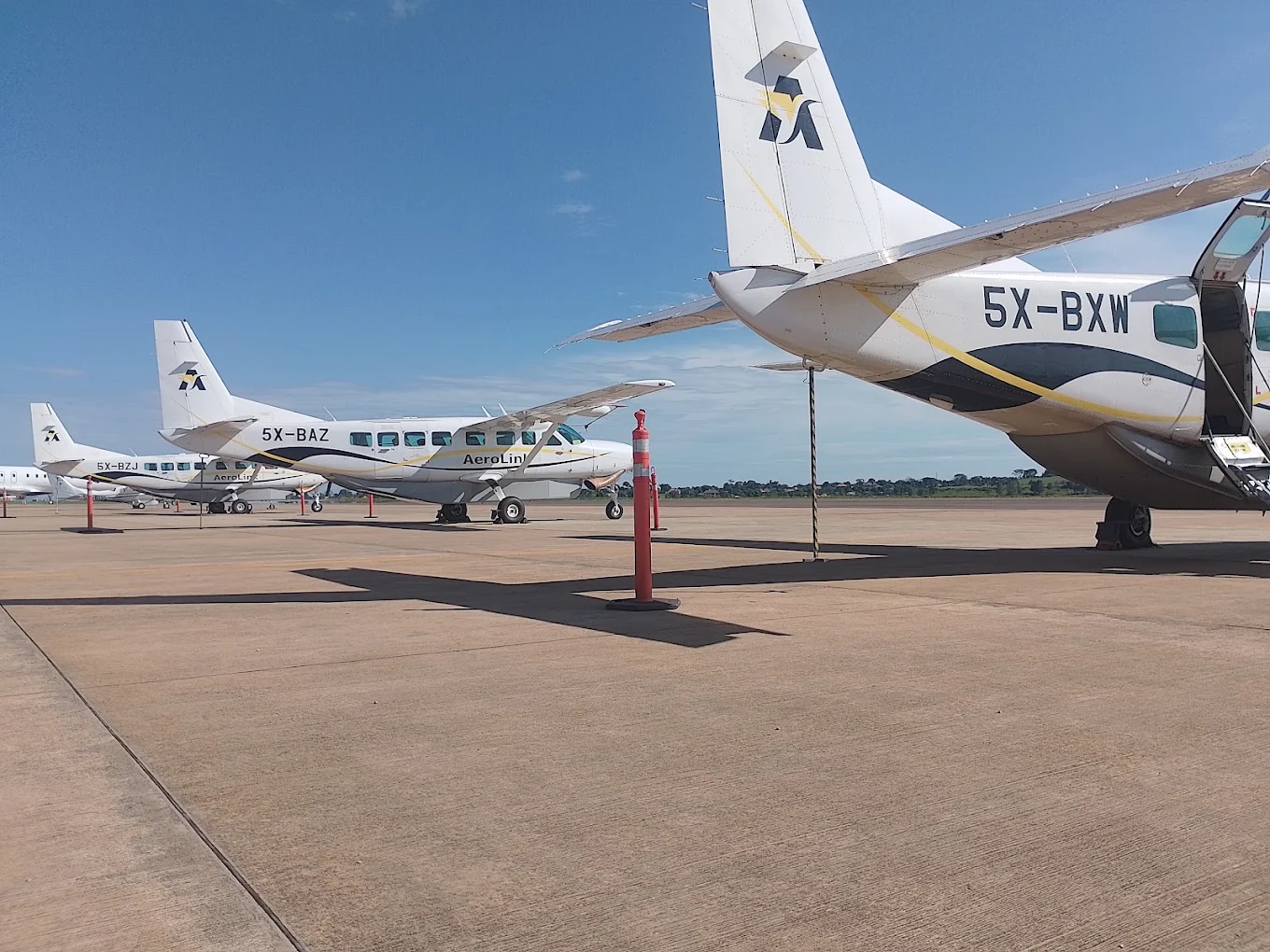
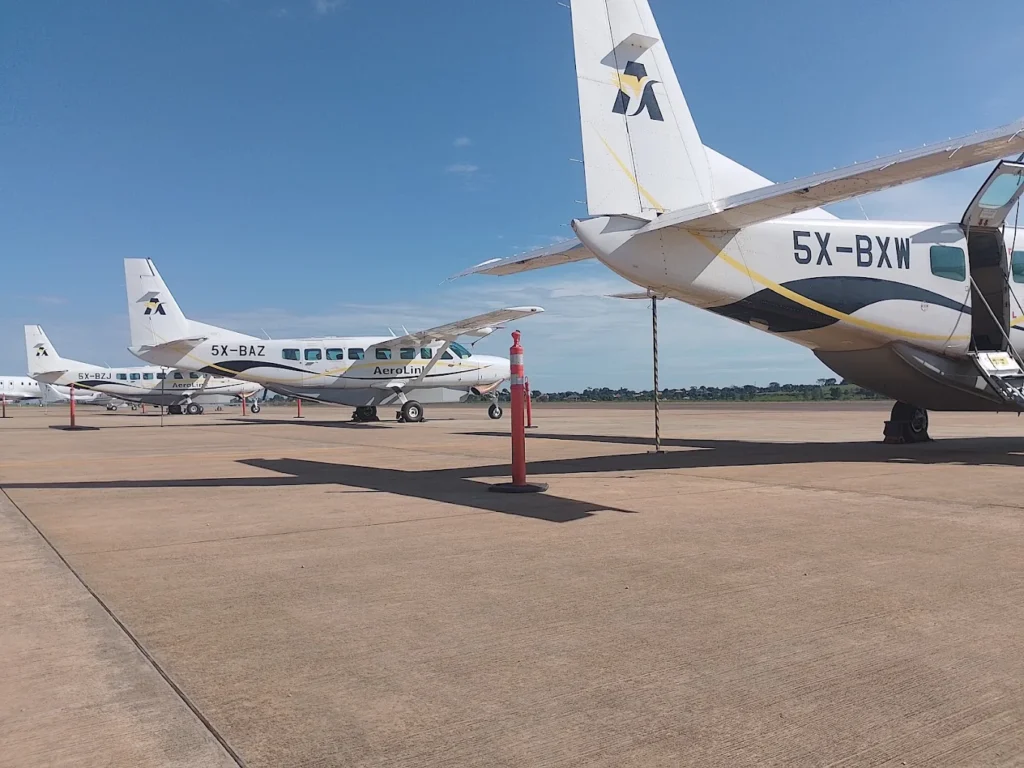
Luxury fly-in safaris Uganda cut the slow parts out of a multi-park trip. You trade long road transfers for short domestic hops, then land close to the action in Bwindi Impenetrable National Park, Kibale Forest National Park, Queen Elizabeth National Park, and Murchison Falls National Park. More time on foot with primates, more time on game drives, more time at your lodge. Less sitting.
And yes, it changes the whole rhythm of your days. You’ll hear propellers at the strip, then the forest goes quiet again.
Luxury Travel With Meaning: The Amatsiko Difference
At Amatsiko Tours, a luxury fly-in safari in Uganda is not only about reaching wildlife destinations faster. It is about creating meaningful connections between travelers, nature, and local communities.
Through responsible tourism, your journey contributes to education, conservation, and sustainable community initiatives in Uganda. Guests can experience incredible wildlife encounters from mountain gorilla trekking in Bwindi to savannah adventures and cultural experiences while knowing their visit helps create positive impact beyond the safari itself.
For travelers seeking a luxury safari with purpose, Amatsiko Tours combines comfort, authentic experiences, and community-driven tourism to create journeys that are memorable for both guests and the communities they visit.
Luxury fly-in safaris Uganda run on one simple trade: flights for time
A Fly-in Safari Uganda works because Uganda’s headline experiences sit far apart on the map, and road conditions swing hard by season. Fly between parks to protect your itinerary, especially if you’re stacking gorilla trekking safaris Uganda with chimpanzee tracking and classic savannah drives. The payoff is practical: fewer transfer days, earlier check-ins, and less fatigue before a trek.
The sensory tell is the temperature shift. Step off a warm airstrip, then hit the cool, damp air of the forest within the same travel day.
Key mechanics you should plan around:
Start and end points stay consistent, most trips route through Entebbe for connections
Park-to-park hops replace full-day drives on multi-park circuits
Tight timing matters, since gorilla trekking permits are date-specific through the Uganda Wildlife Authority (UWA)
Lodge location matters more than décor, because you want the shortest morning run to your trekking sector
Season choice changes reliability, dry months reduce delays, rainy months increase friction on roads and trails
If you’re building a primate-heavy route, lock gorillas first. Everything else flexes around that permit date.
Gorilla trekking safaris Uganda stay the priority, permits set the clock
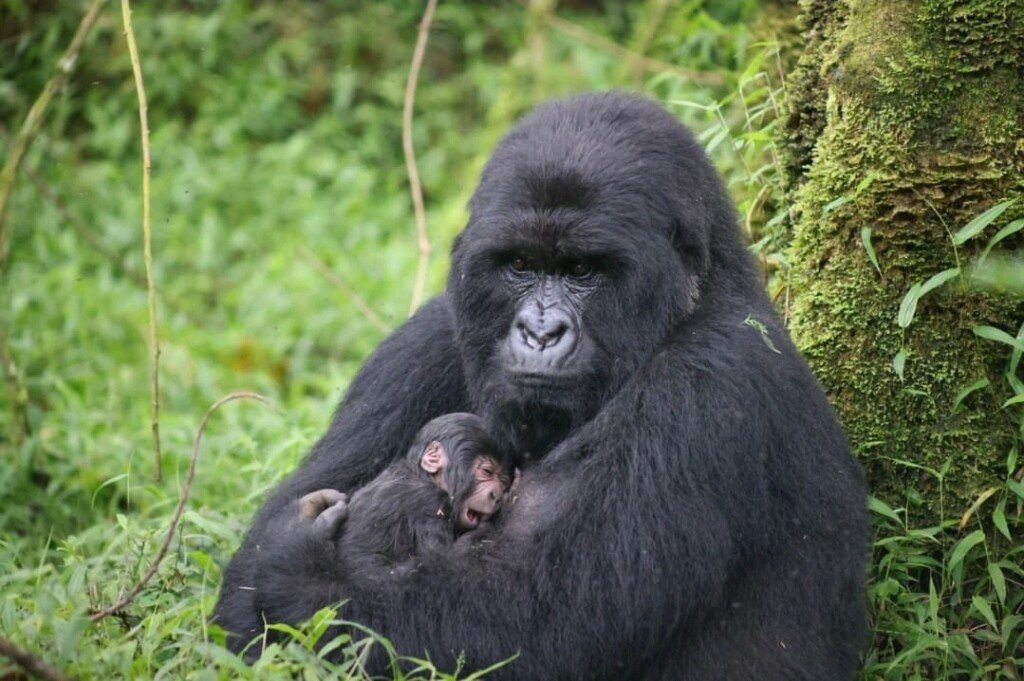
Gorilla trekking safaris Uganda don’t bend around your schedule. Your permit date drives your whole fly-in plan, because UWA permits are limited per day and peak months tighten fast. In Bwindi, treks typically run about 2–6 hours depending on where the gorilla family ranges, and the standard viewing time is one hour once you’re with them.
You’ll feel it in your hands first. Bwindi’s vegetation is grabby, and steep sections ask for balance more than speed.
Practical decisions that save your morning:
Choose the right Bwindi sector based on where you’re sleeping, not what sounds famous: Buhoma, Ruhija, Rushaga, Nkuringo all vary in terrain and access
Build a buffer day if you’re stacking flights tightly, especially in rainy months
Pack for grip, even in dry season: boots with bite, and gloves for holding vegetation on steep slopes
For deeper context on permits, timing, and what the trek actually feels like, use this gorilla trekking field guide.
“If you’re considering a trip to Uganda, stop searching. Amatsiko Tours is in a class entirely of its own. From the moment we arrived, everything was handled with a level of care and professionalism that made the entire experience effortless. Airport pickup, beautiful accommodations, seamless transportation, and delicious meals. Every detail was thoughtfully arranged.”
— 565carolyno, TripAdvisor, 5.00
“Wow where to begin with this experience! […] the tours- with these guys, you’re going to get the REAL REAL of Uganda. […] If you want a unique experience with the added benefit of supporting a cause, this is the company to use when you go to Uganda.”
— Sophie Schneeberger, Google, 5.00
“Our experience with Amatsiko Tours was nothing short of extraordinary! My kids and I had the opportunity to volunteer and travel in Uganda, and we were deeply touched by the kindness and warmth of the Amatsiko team. From the moment we arrived, we felt incredibly welcomed and cared for.”
— Maya Gordon, Google, 5.00

Dry seasons win for luxury fly-in safari itineraries Uganda, rainy seasons reward birding
Best times for gorilla trekking in Uganda line up with the months you’d pick for smooth flying and driving: June–August and December–February. Trails are drier, schedules hold, and you spend less energy fighting mud. Rainy seasons (March–May and September–November) bring greener landscapes and fewer crowds, but the trade-off is real: slippery forest trails and slower road access.
Bwindi’s temperature reference helps you pack honestly. Expect about 11°C (52°F) in the morning and 23°C (73°F) in the afternoon.
Two clear seasonal calls:
Pick dry season if your trip is built around tight connections, short stays, and top-tier lodge nights
Pick green season if you care about Uganda bird watching tours and you don’t mind slower transfers
Uganda supports 1,000+ bird species, and the greener months can feel louder with calls and wingbeats around wetlands, forest edges, and park waterways.
The core fly-in circuit links four anchor parks, each earns its place
A strong fly-in itinerary in Uganda isn’t about ticking every park. It’s about matching the right park to the experience you’re paying for, then keeping travel days clean. The classic set is Kibale Forest National Park for chimps, Queen Elizabeth National Park for savannah game drives, Bwindi Impenetrable National Park for gorillas, and Murchison Falls National Park for northern wildlife and big landscapes.
If I’m being picky, don’t cram Kidepo Valley National Park into a short trip unless you’re ready to protect it with flights and extra days. Remoteness is the point, and it takes time.
A quick planning table you can use to shape luxury safari packages Uganda:
Park | Signature focus | Best season window from provided guidance | Planning detail you shouldn’t skip |
|---|---|---|---|
Bwindi Impenetrable National Park | Gorilla trekking safaris Uganda | June–August, December–February | Match lodging to sector (Buhoma, Ruhija, Rushaga, Nkuringo) |
Kibale Forest National Park | Chimpanzee trekking | June–August, December–February | Keep your arrival day light so you’re fresh for tracking |
Queen Elizabeth National Park | Luxury wildlife safaris Uganda | June–August, December–February | Dry months improve visibility with shorter grass |
Murchison Falls National Park | Savannah wildlife, northern circuit | June–August, December–February | Dry months improve road reliability and timing |
For park-by-park context as you shape the route, start with our national parks overview.

Costs and value hinge on flights, permits, and lodge nights, not one line item
How much does a luxury safari cost in Uganda depends on what you choose to protect with flights. Domestic hops add cost, but they also protect the most expensive hours of your trip: gorilla permits, premium guiding time, and luxury lodge nights you actually get to enjoy instead of arriving after dark.
Two hard numbers anchor your planning:
Uganda gorilla permit reference: USD $800 (provided)
Rwanda gorilla permit reference: USD $1,500 (provided, useful for regional context)
Where fly-in trips usually earn their keep:
Short itineraries (3–7 days) where one lost day is a big percentage of the trip
Peak dry season when demand is high and you want fewer moving parts
Mixed circuits combining gorillas, chimps, and savannah drives across multiple regions
One honest limitation: flights don’t fix the forest. Even in dry months, gorilla trekking stays steep, physical, and unpredictable.
Gorilla habituation experience Uganda belongs in longer stays and slower pacing
The gorilla habituation experience Uganda asks for more time in the forest and more patience with the pace. It fits best when you’ve already committed to gorilla trekking safaris Uganda and you want a deeper primate day without stacking a same-day flight or a long transfer.
This is the part of Uganda that smells like wet leaves and earth, even when the sky clears.
If you’re building an itinerary around habituation, keep these planning positions:
Don’t schedule it after a late arrival, even by air, you’ll feel rushed
Keep the next morning flexible, your legs will thank you
Pair it with a calm decompression stop, Lake Bunyonyi is a common reset in the provided circuits
For a grounded sense of post-trek pacing and how the day lands emotionally, read what gorilla trekking feels like in Uganda.
Luxury fly-in safaris Uganda land best when you fly into savannah parks in dry months
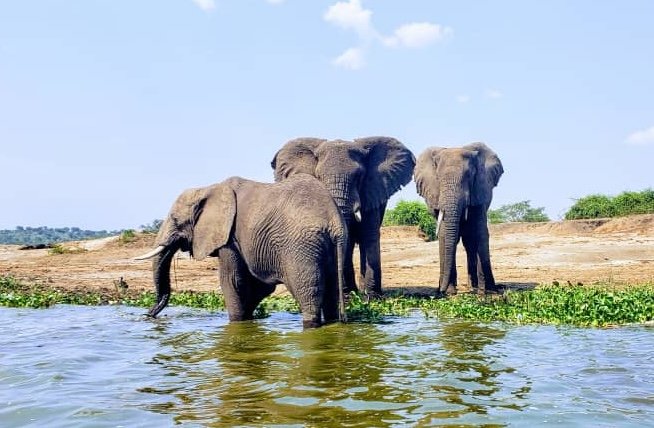
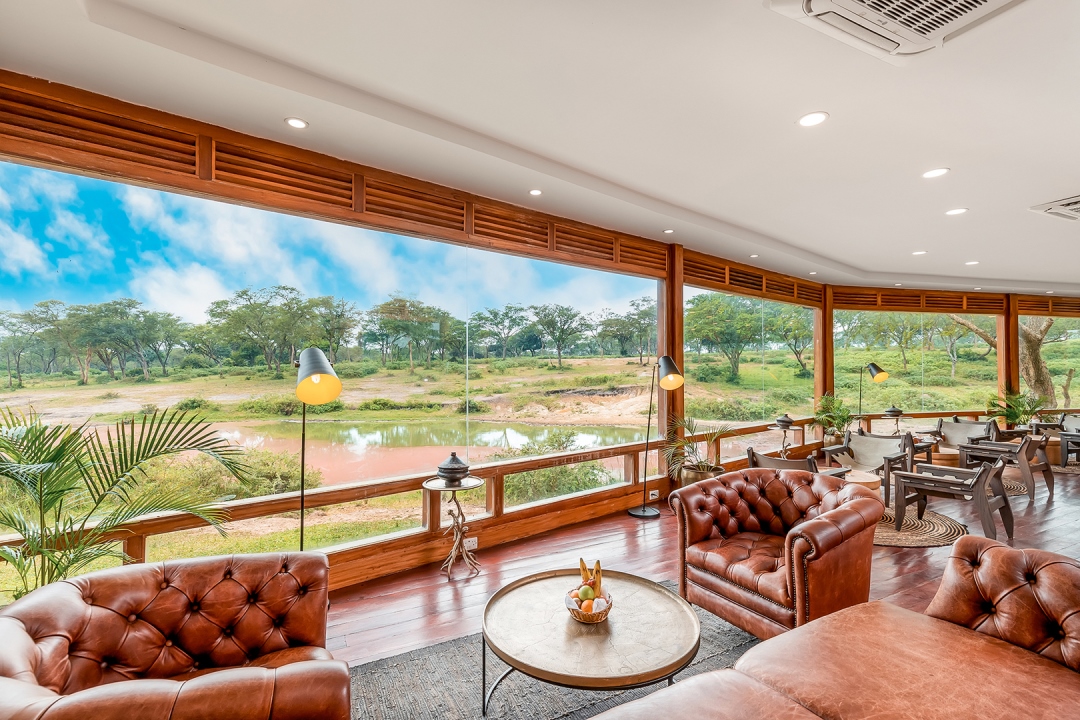
Luxury wildlife safaris Uganda in Queen Elizabeth National Park and Murchison Falls National Park are cleanest in the dry seasons (June–August and December–February). Shorter grass improves sightlines, roads hold up better, and you keep your game drives on schedule. In rainy months, wildlife spreads out with abundant water, and tall grass can hide movement.
You’ll hear the difference, too. Dry-season mornings carry farther, engines, distant calls, and wind across open ground.
A few choices that sharpen your odds:
Plan game drives early, before heat softens the action
Keep one unstructured wildlife day so you’re not racing a checklist
Treat “Big Five” as a routing problem, not a promise, Uganda’s Big Five includes lion, leopard, elephant, buffalo, rhinoceros, and rhino tracking typically needs a dedicated protected sanctuary stop (provided note)
If you want a broader view of safari styles and routes, keep Uganda tours and safaris open while you sketch your days.
Uganda bird watching tours shine in green seasons and between the headline parks
Uganda bird watching tours make the most sense in the rainy or green seasons (March–May and September–November) when habitats are lush and bird activity runs high. You still get strong birding year-round, but the greener months add sound and movement across wetlands, forests, and savannah edges, and they pair well with fewer crowds.
The detail most travelers miss: birding fits best on transfer days. A short stop can beat a rushed “birding day” wedged between permits.
Places that pair naturally with fly-in routing from the provided guidance:
Queen Elizabeth National Park for strong birding areas
Bwindi Impenetrable National Park and Mgahinga Gorilla National Park for forest species year-round
Lake Bunyonyi region as a post-trek reset with birding opportunities
And yes, the air feels different after rain. Cooler, heavier, and a bit sweet.

What to expect on a luxury fly-in safaris in Uganda comes down to pacing and packing
What to expect on a luxury safari fly-in Uganda is less about marble bathrooms and more about how your days flow. Fly-in logistics give you earlier arrivals, longer evenings at the lodge, and better recovery between physically demanding forest treks and long game-drive mornings. But you still need to pack for dust in savannah parks and moisture under rainforest canopy.
Two planning anchors from the provided guidance:
Gorilla trekking happens year-round, and treks commonly take 2–6 hours
Dry seasons (June–August, December–February) bring the most predictable logistics, rainy seasons (March–May, September–November) add mud and slower roads
A packing stance we’ll keep repeating because it saves trips:
Bring gloves for gorilla trekking grip
Bring gaiters even in dry months, mud patches happen
Protect camera gear for dust in savannah segments and moisture in forest segments
Dress for morning chill in Bwindi, 11°C (52°F) can feel cold when you’re standing still
Keep one set of clothes easy to reach, flights and lodge transfers go smoother when you aren’t digging through everything
For a tight, practical checklist you can actually use, keep what to pack for Uganda bookmarked.
Luxury fly-in safari itineraries Uganda that work in real time, not just on paper
Luxury fly-in safari itineraries Uganda work best when you commit to a clear circuit and stop trying to “add one more park.” The provided sample routes already show what holds together on the ground: primates in the west, savannah in Queen Elizabeth, a gorilla finale in Bwindi, and Lake Bunyonyi as a recovery pause. Keep your best experiences on your best energy days.
A few itinerary shapes worth copying outright:
Primate plus savannah circuit (7–10 days)
Route concept: Entebbe → Kibale → Queen Elizabeth → Bwindi → Lake Bunyonyi → Entebbe (provided).
This is the cleanest structure for gorilla trekking safaris Uganda plus chimps and classic game drives, and it leaves room to breathe.
Northern–western extended safari (10–14 days)
Route concept: Kampala → Murchison Falls → Kibale → Queen Elizabeth → Bwindi (provided).
You earn Murchison Falls National Park when you give it time, especially in dry months when roads cooperate.
Gorilla-focused short circuit (3–7 days)
Route concept: Entebbe → Bwindi → Lake Bunyonyi → Entebbe (provided).
This is the one to choose if you want top luxury safari lodges in Uganda and you don’t want the trip diluted by constant movement.
One more candid note: a fly-in plan still needs a buffer. Weather shifts, and forests don’t care about your calendar.
Key takeaways for planning luxury fly-in safaris Uganda
Luxury fly-in safaris Uganda prioritize time in Bwindi Impenetrable National Park, Kibale Forest National Park, Queen Elizabeth National Park, and Murchison Falls National Park by replacing long road transfers with domestic flights. Dry seasons, June–August and December–February, deliver the most reliable logistics for gorilla trekking safaris Uganda and luxury wildlife safaris Uganda. Gorilla trekking remains year-round, with treks commonly 2–6 hours and one hour with the gorillas. Plan around UWA permits, and pack for 11°C (52°F) Bwindi mornings.
Frequently Asked Questions
1. What are the advantages of choosing a luxury fly-in safari in Uganda?
Luxury fly-in safaris in Uganda offer the advantage of reducing long road transfers by replacing them with short domestic flights. This allows you more time to explore parks like Bwindi Impenetrable National Park, Kibale Forest National Park, Queen Elizabeth National Park, and Murchison Falls National Park. The result is less fatigue and more time for activities like game drives and primate tracking.
2. When is the best time for gorilla trekking safaris in Uganda?
The best times for gorilla trekking in Uganda are during the dry seasons, from June to August and December to February. During these months, the trails are drier, and logistics are more predictable, allowing for a smoother trekking experience.
3. How do gorilla trekking permits affect my safari itinerary?
Gorilla trekking permits in Uganda drive the entire planning process for your fly-in safari. These permits are date-specific and limited, especially during peak months. Therefore, securing your permit date is crucial and should be the first step in planning your safari itinerary.
4. What should I pack for a luxury fly-in safaris Uganda?
For a luxury safari in Uganda, pack items suitable for both savannah and rainforest environments. Essentials include gloves for gorilla trekking grip, gaiters for potential mud, dust covers for camera gear, and layers for the morning chill in Bwindi, where temperatures can be as low as 11°C (52°F).
5. Which parks are included in a typical fly-in safaris Uganda circuit?
A typical fly-in safaris fly-in Uganda circuit includes Kibale Forest National Park for chimpanzee trekking, Queen Elizabeth National Park for savannah game drives, Bwindi Impenetrable National Park for gorilla trekking, and Murchison Falls National Park for diverse wildlife and landscapes.
6. Are luxury fly-in safaris suitable during the rainy season?
While luxury fly-in safaris can be conducted during the rainy season (March–May and September–November), these months are better suited for bird watching tours due to lush habitats and increased bird activity. However, expect slower road access and slippery trails during this period.
7. How does the cost of a luxury safari in Uganda break down?
The cost of a luxury safari in Uganda is influenced by the choice to use flights, gorilla permits, and luxury lodge accommodations. Flights add to the cost but also ensure you make the most of high-value experiences like gorilla trekking and premium guiding time.
8. What is the gorilla habituation experience in Uganda, and who is it for?
The gorilla habituation experience in Uganda is for those seeking a deeper understanding of primates. It requires more time in the forest and is best suited for travelers who have already experienced standard gorilla trekking and want to explore at a slower pace without the rush of same-day flights or long transfers.